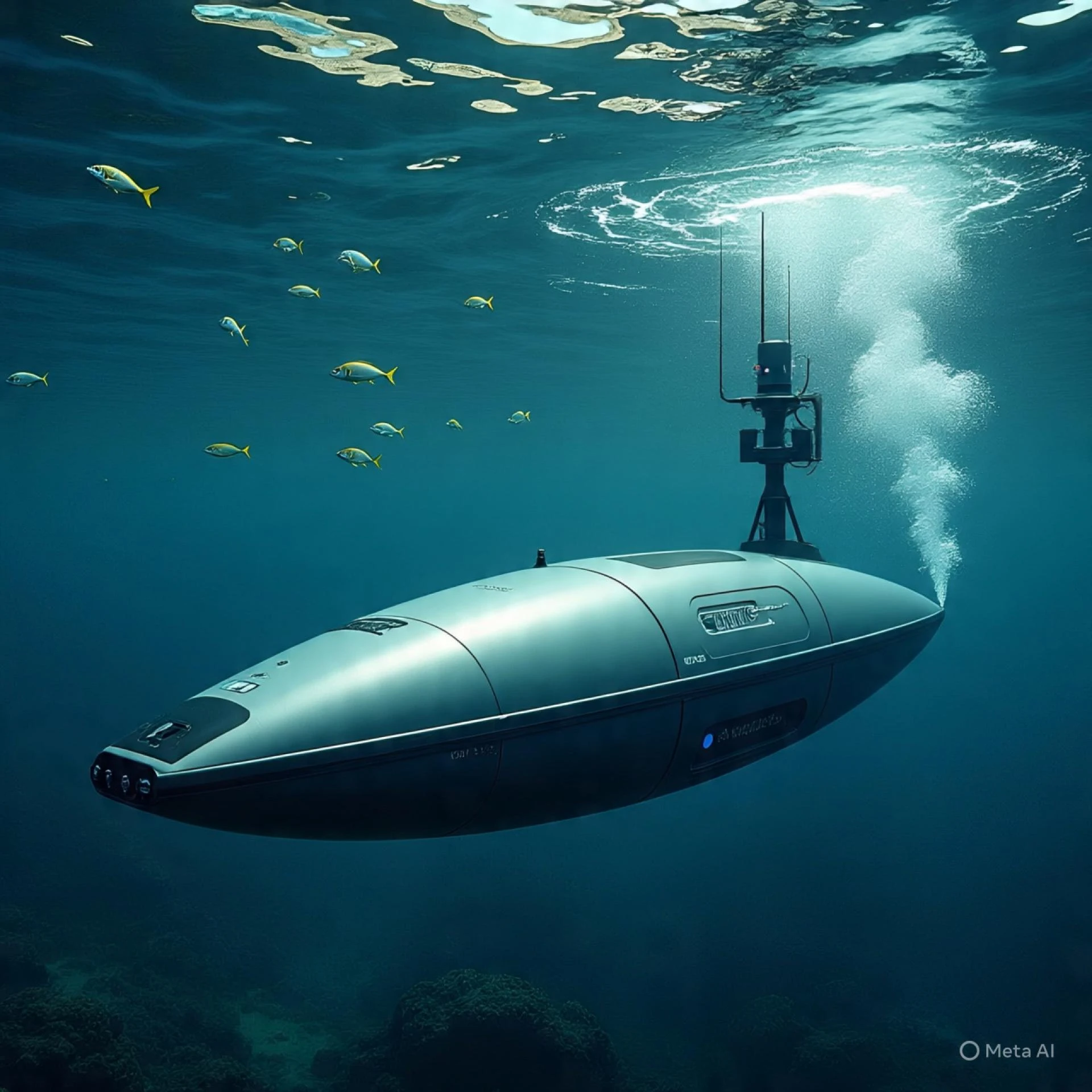
The Underwater Sonar Pod is one of the most advanced tools designed to explore and study underwater environments using sound waves. In places where light cannot reach, sonar technology becomes the “eyes” of underwater machines. It helps detect, measure, and map objects lying beneath the surface of the ocean. From naval defense operations to scientific ocean studies, the Underwater Sonar Pod plays a vital role in understanding the mysterious underwater world.
The term “sonar” stands for Sound Navigation and Ranging, meaning it uses sound to determine distance, direction, and structure underwater. The Underwater Sonar Pod is widely used in ships, submarines, and underwater drones to explore the seabed, find lost objects, or study marine life. With the help of sonar pods, experts can see underwater areas that are impossible to view with normal cameras or human eyes.
This article explains what an Underwater Sonar Pod is, how it works, its types, uses, benefits, and how technology is improving it for the future — all in very simple and easy-to-understand language.
Understanding What an Underwater Sonar Pod Is
An Underwater Sonar Pod is a specially designed device that uses sound waves to detect and locate underwater objects. It works on the principle that sound travels faster and farther in water than light. This makes sound the best option for exploring the deep sea, where sunlight cannot reach.
The sonar pod sends out sound pulses, also known as “pings,” which travel through the water. When these sound waves hit an object, such as a rock, a submarine, or fish, they bounce back to the device. The sonar pod measures the time taken for the sound to return and converts it into an image or map of the underwater area.
These pods are often shaped like small, strong capsules made to withstand the high pressure of deep waters. The Underwater Sonar Pod can be attached to ships, submarines, or autonomous underwater vehicles (AUVs). They are widely used in military operations, ocean research, and even in the fishing industry. This technology has helped humans explore places that were once thought unreachable.
How the Underwater Sonar Pod Works
The working process of an Underwater Sonar Pod is both simple and fascinating. It operates by sending out sound waves underwater and listening to the echoes that come back. The time gap between sending and receiving the sound helps determine how far away an object is.
There are two main types of sonar technology:
- Active Sonar: This type sends sound waves and waits for them to bounce back. It’s commonly used for mapping underwater surfaces and detecting objects.
- Passive Sonar: This type doesn’t send sound but instead listens to the natural sounds underwater, such as marine life, ship engines, or submarine movements.
Inside the sonar pod, there’s a special component called a transducer, which changes electrical signals into sound waves and back again. The data collected by the sonar pod is processed and displayed on screens, showing a visual map of what’s below the surface.
The Underwater Sonar Pod is extremely useful in dark and murky waters, where cameras fail to work. It provides clear and accurate information about underwater conditions, helping ships and submarines move safely and efficiently.
Different Types of Underwater Sonar Pods
There are several kinds of Underwater Sonar Pods, each created for specific tasks. Depending on their function, they vary in size, range, and design. The main types include:
- Single-Beam Sonar Pod:
- This is the simplest type, sending one sound beam straight down. It is often used to measure water depth or detect single targets directly below the device.
- Multibeam Sonar Pod:
- This type sends out multiple sound beams at once, covering a wide area of the seafloor. It provides highly detailed 3D maps, making it useful for oceanographic studies and hydrographic surveys.
- Side-Scan Sonar Pod:
- This sonar type scans the seabed from the sides, capturing detailed images of large underwater areas. It’s often used to find shipwrecks, pipelines, and other large objects on the ocean floor.
- Synthetic Aperture Sonar Pod:
- This advanced type combines several sonar images to produce ultra-clear and high-resolution maps of underwater objects.
Each Underwater Sonar Pod serves a different purpose but shares one goal — to give us a better understanding of what lies beneath the water’s surface.
Important Uses of Underwater Sonar Pods
The Underwater Sonar Pod is used in many fields, proving its importance across different industries. Its ability to work in conditions where light cannot reach makes it extremely valuable. Here are the major uses:
- Military and Defense:
- Navies across the world use sonar pods to detect submarines, underwater mines, and other threats. They help in safe navigation during naval missions and ensure national security.
- Scientific Research:
- Ocean scientists use sonar pods to study underwater landscapes, track marine life movements, and understand ocean currents.
- Fishing Industry:
- Fishermen use sonar pods to locate fish schools, making fishing more efficient and reducing time spent searching.
- Underwater Construction:
- Engineers use sonar pods to survey underwater areas before constructing bridges, pipelines, or wind farms.
- Search and Rescue Operations:
- During accidents or shipwrecks, sonar pods help find lost vessels, black boxes, or underwater debris.
These uses show how Underwater Sonar Pods have become an essential part of both commercial and scientific activities underwater.
Major Benefits of Using Underwater Sonar Pods
The Underwater Sonar Pod offers a wide range of benefits that make it a preferred choice in underwater exploration. Some of the key advantages include:
- High Accuracy:
- Sonar pods can detect and measure objects underwater with great precision, even in deep and dark areas.
- Visibility in Darkness:
- Unlike cameras, sonar doesn’t rely on light, allowing it to work perfectly even in complete darkness.
- Safety and Navigation:
- It helps ships and submarines avoid collisions with rocks, reefs, or other obstacles underwater.
- Efficiency:
- Sonar pods can scan large areas quickly, saving time and reducing operational costs.
- Environmental Safety:
- Modern Underwater Sonar Pods use sound frequencies that are safe for marine life, reducing the risk of harm to animals.
These benefits make sonar pods essential for underwater research, defense, and industrial projects. Their reliability and accuracy continue to improve as technology advances.
The Future of Underwater Sonar Pod Technology
The future of Underwater Sonar Pod technology is very promising. With rapid growth in artificial intelligence (AI) and robotics, sonar pods are becoming smarter, faster, and more efficient.
New-generation sonar pods are expected to have:
- AI-based Analysis: Advanced software that can automatically identify and classify underwater objects.
- Smaller Size and Portability: Miniature pods that can be used on small underwater drones for flexible exploration.
- Improved Resolution: Higher-quality imaging to capture detailed 3D models of underwater terrains.
- Eco-Friendly Technology: Designs that further minimize sound pollution and protect marine ecosystems.
In the coming years, Underwater Sonar Pods will play an even bigger role in ocean mapping, climate research, and marine conservation. They will continue to be one of the most valuable technologies for unlocking the secrets of the deep sea.
Conclusion
The Underwater Sonar Pod is an incredible innovation that helps humans explore the hidden depths of the ocean using sound technology. It has changed how we understand underwater environments, making navigation, research, and rescue operations safer and more accurate. From the navy to scientists, and from fishermen to engineers, everyone benefits from this versatile tool.
As technology continues to evolve, Underwater Sonar Pods will become more advanced, offering better imaging, faster data analysis, and safer operation. They are not just tools — they are gateways to discovering the unseen world beneath the sea.
Frequently Asked Questions (FAQs)
Q1. What is the main purpose of an Underwater Sonar Pod?
The main purpose of an Underwater Sonar Pod is to detect, locate, and map underwater objects using sound waves for navigation, research, and safety.
Q2. How does an Underwater Sonar Pod work?
It sends sound waves underwater, and when the waves hit an object and bounce back, the device measures the time taken to calculate the distance and shape of the object.
Q3. Where are Underwater Sonar Pods used?
They are used in naval defense, marine research, fishing, underwater construction, and search and rescue operations.























Sign in to leave a comment.