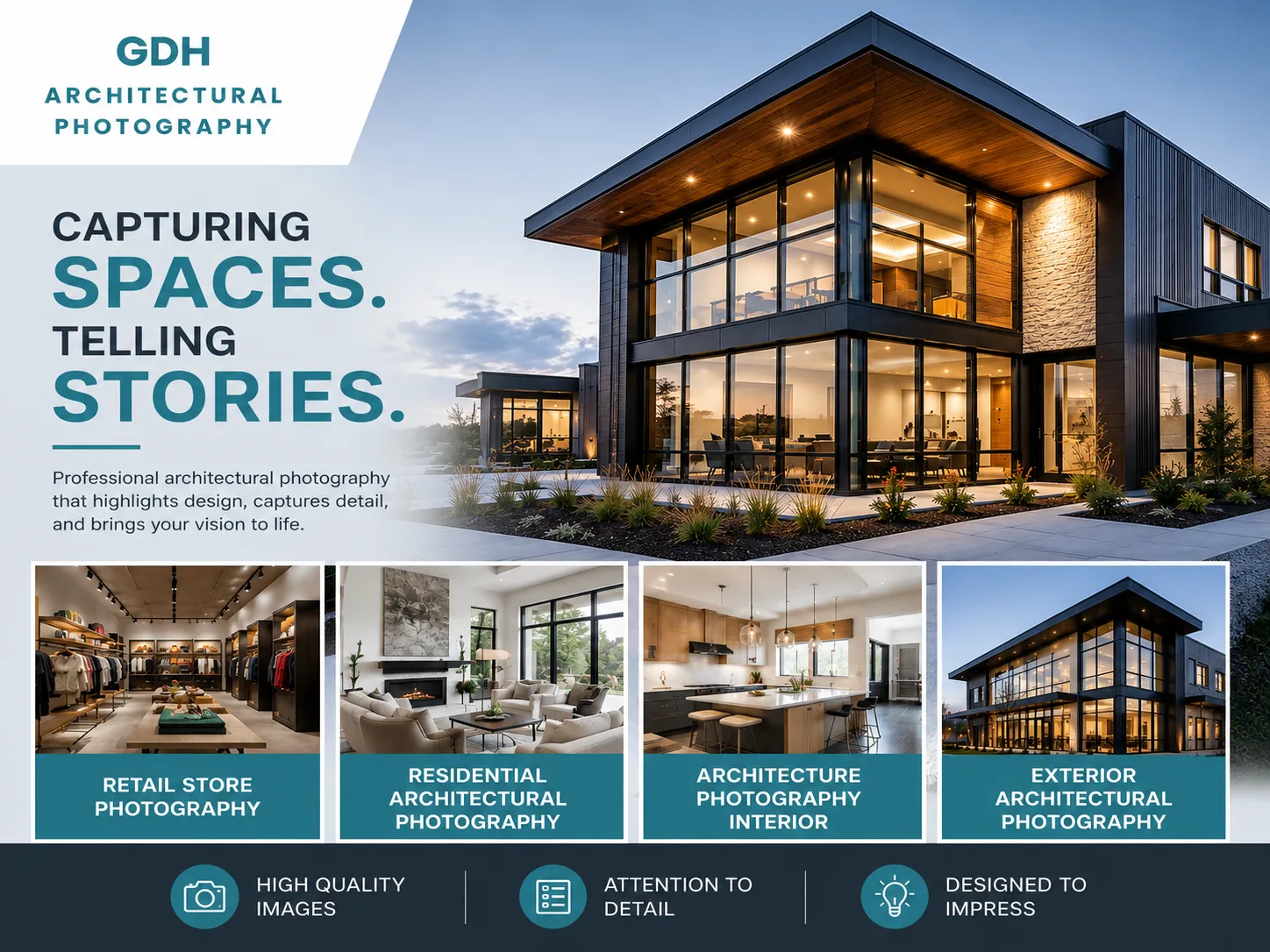

A while back, I was looking at a newly completed property online. The design was beautiful. Clean architecture, thoughtful details, and plenty of character. The problem wasn't the building. It was the photos.
Everything looked flat.
The space that probably felt impressive in person somehow looked forgettable on a screen. And that's a shame because most people will see the photographs long before they ever see the actual building.
That's one of the reasons I think hiring the right University Place photographer matters more than many property owners realize.
People don't experience architecture the way architects do. They don't study floor plans or construction drawings. They see photographs. That's the first impression, whether we're talking about a custom home, a retail location, or a commercial project.
And first impressions tend to stick.
The Camera Isn't the Most Important Part
Whenever someone asks what equipment I use, I usually smile because they're asking the wrong question.
Of course, professional gear helps. No argument there.
But I've seen photographers with expensive cameras produce average work, and I've seen experienced professionals create incredible images with equipment that wasn't the newest or most expensive.
The real skill comes from understanding light.
Light changes everything.
A building photographed at noon can look completely different from that same building photographed an hour before sunset. Materials show more texture. Shadows become softer. The entire structure starts to feel more dimensional.
Most people notice the difference immediately, even if they can't explain why.
Why Architecture Photography Is Different
Photographing architecture isn't the same as photographing people, events, or products.
Buildings don't move, which sounds easier until you realize every detail becomes visible.
A slightly crooked vertical line suddenly looks obvious.
A distracting object in the background pulls attention away from the design.
Even reflections can create unexpected problems.
I've spent twenty minutes waiting for the right cloud cover just to reduce glare on a glass façade. It sounds excessive until you compare the results.
That's the funny thing about architectural photography. The small details are often doing most of the work.
Residential Architectural Photography Requires Patience
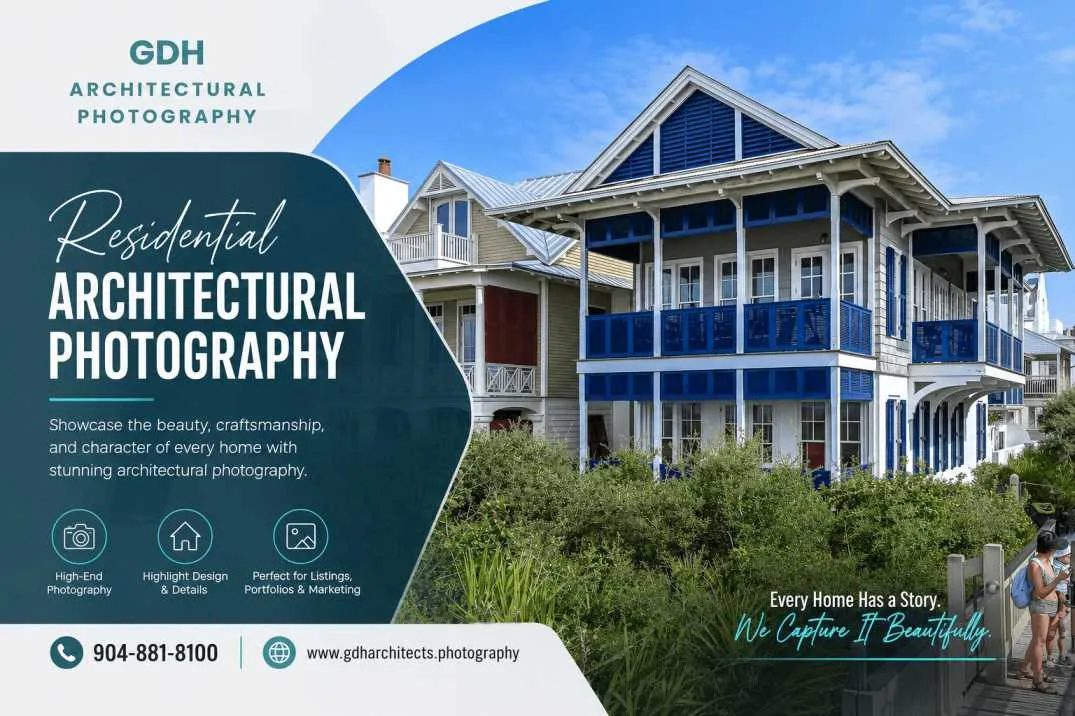
One area I particularly enjoy is residential architectural photography.
Homes tell stories differently than commercial spaces.
A custom residence isn't just a structure. It's where people gather for holidays, drink coffee on quiet mornings, and create memories over time.
The best photographs help viewers imagine those moments.
Oddly enough, some of the strongest images from a home aren't always the largest rooms.
Sometimes it's a reading nook near a window.
Sometimes it's the way sunlight lands on hardwood flooring.
Sometimes it's a staircase an architect spent months perfecting.
Those details create personality.
Without them, a home can start feeling like every other property listing online.
Architecture Photography Interior: Capturing How a Space Feels
Here's something I've noticed over the years.
People rarely remember square footage.
They remember atmosphere.
That's why architecture photography interior work is about more than documenting rooms.
You're trying to capture an experience.
A bright kitchen should feel bright in the photograph.
A luxury office should feel polished and professional.
A hotel lobby should feel welcoming.
That sounds straightforward, but interior photography can be surprisingly challenging.
Cameras see light differently than human eyes do. A room that feels warm and balanced in person can look dark or overly bright if photographed incorrectly.
That's why professional photographers spend so much time adjusting compositions, balancing exposure, and paying attention to seemingly tiny details.
Most viewers never notice those adjustments directly.
They just know the space feels right.
Exterior Architectural Photography Often Makes the First Impression
Most people judge a building before they ever step inside.
That's reality.
Whether it's a commercial property, educational facility, office building, or custom residence, the exterior creates expectations.
Good exterior architectural photography helps communicate the design intent behind a project.
I've photographed buildings that looked fairly ordinary during a site visit but became striking once the lighting conditions were right.
I've also photographed impressive structures under harsh midday sunlight and watched them lose much of their visual impact.
Timing matters.
A lot.
Professional photography often involves returning to a location more than once simply because the light isn't cooperating.
Nature doesn't always follow the schedule.
Retail Store Photography Is More Important Than Ever
The same idea applies to retail store photography.
Before customers visit a store, they're usually checking it out online.
Maybe they found it through a Google search.
Maybe they're looking at social media.
Maybe they're comparing several businesses before deciding where to shop.
Whatever the reason, photographs influence that decision.
I've walked into retail spaces that felt energetic, modern, and inviting, yet their online images made them appear dull.
That's a missed opportunity.
Strong retail photography helps customers understand what makes a business different.
The goal isn't to trick anyone.
The goal is simply to present the space accurately while highlighting its best features.
When that's done well, customers arrive with the right expectations.
Experience Matters More Than People Think
One thing I've learned is that every project presents different challenges.
A residential property might require careful attention to natural light.
A retail store might need photography outside operating hours.
A commercial building may involve weather concerns, reflections, or access restrictions.
Experience helps photographers adapt when those challenges appear.
And trust me, they always appear.
Rarely does a photography session unfold exactly as planned.
That's part of the job.
Why Professional Photography Is an Investment
Some business expenses disappear the moment they're paid.
Photography isn't usually one of them.
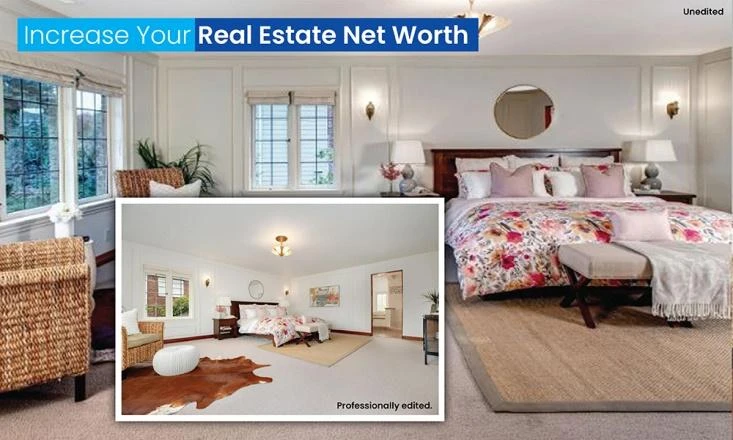
A strong collection of professional images can be used for years across websites, portfolios, advertisements, social media campaigns, presentations, and marketing materials.
Architects use them to win new projects.
Builders use them to showcase craftsmanship.
Property owners use them to attract interest.
Retail businesses use them to bring in customers.
The photographs keep working long after the shoot is finished.
That's why many professionals don't view photography as a cost.
They view it as part of their marketing foundation.
Final Thoughts
Finding the right University Place photographer isn't really about finding someone with a camera. It's about finding someone who understands how to translate a physical space into an image that feels engaging, authentic, and memorable.
Whether the project involves residential architectural photography, architecture photography interior work, retail store photography, or exterior architectural photography, the goal remains the same.
Create photographs that do justice to the work behind the project.
Because at the end of the day, people may forget specifications, measurements, or construction timelines.
They usually remember the images.





















Sign in to leave a comment.