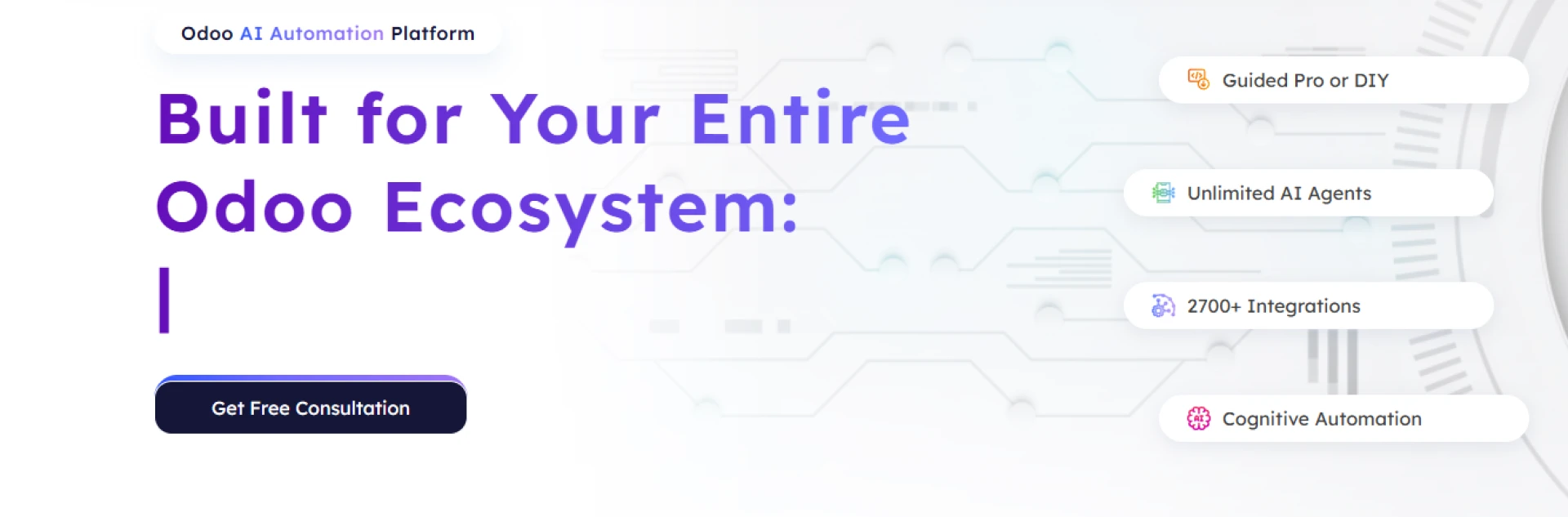

In today's fast-paced digital economy, businesses are continuously seeking ways to streamline processes, improve decision-making, and enhance productivity. The integration of artificial intelligence (AI) into enterprise resource planning (ERP) systems has emerged as a game-changer in this endeavor. One such innovation, odoo ai automation, is revolutionizing the way companies manage workflows, handle data, and optimize operations. This article delves into the transformative potential of Odoo AI Automation, its key features, and the tangible benefits it offers to organizations of all sizes.
The Evolution of Business Automation
Automation is not a new concept. Over the past few decades, businesses have leveraged technology to eliminate repetitive tasks and increase efficiency. Traditional ERP systems helped centralize operations, but they often lacked intelligence. As AI technologies matured, integrating AI into ERP systems became a natural progression, enabling predictive analytics, smart decision-making, and personalized process automation.
Odoo, a leading open-source ERP platform, recognized this need and introduced AI-driven capabilities through odoo ai automation, bridging the gap between conventional automation and intelligent enterprise operations.
Understanding Odoo AI Automation
Odoo AI Automation is a suite of AI-powered tools embedded within the Odoo ERP platform. It leverages machine learning, natural language processing, and advanced analytics to automate complex business processes. Unlike rule-based automation, AI automation can learn from historical data, adapt to changing patterns, and make recommendations, thereby reducing manual intervention and errors.
Key areas where Odoo AI Automation excels include:
- Sales and Customer Relationship Management (CRM)
AI can analyze past interactions, predict customer behavior, and suggest the next best actions. For example, the system can identify leads with the highest probability of conversion and recommend personalized communication strategies. - Inventory and Supply Chain Management
With AI, businesses can forecast demand, optimize stock levels, and reduce wastage. The predictive algorithms evaluate historical sales, seasonal trends, and market conditions to provide actionable insights. - Finance and Accounting
Automating routine accounting tasks, such as invoice processing, expense categorization, and financial forecasting, minimizes human error and improves accuracy. AI can also detect anomalies in financial data, reducing the risk of fraud. - Human Resources and Recruitment
AI-driven automation can screen resumes, schedule interviews, and even predict candidate suitability based on historical hiring data. It enhances HR efficiency while maintaining a fair and consistent evaluation process.
Core Features of Odoo AI Automation
The true power of odoo ai automation lies in its intelligent features, which seamlessly integrate with Odoo’s modular ecosystem:
1. Predictive Analytics
By analyzing historical data, AI can forecast future outcomes, helping businesses make proactive decisions. For instance, predicting sales trends enables companies to prepare inventory and marketing campaigns in advance.
2. Automated Workflows
Tasks that previously required manual input can now be executed automatically. From sending follow-up emails to generating reports, Odoo AI ensures consistency and speed in daily operations.
3. Smart Recommendations
AI can provide context-aware suggestions across various departments. In marketing, it may recommend content personalization strategies. In procurement, it might suggest alternative suppliers based on past performance.
4. Natural Language Processing (NLP)
NLP allows users to interact with the system using plain language commands. Employees can request reports, initiate workflows, or retrieve insights without navigating complex menus.
5. Anomaly Detection
Identifying irregular patterns in financial transactions, inventory movements, or operational metrics can prevent costly mistakes. AI continuously monitors data to flag potential issues before they escalate.
Benefits of Implementing Odoo AI Automation
Implementing odoo ai automation brings substantial advantages that can drive business growth and efficiency:
1. Increased Productivity
By automating repetitive tasks, employees can focus on higher-value activities, such as strategy development, creative problem-solving, and customer engagement.
2. Cost Reduction
Automation reduces operational costs by minimizing manual errors, optimizing resource allocation, and improving overall workflow efficiency.
3. Enhanced Decision-Making
AI provides actionable insights based on data-driven analysis. Business leaders can make informed decisions quickly, reducing the reliance on gut instinct or delayed reports.
4. Improved Customer Experience
Personalized recommendations, timely follow-ups, and faster response times enhance customer satisfaction and loyalty. AI ensures that customer interactions are meaningful and data-driven.
5. Scalability
Odoo AI Automation scales with your business. Whether a startup or a multinational enterprise, AI-driven processes adapt to changing volumes and complexities without requiring significant additional resources.
Use Cases Across Industries
The versatility of odoo ai automation makes it suitable for various industries:
1. Retail and E-commerce
AI-driven inventory management ensures that products are always available when needed, while predictive analytics optimize pricing and promotions. Chatbots powered by AI enhance customer support, providing instant responses and personalized recommendations.
2. Manufacturing
Predictive maintenance powered by AI reduces machine downtime and extends equipment life. Supply chain optimization ensures timely procurement of raw materials, reducing production delays.
3. Healthcare
AI automates patient record management, appointment scheduling, and billing processes. Predictive analytics can also help forecast patient inflows and optimize resource allocation.
4. Finance
Automated reconciliation, fraud detection, and predictive financial planning improve accuracy and efficiency, while AI-driven insights help identify profitable investment opportunities.
5. Human Resources
From resume screening to employee engagement analysis, AI streamlines HR processes and ensures better talent acquisition and retention.
How to Integrate Odoo AI Automation in Your Business
Implementing odoo ai automation requires careful planning:
- Assess Business Needs
Identify areas where AI can deliver the most value, whether in sales, operations, finance, or customer service. - Data Preparation
AI effectiveness depends on quality data. Clean, structured, and relevant data ensures accurate predictions and recommendations. - Customize AI Workflows
Configure AI automation according to your business processes. Odoo’s modular design allows tailored solutions for each department. - Training and Adoption
Educate employees about AI tools to ensure smooth adoption. Training sessions, workshops, and user-friendly documentation enhance acceptance. - Continuous Monitoring
AI models improve over time. Regularly review their performance, adjust parameters, and incorporate new data to maintain effectiveness.
Challenges and Considerations
While odoo ai automation offers immense benefits, businesses should consider potential challenges:
- Data Privacy: Handling sensitive data requires strict compliance with privacy regulations such as GDPR or HIPAA.
- Change Management: Employees may resist AI adoption; addressing concerns and demonstrating benefits is essential.
- Integration Complexity: AI systems must integrate smoothly with existing ERP modules to avoid workflow disruptions.
- Continuous Learning: AI models require ongoing training and updates to adapt to changing business conditions.
Proper planning and vendor support can mitigate these challenges, ensuring a successful AI-driven transformation.
The Future of AI in ERP Systems
The future of enterprise operations is increasingly intelligent. As AI continues to evolve, ERP systems like Odoo will become even more adaptive, predictive, and autonomous. Emerging trends include:
- Hyper-personalization: AI will tailor every business interaction, from customer communication to internal workflow management.
- Autonomous Decision-Making: AI will move from recommendations to autonomous execution, making real-time decisions with minimal human intervention.
- Enhanced Collaboration: AI tools will facilitate seamless collaboration between departments, integrating insights across the organization.
- Sustainability Analytics: AI will optimize resource usage, reduce waste, and contribute to environmentally sustainable business practices.
Businesses adopting odoo ai automation today are positioning themselves at the forefront of this digital revolution.
Conclusion
In an era where speed, accuracy, and efficiency define competitiveness, odoo ai automation offers a strategic advantage for businesses seeking digital transformation. By leveraging AI to automate complex processes, enhance decision-making, and optimize operations, organizations can not only reduce costs but also drive growth and innovation.
From small startups to multinational corporations, integrating AI into ERP systems is no longer optional—it is a necessity. With Odoo AI Automation, businesses have the tools to unlock their full potential, transform workflows, and deliver exceptional value to customers and stakeholders alike.



Sign in to leave a comment.