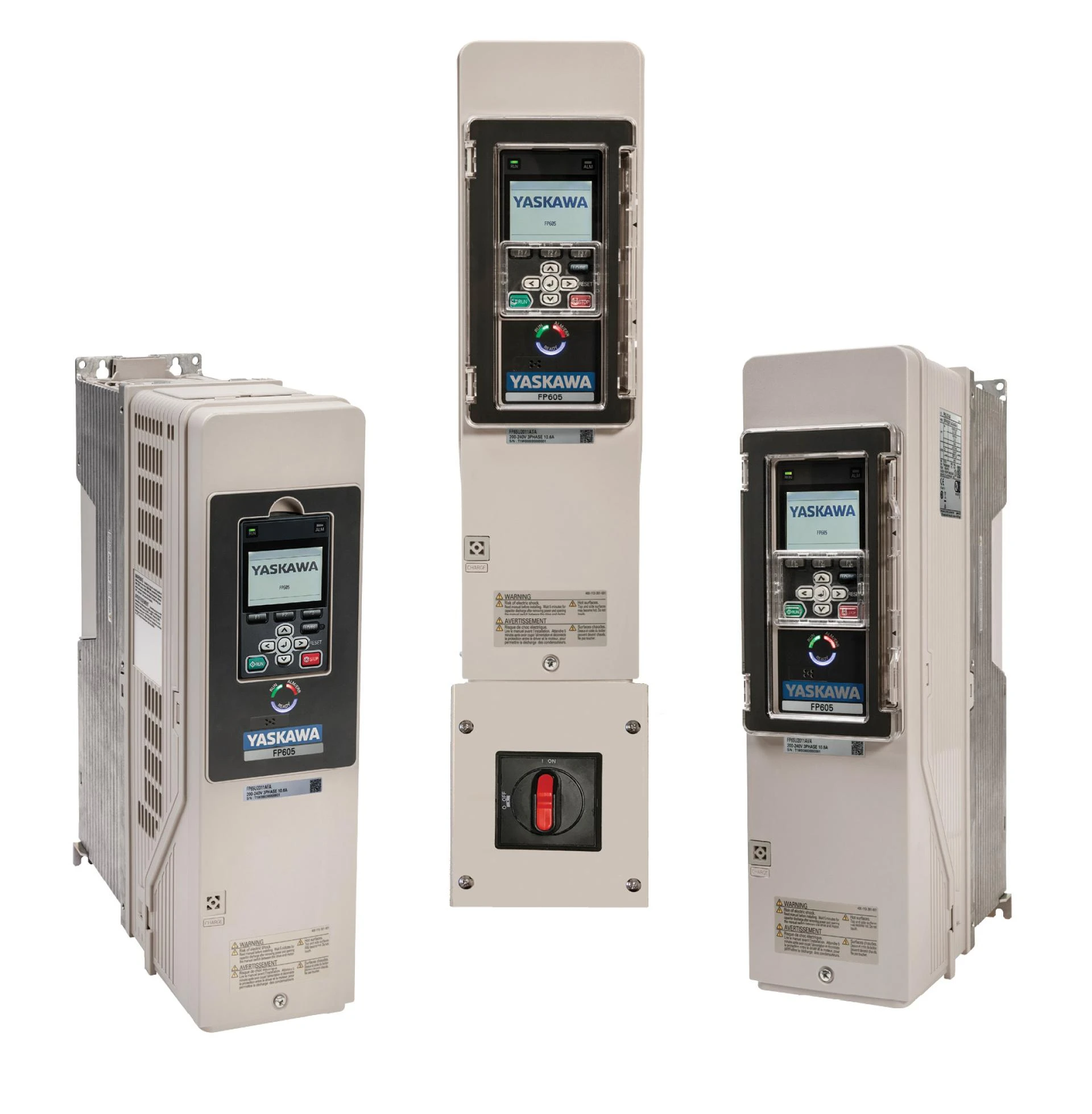

Across manufacturing, warehousing, and building systems, efficiency has become a key driver of success. Businesses are increasingly adopting VFD drives to regulate motor performance, cut energy costs, and extend equipment life. These systems are no longer optional upgrades—they’re essential tools for operations that demand reliability and control.
As authorized Yaskawa distributors, we’ve been delivering these solutions since 1999, helping industries achieve better performance through advanced motor control technology.
VFD Motor Control Explained
At the core of every VFD is the ability to regulate the speed and torque of electric motors. VFD motor control works by adjusting the frequency and voltage supplied to the motor. Instead of running at full capacity all the time, motors operate at the exact speed required for each task.
This precision improves efficiency, reduces mechanical stress, and ensures smooth operation across applications such as conveyors, extrusion systems, and elevators. By fine-tuning performance, VFDs prevent wasted energy and prolong the lifespan of both motors and connected equipment.
Benefits of VFD Fan Applications
A primary application for VFD drives is in fans and blowers. A traditional fan motor runs at a constant speed, consuming energy even when demand is low. By contrast, a VFD fan adjusts airflow based on real-time needs.
Key benefits include:
Lower energy consumption in HVAC and ventilation systems
- Traditional fans run at a constant speed, often wasting power when demand is low.
- With VFD integration, motors adjust speed to match real-time requirements.
- This reduces electricity bills and lowers overall operating costs.
Reduced wear on belts, bearings, and mechanical parts
- Constant high-speed operation creates unnecessary strain on moving components.
- By slowing down during lighter loads, a VFD decreases friction and vibration.
- The result is longer equipment life and fewer unplanned breakdowns.
Quieter operation and improved working environments
- Fans running at maximum capacity generate excess noise.
- A VFD fan reduces speed when full output is not needed, lowering sound levels.
- This makes workplaces safer, more comfortable, and compliant with noise regulations.
Greater control over airflow for precise temperature and humidity management
- Industries like manufacturing, food processing, and warehousing rely on stable environments.
- VFDs allow precise adjustment of fan speed to maintain consistent airflow.
- This leads to better temperature balance, improved product quality, and optimized energy use.
From warehouses to manufacturing plants, VFD fans provide operators with consistent airflow while cutting unnecessary costs.
Long-Term Operational and Cost Advantages
Beyond immediate savings, the long-term advantages of VFD drives are significant. Businesses that invest in VFD technology benefit from:
- Extended motor lifespan due to reduced stress and vibration
- Lower maintenance costs through fewer mechanical failures
- Improved process control that leads to higher product quality
- Greater flexibility as drives adapt to different load demands
For facilities managing multiple systems, the cumulative savings are substantial. We’ve seen clients achieve measurable reductions in operating costs while gaining the confidence of stable, reliable performance over years of use.
Conclusion
VFD drives are transforming industrial operations by delivering precise VFD motor control and energy-efficient solutions. Whether in fan applications, conveyors, or heavy-duty equipment, they provide both immediate performance improvements and long-term cost savings.
For organizations looking to optimize their operations, we deliver proven Yaskawa products backed by decades of expertise. At OnDrive Inc., our focus on long-term customer relationships and trusted service makes us the partner of choice for every VFD fan and industrial application.




























Sign in to leave a comment.