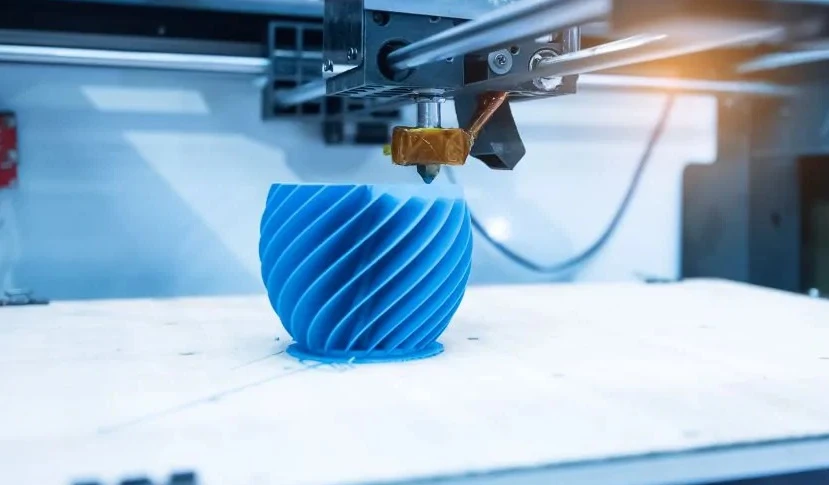

In recent years, the 3D printing market has witnessed a revolutionary transformation, evolving from a niche technology into a mainstream manufacturing process with a profound impact across various industries. Also known as additive manufacturing, 3D printing has captured the imagination of innovators, manufacturers, and consumers alike. This blog delves into the expansive growth and potential of the 3D printing market, exploring its current state, key applications, and future prospects.
The Current State of the 3D Printing Market
The 3D printing market has experienced remarkable growth, with a compound annual growth rate (CAGR) exceeding 20% over the past decade. This exponential rise can be attributed to the technology's versatility, cost-effectiveness, and ability to create complex and customized objects. As the cost of 3D printers decreases and the range of printable materials expands, industries such as aerospace, healthcare, automotive, and consumer goods are integrating 3D printing into their operations.
Key Applications Driving the Market
Aerospace and Defense: The aerospace sector has been an early adopter of 3D printing, utilizing it to manufacture lightweight and intricate components, thereby reducing fuel consumption and increasing efficiency. Complex geometries that were once unattainable are now achievable through additive manufacturing, enhancing the overall performance of aircraft.
Healthcare: 3D printing has revolutionized the medical field by enabling the creation of patient-specific implants, prosthetics, and even human tissue. Surgeons can now practice complex procedures on lifelike 3D-printed models, leading to improved patient outcomes and reduced surgical risks.
Automotive: The automotive industry benefits from 3D printing for rapid prototyping, tooling, and even producing end-use parts. This technology accelerates the design iteration process, shortening development timelines and reducing costs.
Consumer Goods: Customization has become a cornerstone of consumer preferences. With 3D printing, consumers can design and print personalized accessories, jewelry, and household items, fostering a sense of ownership and individuality.
Architecture and Construction: 3D printing is poised to revolutionize the construction industry by allowing for the creation of intricate architectural elements, rapid prototyping of building components, and even construction of entire houses using specialized 3D printers.
Future Prospects and Challenges
The future of the 3D printing market holds immense promise. As technological advancements continue to refine the printing process and expand the range of printable materials, industries will increasingly integrate 3D printing into their operations. Mass customization, reduced waste, and decentralized manufacturing are some of the key benefits that 3D printing promises to deliver.
However, challenges remain. Quality control, scalability, and the need for standardized regulations are areas that the industry must address to fully capitalize on the potential of 3D printing. Additionally, as the technology becomes more accessible, the issue of intellectual property protection becomes pertinent, demanding innovative solutions.
The 3D printing market has transcended its initial status as a technological curiosity to emerge as a game-changing force across industries. With its potential to revolutionize manufacturing processes, reduce costs, and foster innovation, 3D printing is poised for exponential growth in the coming years. As industries continue to unlock the possibilities of this transformative technology, collaboration between innovators, researchers, and regulators will be key to realizing its full potential while addressing the challenges ahead. Stay tuned as the 3D printing journey continues to reshape the way we create, build, and imagine.


























Sign in to leave a comment.