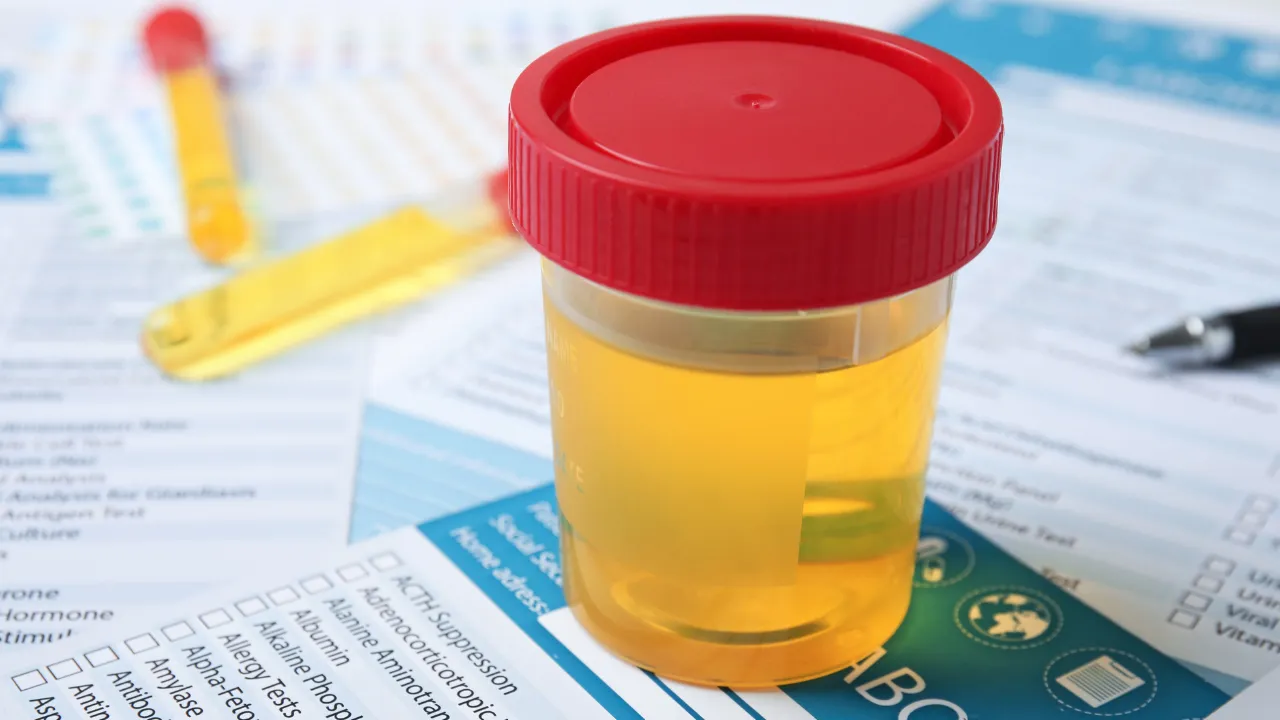

Urine drug testing in Florida detects the presence of controlled substances in a urine sample, using immunoassay screening followed by gas chromatography-mass spectrometry (GC-MS) confirmation for positive results. Florida employers, healthcare providers, legal professionals, and individuals use this testing method across 4 primary settings: pre-employment screening, random workplace testing, post-accident investigation, and court-ordered compliance monitoring.
Florida ranks among the top 10 states in the USA for workplace drug testing volume, driven by industries with federally mandated testing requirements — transportation, healthcare, construction, and federal contracting.
What Urine Drug Testing Detects in Florida
A standard urine drug test panel detects 5 to 12 substance categories, depending on the panel type ordered by the employer, legal authority, or individual.
The most common panel types used in Florida include:
- 5-panel test — screens for marijuana (THC), cocaine, amphetamines, opiates, and phencyclidine (PCP); required for most federally regulated DOT testing programs
- 10-panel test — adds benzodiazepines (diazepam, alprazolam), barbiturates, methadone, propoxyphene, and methaqualone to the 5-panel base
- 12-panel test — includes oxycodone and buprenorphine in addition to the 10-panel substances; used by Florida employers in healthcare and pain management sectors
- ETG (ethyl glucuronide) test — detects alcohol metabolites in urine up to 80 hours after consumption; used in DUI monitoring and court-ordered sobriety programs
Detection windows for common substances in urine samples:
| Substance | Detection Window |
|---|---|
| Marijuana (THC) — casual user | 3 to 4 days |
| Marijuana (THC) — daily user | 30 days |
| Cocaine | 2 to 4 days |
| Amphetamines | 2 to 3 days |
| Opiates (heroin, morphine) | 2 to 3 days |
| Oxycodone | 3 to 4 days |
| Benzodiazepines | 3 to 7 days |
| Methadone | 3 to 12 days |
Florida DOT Urine Drug Testing Requirements
DOT (Department of Transportation) urine drug testing in Florida follows 49 CFR Part 40, the federal regulation governing specimen collection, laboratory analysis, and Medical Review Officer (MRO) review for all safety-sensitive transportation workers.
Florida employees subject to mandatory DOT testing include workers in 6 transportation sectors:
- FMCSA — commercial truck and bus drivers holding a CDL license
- FAA — aviation personnel including pilots, air traffic controllers, and aircraft mechanics
- FRA — railroad employees in safety-sensitive roles
- FTA — mass transit operators and maintenance workers in Florida's public transit systems
- PHMSA — pipeline and hazardous materials safety personnel
- USCG — maritime workers on commercial vessels operating in Florida waters
DOT-regulated employers in Florida conduct testing across 5 required event types: pre-employment, random, reasonable suspicion, post-accident, and return-to-duty. Random testing rates for 2024 are set at 50% of the average number of driver positions for FMCSA-regulated employers.
Florida Workplace Drug Testing Laws
Florida's Drug-Free Workplace Program, governed by Florida Statute §440.102, allows employers to qualify for a 5% workers' compensation premium discount by implementing a state-certified drug testing policy.
Key provisions of Florida's workplace drug testing statute:
- Employers post written notice of drug testing policy at least 60 days before testing begins
- Testing laboratories used in Florida must hold SAMHSA (Substance Abuse and Mental Health Services Administration) certification
- Confirmed positive results require review by a licensed Medical Review Officer (MRO) before the employer receives the result
- Employees who test positive receive written notification and information about Employee Assistance Program (EAP) resources
- Florida law permits testing for pre-employment, random, reasonable suspicion, post-accident, and routine fitness-for-duty scenarios
Florida is an employer-friendly state for drug testing. Private employers in Florida face no statutory prohibition on marijuana testing, even following the 2024 Amendment 3 that legalized adult-use cannabis — federal and state employment law still permits termination for positive THC results.
How Urine Drug Testing Works: The 3-Stage Process
Urine drug testing follows a 3-stage chain-of-custody process — specimen collection, initial immunoassay screening, and confirmatory GC-MS analysis — to ensure result accuracy and legal defensibility.
Stage 1: Specimen Collection
The donor provides a minimum of 30 milliliters of urine in a private collection facility. The collector checks temperature (acceptable range: 90°F to 100°F within 4 minutes of collection), applies tamper-evident seals, and completes the Federal Drug Testing Custody and Control Form (CCF). Split specimen collection (dividing the sample into Bottle A and Bottle B) applies to all DOT-regulated tests.
Stage 2: Immunoassay Screening
The SAMHSA-certified laboratory runs the specimen through an immunoassay screen — an antibody-based test that identifies substance categories above established cutoff concentrations. A 5-panel immunoassay screen produces results within 24 hours. Negative results are reported directly; positive screens proceed to Stage 3.
Stage 3: GC-MS Confirmation
Gas chromatography-mass spectrometry (GC-MS) confirms positive immunoassay results by identifying the specific compound and measuring its exact concentration. GC-MS eliminates false positives caused by cross-reactive substances — for example, ibuprofen triggering a false positive for marijuana on an immunoassay screen. A confirmed positive result is only reported after both the immunoassay screen and GC-MS confirmation produce positive findings.
Where to Get Urine Drug Testing in Florida
Urine drug testing in Florida is available at urgent care centers, occupational health clinics, and third-party administrator (TPA) collection sites — with no appointment required at most locations.
American Urgent Care provides urine drug testing services at Florida walk-in locations, with results returned within 24 to 48 hours for standard non-DOT panels and 48 to 72 hours for DOT-regulated chain-of-custody testing processed through a SAMHSA-certified laboratory.
Services available at walk-in collection sites include:
- Standard 5-panel and 10-panel urine screening for non-DOT employer programs
- DOT-compliant chain-of-custody collection for FMCSA, FAA, FRA, FTA, PHMSA, and USCG-regulated employers
- Court-ordered and probation compliance testing with documented chain of custody
- Personal or self-requested testing for individuals monitoring their own substance use or verifying results before a scheduled employer test
- Rapid urine screening with on-site preliminary results in 5 to 10 minutes, pending laboratory confirmation for any non-negative finding
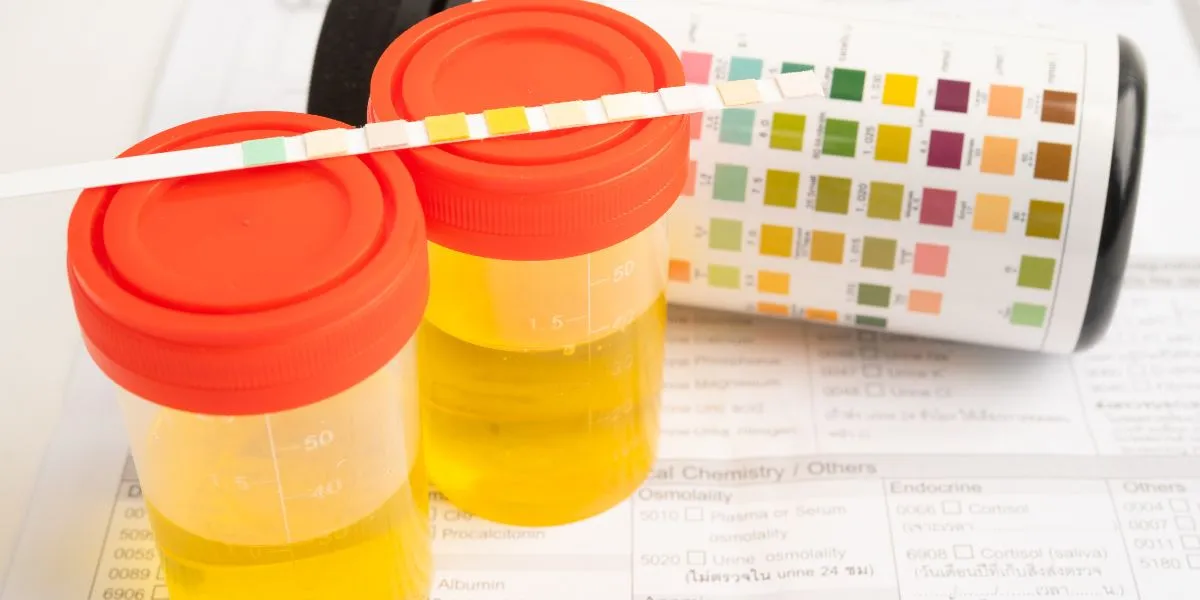
FAQ: Urine Drug Testing in Florida
What does a standard urine drug test detect in Florida?
A standard 5-panel urine test detects 5 substance categories: marijuana (THC), cocaine, amphetamines, opiates, and phencyclidine (PCP). Employers in Florida order 10-panel or 12-panel tests to screen for additional substances, including benzodiazepines, oxycodone, and methadone.
How long does urine drug testing take in Florida?
Standard urine drug test results are returned within 24 to 48 hours for negative results. Specimens requiring GC-MS confirmatory testing — due to a non-negative immunoassay screen — take an additional 24 to 72 hours for laboratory confirmation and MRO review.
What are the Florida legal requirements for workplace urine drug testing?
Florida Statute §440.102 governs workplace drug testing and requires SAMHSA-certified laboratories, a written employer policy posted 60 days in advance, and MRO review of all confirmed positive results. Employers who meet all program requirements qualify for a 5% workers' compensation premium discount.
Why is urine testing the most common method for drug screening in Florida?
Urine testing is the most common drug screening method in Florida because it provides the longest detection window for most substances, costs less than hair or blood testing, and meets federal DOT requirements under 49 CFR Part 40. Hair testing detects substances over 90 days but does not satisfy DOT program requirements for federally regulated employers.
How does Florida handle marijuana drug testing after legalization?
Florida employers retain full legal authority to test for and act on positive marijuana (THC) results, even following Amendment 3's 2024 legalization of adult-use cannabis for individuals 21 and older. Federal employment law and Florida Statute §440.102 both permit termination and adverse employment action for positive THC findings in workplace drug testing programs.


























Sign in to leave a comment.