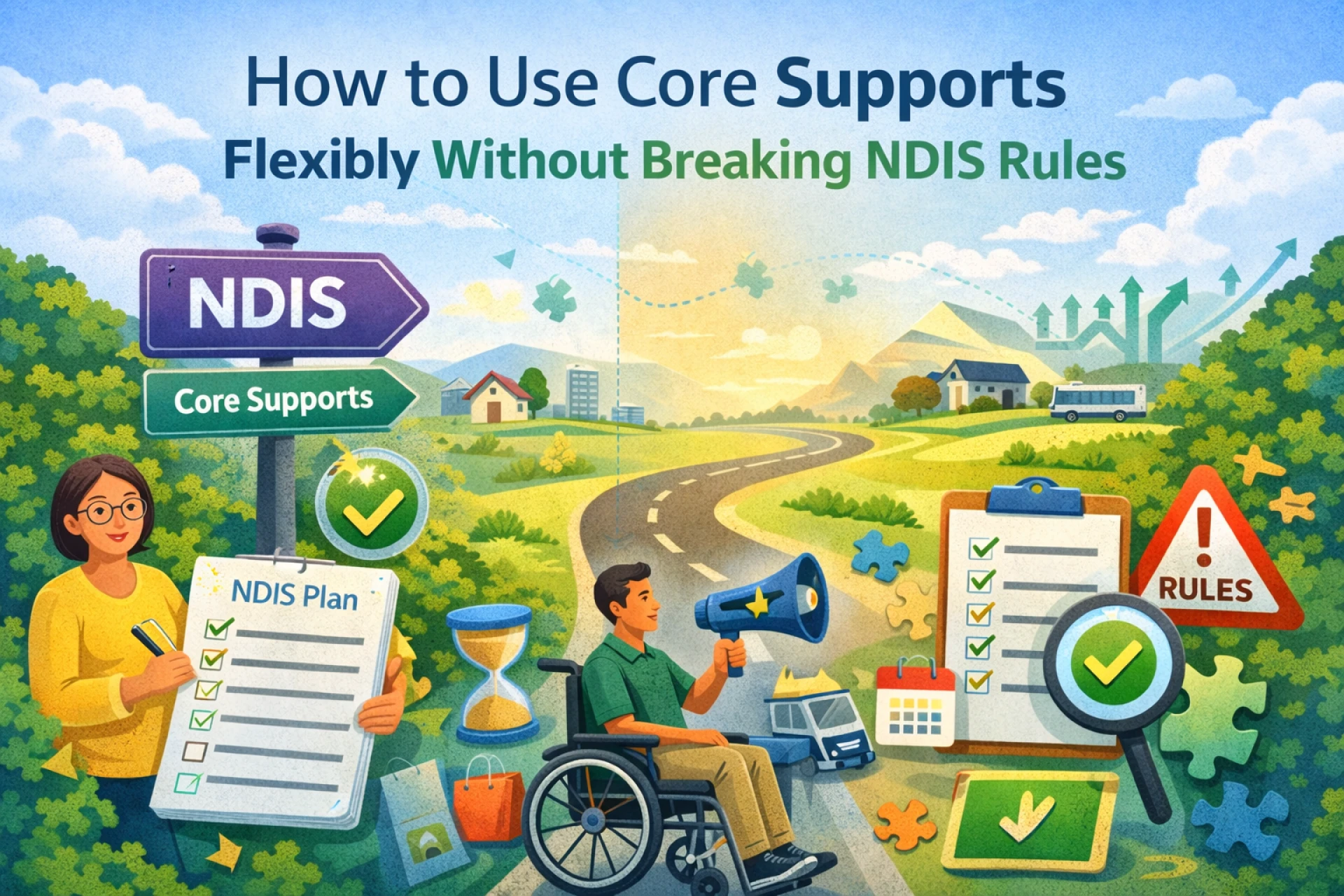

Core Supports are one of the most flexible parts of an NDIS plan, but they’re also one of the most misunderstood. Many participants don’t realise how much choice they actually have, while others worry about using their funding “the wrong way” and risking issues later.
The good news? You can use Core Supports flexibly without breaking NDIS rules, as long as you understand a few key principles. This guide explains how to get the most out of your Core Supports while staying fully compliant.
What Are Core Supports (Quick Refresher)
Core Supports are designed to help you manage everyday life and increase independence. They usually cover four main areas:
- Assistance with Daily Living
- Transport
- Consumables
- Assistance with Social, Economic and Community Participation
Unlike other funding categories, Core Supports are intentionally flexible—meaning funds can often be used across different support types depending on your needs.
What “Flexible” Really Means Under the NDIS
Flexibility doesn’t mean “anything goes.” Instead, the NDIS allows flexibility within clear boundaries.
A Core Support purchase must be:
- Related to your disability
- Reasonable and necessary
- Aligned with your NDIS goals
- Value for money
- Not the responsibility of another system (like health or housing)
If your support meets these criteria, it’s usually considered compliant.
Ways to Use Core Supports More Flexibly (The Right Way)
1. Move Funding Across Core Support Categories
Most NDIS plans allow you to move funding between Core Support categories as your needs change. For example:
- Using unspent transport funding to increase daily living supports
- Shifting funds toward community participation during busier months
⚠️ Always check if your plan has stated supports, as these limit flexibility.
2. Choose Providers That Fit Your Lifestyle
You’re not locked into one provider type. Core Supports can be used with:
- Registered providers
- Unregistered providers (for self- or plan-managed participants)
This means you can choose services that fit your routine, culture, and comfort level—while still meeting NDIS guidelines.
3. Use Core Supports for Community Access (Beyond the Basics)
Many participants assume community access only means outings. In reality, it can include:
- Support to attend social groups
- Help with shopping or appointments
- Assistance to build confidence in public spaces
If it helps you participate more fully in the community, it may be eligible.
4. Adjust Supports During Life Changes
Your needs don’t stay the same all year—and Core Supports are designed for that.
You can increase or decrease supports during:
- Health changes
- Family or housing transitions
- Mental health challenges
- Periods of increased independence
Using Core Supports flexibly during these times is not misuse—it’s exactly what the funding is for.
5. Use Support Coordination to Stay Compliant
If you’re unsure whether a support is allowed, this is where support coordination becomes valuable. A coordinator can:
- Check if a support aligns with NDIS rules
- Help document how it meets your goals
- Prevent funding misuse before it happens
This gives you confidence to use your Core Supports fully—without fear.
Common Core Support Mistakes to Avoid
Even with flexibility, some mistakes can cause problems:
❌ Paying for everyday expenses not related to disability
❌ Using Core Supports for medical or hospital services
❌ Buying items without linking them to NDIS goals
❌ Not keeping records or invoices
Avoiding these ensures your plan stays safe and sustainable.
How to Check If a Support Is Allowed (Quick Test)
Ask yourself:
- Does this support help with my disability-related needs?
- Does it connect to my NDIS goals?
- Would a reasonable person agree it’s necessary?
- Is it not covered by another system?
If the answer is yes to all four, you’re likely on the right track.
Final Thoughts
Core Supports are meant to adapt to your life—not the other way around. When used correctly, they give you freedom, independence, and choice without putting your plan at risk.
Understanding the rules doesn’t limit flexibility; it protects it.





























Sign in to leave a comment.