Venous Leakage: Understanding Causes, Symptoms, Diagnosis, and Treatment

Sexual health is an important part of a man's overall physical and emotional well-being. However, many men experience erectile difficulties that can affect their confidence, relationships, and quality of life. One possible cause of these problems is venous leakage, a condition that makes it difficult to maintain an erection because blood does not remain inside the penis as it should.
Venous leakage, also called venogenic erectile dysfunction, occurs when the natural mechanism responsible for restricting blood outflow from the penis does not function properly. As a result, a man may achieve an erection initially but struggle to maintain sufficient firmness during sexual activity.
The condition can affect men of different age groups and may be associated with diabetes, vascular abnormalities, penile injuries, and changes in erectile tissue. Although venous leakage can be frustrating, several medical treatments are available to help manage its symptoms and improve erectile performance.
Understanding the causes, warning signs, diagnostic procedures, and available treatments can help men take the right steps toward better sexual health.
What Is Venous Leakage?
Venous leakage is a vascular condition associated with erectile dysfunction. It develops when the penis cannot retain enough blood to maintain an erection.
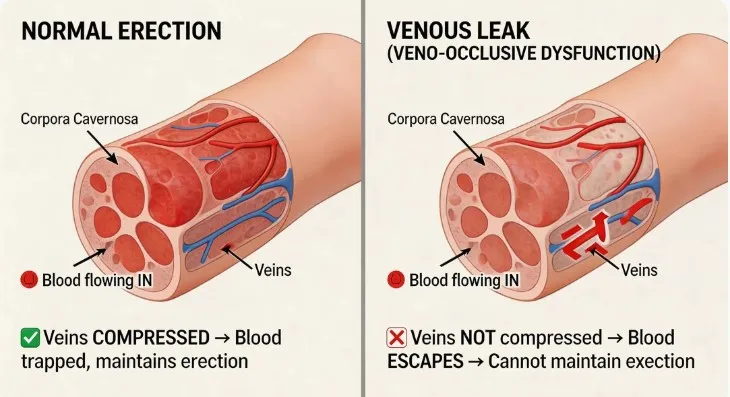
Under normal circumstances, sexual stimulation causes blood vessels inside the penis to relax and allows increased blood flow into the erectile chambers. These chambers expand as they fill with blood, compressing the veins responsible for draining blood away from the penis.
This process temporarily reduces venous blood outflow and helps maintain a firm erection.
In men with venous leakage, this mechanism becomes ineffective. The erectile tissue may not compress the veins adequately, allowing blood to escape too quickly. Consequently, the penis may become soft even when sexual stimulation continues.
It is important to understand that venous leakage does not always mean that a particular vein is physically damaged. Problems involving smooth muscle function, connective tissue, fibrosis, or the overall structure of the erectile chambers may also contribute to impaired blood retention.
Understanding the Normal Erection Process
To understand why venous leakage occurs, it helps to know how a normal erection develops.
The penis contains two cylindrical erectile structures called the corpora cavernosa. These structures consist of specialized tissue containing spaces that can fill with blood.
The erection process generally involves the following stages:
- Sexual stimulation: The nervous system sends signals that initiate the erectile response.
- Smooth muscle relaxation: Muscles within the erectile tissue relax, allowing blood vessels to expand.
- Increased blood circulation: Blood enters the penis through the penile arteries.
- Expansion of erectile chambers: The corpora cavernosa fill with blood and become enlarged.
- Restriction of venous drainage: Expanding erectile tissue compresses the veins and reduces blood outflow.
- Maintenance of erection: Blood remains trapped within the erectile tissue, allowing the penis to stay firm.
This process is known as the penile veno-occlusive mechanism.
When this mechanism is impaired, blood may leave the penis too quickly, resulting in venogenic erectile dysfunction.
What Causes Venous Leakage?
Venous leakage can develop because of different medical conditions and structural abnormalities. In many cases, more than one factor contributes to erectile dysfunction.
The following are some common contributing factors.
1. Diabetes and Poor Blood Sugar Control
Diabetes is strongly associated with erectile dysfunction because prolonged high blood glucose can damage blood vessels and nerves.
These changes may interfere with the normal processes required for an erection, including blood circulation, smooth muscle relaxation, and the ability of erectile tissue to retain blood.
Men with poorly controlled diabetes may experience progressive sexual health problems and should discuss persistent erectile difficulties with their healthcare provider.
2. Cardiovascular and Blood Vessel Problems
Healthy blood vessels are essential for normal erectile function.
Conditions such as hypertension, atherosclerosis, and cardiovascular disease can interfere with vascular health. Although these conditions more commonly contribute to inadequate arterial blood flow, they can also coexist with abnormalities affecting the penile veno-occlusive mechanism.
This is one reason why erectile dysfunction should be evaluated as a potential indicator of broader cardiovascular health problems.
3. Penile or Pelvic Injuries
Physical trauma involving the penis, pelvis, or perineal region may affect the structures responsible for normal erections.
In some cases, an injury can damage blood vessels, connective tissue, or erectile chambers.
Men who notice persistent erection difficulties following an accident, sports injury, or pelvic procedure should seek medical assessment.
4. Fibrosis of Erectile Tissue
Fibrosis refers to the formation of excessive scar-like tissue inside normal body structures.
When fibrosis develops in the corpora cavernosa, the erectile chambers may lose some of their normal elasticity.
This can interfere with their ability to expand and compress the surrounding veins during an erection.
As a result, maintaining sufficient penile firmness may become difficult.
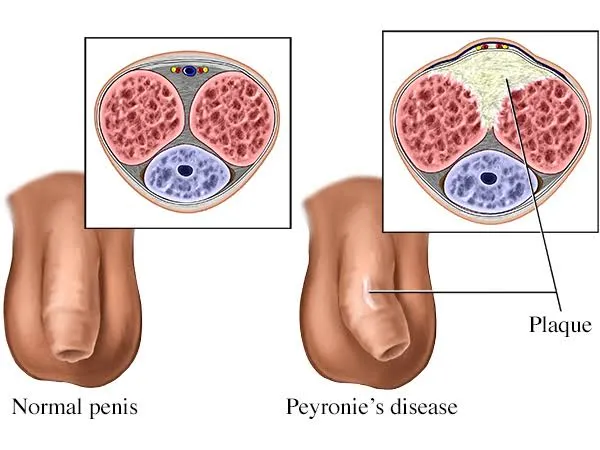
5. Peyronie's Disease
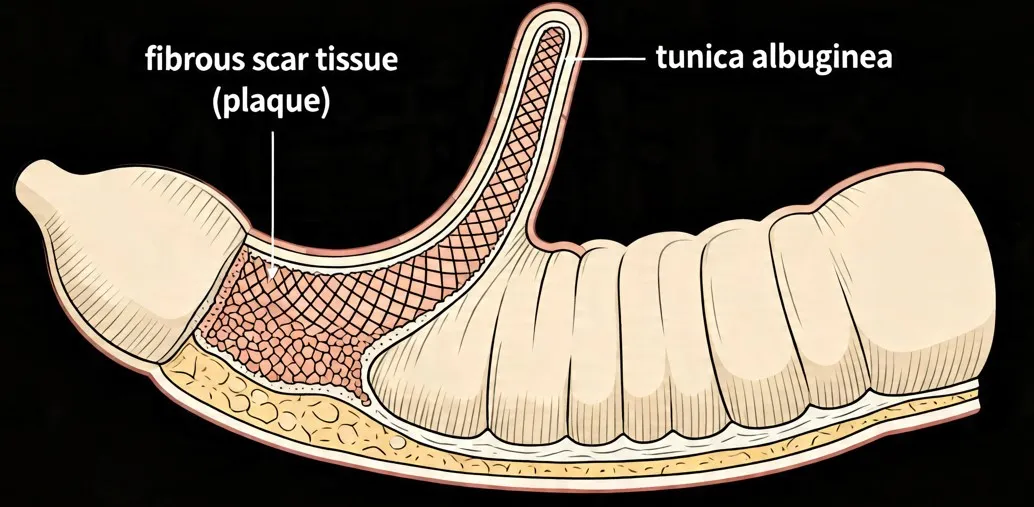
Peyronie's disease is characterized by the formation of fibrous scar tissue inside the penis.
It may cause:
- Penile curvature.
- Pain during erections.
- Changes in penile shape.
- Difficulty achieving or maintaining erections.
- Shortening of the penis.
In some men, structural changes associated with Peyronie's disease may interfere with normal erectile tissue expansion and contribute to veno-occlusive dysfunction.
6. Smoking and Unhealthy Lifestyle Habits
Smoking is harmful to blood vessel health and can increase the risk of erectile dysfunction.
Other lifestyle factors, including physical inactivity, obesity, excessive alcohol consumption, and an unhealthy diet, may also contribute to vascular problems.
Improving these habits can support cardiovascular health and overall erectile function, although lifestyle changes alone may not correct structural venous leakage.
7. Neurological Disorders
The brain, spinal cord, and peripheral nerves play an important role in controlling erections.
Neurological conditions can interrupt the signals required for normal sexual function.
Examples include:
- Spinal cord injuries.
- Multiple sclerosis.
- Diabetic neuropathy.
- Certain neurological disorders.
- Nerve damage following pelvic surgery.
Neurological dysfunction may cause erectile difficulties independently or alongside vascular problems.
8. Age-Related Physical Changes
As men grow older, changes in vascular function, hormone levels, and erectile tissue may influence sexual performance.
However, venous leakage should not be considered an unavoidable consequence of aging.
Persistent erectile difficulties at any age deserve appropriate medical evaluation.
Signs and Symptoms of Venous Leakage
Venous leakage primarily affects the ability to maintain an erection. Some men can achieve initial penile firmness but lose it quickly, while others experience erections that never become completely firm.
Recognizing common symptoms can help men understand when they should seek professional advice.
Difficulty Maintaining an Erection
One of the most commonly reported symptoms is difficulty keeping an erection during sexual activity.
A man may initially achieve satisfactory firmness, but the penis gradually becomes soft because blood does not remain inside the erectile tissue.
Soft or Weak Erections
Some men experience erections that are insufficiently firm for satisfactory sexual intercourse.
This may affect sexual confidence and create frustration during intimate moments.
Losing an Erection During Intercourse
Another common complaint is losing penile firmness during intercourse despite continued sexual stimulation.
Repeated erection difficulties may affect relationships and lead to performance anxiety.
Difficulty Maintaining an Erection Without Continuous Stimulation
Some men notice that their erections become weaker when stimulation stops.
However, this symptom is not specific to venous leakage and may also occur with other forms of erectile dysfunction.
Reduced Sexual Confidence
Repeated sexual difficulties can negatively affect emotional well-being.
Men may become worried about their performance, avoid intimacy, or experience anxiety before sexual activity.
Psychological stress can further worsen erectile function, making it important to address both physical and emotional factors.
Important to remember
Having difficulty maintaining an erection does not automatically mean that you have venous leakage. Diabetes, arterial insufficiency, hormonal abnormalities, medication side effects, stress, and other medical conditions can produce similar symptoms. A proper diagnosis is essential.
How Is Venous Leakage Diagnosed?
Accurate diagnosis is necessary to identify the underlying cause of erectile dysfunction and determine the most appropriate treatment.
A urologist or andrologist generally evaluates the patient's medical history, symptoms, and physical condition before recommending specific investigations.
1. Medical History
The doctor may ask questions about:
- When erectile difficulties first appeared.
- Whether erections can be achieved but not maintained.
- Whether morning erections are present.
- Existing medical conditions.
- Current medications.
- Smoking and alcohol consumption.
- Previous penile or pelvic injuries.
- Stress and relationship concerns.
This information helps the specialist understand whether the problem may have a vascular, hormonal, neurological, or psychological cause.
2. Physical Examination
A physical examination may help identify abnormalities involving the penis, testicles, and surrounding structures.
The doctor may also assess blood pressure, body weight, and other signs of cardiovascular or metabolic disease.
3. Penile Doppler Ultrasound
Penile Doppler ultrasound is one of the most useful specialized investigations for evaluating penile blood circulation.
It uses ultrasound technology to assess blood entering and leaving the penis.
In many cases, a medication is injected into the erectile tissue to produce an erection before measurements are taken.
The examination evaluates several parameters:
- Peak systolic velocity (PSV): Measures arterial blood entering the penis.
- End-diastolic velocity (EDV): Helps assess blood outflow during the erection phase.
- Resistive index (RI): Provides additional information about vascular resistance.
Persistently elevated EDV after an adequate erection may indicate impaired venous occlusion.
However, results must be interpreted carefully because anxiety, inadequate medication response, and testing technique can affect the measurements.
4. Blood Investigations
Blood tests may help identify medical conditions contributing to erectile dysfunction.
Depending on the patient's symptoms, a specialist may recommend:
| Investigation | What it evaluates |
|---|---|
| Fasting blood glucose | Blood sugar levels |
| HbA1c | Long-term glucose control |
| Lipid profile | Cholesterol and cardiovascular risk |
| Testosterone | Male hormone levels |
| Thyroid function | Thyroid-related abnormalities |
| Prolactin | Possible hormonal disturbances |
5. Specialized Vascular Testing
In selected patients, doctors may recommend dynamic infusion cavernosometry or cavernosography.
These investigations help assess pressure within the erectile chambers and visualize venous drainage pathways.
They are not routinely required for most men with erectile dysfunction. Their use depends on the clinical situation and whether the findings could influence treatment decisions.
Effective Treatment Options for Venous Leakage
Venous leakage treatment depends on the underlying cause, the severity of erectile dysfunction, and the patient's overall health.
Some men respond to medication, while others require mechanical devices or more advanced procedures.
There is no single treatment suitable for everyone.
1. Oral Medication for Erectile Dysfunction
Viagra vs. Cialis for Erectile Dysfunction
aarp.org
Oral medications are commonly prescribed to improve erectile function.
These medicines are known as phosphodiesterase type 5 inhibitors, or PDE5 inhibitors.
They enhance the body's natural erectile response by supporting the effects of nitric oxide and increasing blood flow into the penis.
Common options include:
- Sildenafil.
- Tadalafil.
- Vardenafil.
- Avanafil.
These medicines may help men achieve firmer erections and maintain them during sexual activity.
However, they do not directly repair damaged veins or guarantee a permanent cure for venous leakage.
Patients should consult a qualified doctor before using these medications. They are contraindicated with nitrate medicines because the combination can cause a dangerous decrease in blood pressure.
2. Vacuum Erection Device
Vacuum erection devices: a plain-language guide | Arcus Medical
arcusmed.com
A vacuum erection device is a non-surgical treatment option that helps produce an erection mechanically.
It consists of a transparent cylinder and a pump that removes air from the cylinder.
The process works by creating negative pressure around the penis, which draws blood into the erectile chambers.
Once an erection develops, a constriction ring is placed around the base of the penis to help reduce blood outflow.
This method can be useful for men who cannot use oral medications or do not achieve satisfactory results with them.
The constriction ring should generally be removed within 30 minutes.
3. Intracavernosal Injection Therapy
Intracavernosal injection therapy involves injecting a prescribed medication directly into the erectile tissue.
Alprostadil is commonly used because it relaxes smooth muscles and increases blood flow into the penis.
This approach can help men who do not respond adequately to oral medications.
Potential side effects include penile pain, bruising, scar tissue, and prolonged erections.
Patients must receive proper training from a healthcare professional. An erection lasting four hours or longer requires emergency treatment.
4. Penile Constriction Rings
Penile constriction rings may help men who can achieve an erection but struggle to maintain it.
The ring is placed around the base of the penis to reduce blood outflow and help preserve penile firmness.
These devices may be used with vacuum erection pumps.
They should be used carefully and according to medical instructions to avoid tissue injury.
5. Penile Venous Embolization
Эмболизация сосудов: симптомы и заболевания, когда назначают операцию
Penile venous embolization is a minimally invasive procedure that may be considered in selected patients with confirmed venogenic erectile dysfunction.
During the procedure, an interventional specialist uses a catheter to access selected abnormal venous pathways.
Embolic materials are then used to block targeted veins, with the aim of reducing excessive blood outflow from the penis.
Potential benefits include:
- A catheter-based treatment approach.
- No traditional open surgical incision.
- Targeted treatment of selected venous pathways.
- Potential improvement in erectile function.
However, this procedure is not a guaranteed cure. Evidence regarding its effectiveness and long-term outcomes remains limited.
A detailed evaluation is necessary to determine whether a patient is an appropriate candidate.
6. Penile Implant Surgery
Penile Implant — Dorothy Parker's Ashes
Penile implant surgery is an option for men with severe erectile dysfunction who do not achieve satisfactory results with other treatments.
A penile prosthesis is surgically placed inside the penis to allow mechanical erections.
There are two main types:
Inflatable penile implant: Contains inflatable cylinders, a reservoir, and a pump. The patient activates the pump to create an erection.
Malleable penile implant: Contains flexible rods that allow the penis to be manually positioned when needed.
Penile implants can provide reliable erectile function and high satisfaction rates among appropriately selected patients.
However, surgery involves risks such as infection, mechanical failure, and the possibility of additional procedures.
7. Psychological Counseling
Psychological health can influence sexual performance, even when an underlying physical condition is present.
Performance anxiety, depression, stress, and relationship difficulties may worsen erectile dysfunction.
Counseling and sex therapy can help men:
- Manage performance anxiety.
- Improve communication with their partners.
- Reduce stress.
- Develop healthier sexual expectations.
- Rebuild sexual confidence.
These approaches can be combined with medical treatment when appropriate.
Can Venous Leakage Be Cured?
Whether venous leakage can be completely corrected depends on its cause and severity.
Some men achieve satisfactory erections through medication and other non-surgical treatments. Others may require specialized interventions or penile implant surgery.
It is important to understand that successful management does not always mean the underlying venous abnormality has been permanently repaired.
For example, oral medications may improve erectile function without correcting the structural problem responsible for excessive blood outflow.
Similarly, vacuum erection devices and constriction rings help maintain an erection mechanically.
Patients should discuss realistic treatment expectations with their specialists before choosing a procedure.
Lifestyle Changes to Support Better Erectile Function
Lifestyle improvements can support cardiovascular health and may improve erectile function, particularly when diabetes, obesity, smoking, or hypertension contribute to the problem.
Exercise Regularly
Regular physical activity supports healthy circulation and cardiovascular fitness.
Activities such as walking, swimming, cycling, and strength training can help improve overall physical health.
Maintain a Healthy Weight
Excess body weight is associated with metabolic and cardiovascular problems that can negatively affect sexual health.
A balanced diet and regular exercise can help maintain a healthy weight.
Quit Smoking
Smoking damages blood vessels and contributes to vascular dysfunction.
Stopping smoking can reduce cardiovascular risks and support healthier circulation.
Control Diabetes
Men with diabetes should monitor their blood glucose levels and follow their prescribed treatment plans.
Good diabetes management helps reduce the risk of further vascular and neurological complications.
Reduce Excessive Alcohol Consumption
Excessive alcohol consumption may interfere with normal sexual responses and erectile performance.
Reducing alcohol intake can support better overall health.
Manage Stress and Anxiety
Stress can affect sexual function and increase performance anxiety.
Relaxation techniques, counseling, and open communication with a partner can help manage these concerns.
Improve Sleep Quality
Healthy sleep supports hormonal regulation, mood, and general well-being.
Men experiencing persistent sleep difficulties should seek medical advice.
Venous Leakage and Other Types of Erectile Dysfunction
Venous leakage is not the only cause of erectile dysfunction. Different physical and psychological problems can interfere with normal erections.
| Condition | Main underlying problem |
|---|---|
| Venous leakage | Difficulty retaining blood inside the penis |
| Arterial insufficiency | Reduced blood entering the penis |
| Hormonal ED | Abnormal hormone levels |
| Psychogenic ED | Psychological or emotional factors |
| Neurological ED | Problems with nerve signals |
Some men experience multiple contributing conditions simultaneously.
For example, diabetes may affect blood vessels and nerves, leading to a combination of vascular and neurological erectile dysfunction.
This is why identifying the underlying cause is essential before starting treatment.
When Should You Consult a Urologist?
Occasional erection difficulties can happen to many men. However, persistent or recurring problems should not be ignored.
Consider consulting a urologist if:
- You regularly lose erections during intercourse.
- Your erections are consistently weak.
- You struggle to maintain penile firmness.
- You develop erectile problems following an injury.
- You experience penile pain or curvature.
- You have diabetes, hypertension, or cardiovascular disease.
- Prescribed erectile dysfunction medication does not provide satisfactory results.
A qualified specialist can evaluate your symptoms and recommend suitable investigations and treatment.
Frequently Asked Questions About Venous Leakage
1. What is venous leakage in men?
Venous leakage is a condition in which the penis cannot retain blood effectively during an erection. This results in difficulty maintaining penile firmness and may lead to erectile dysfunction.
2. What are the main symptoms of venous leakage?
Common symptoms include weak erections, losing an erection during intercourse, and difficulty maintaining penile firmness despite sexual stimulation.
3. Can venous leakage occur in young men?
Yes. Younger men can develop venogenic erectile dysfunction due to injuries, structural abnormalities, or other medical conditions.
4. How is venous leakage diagnosed?
A doctor may recommend medical examination, blood tests, and penile Doppler ultrasound to evaluate erectile function and penile circulation.
5. Can medication treat venous leakage?
PDE5 inhibitor medications, such as sildenafil and tadalafil, can improve erectile function in some patients. However, they do not directly repair abnormal venous structures.
6. Is venous leakage a permanent condition?
Not necessarily. Treatment outcomes depend on the underlying cause and severity. Some men can manage their symptoms successfully through medication and other treatments.
7. Can diabetes cause venous leakage?
Diabetes can damage blood vessels and nerves involved in erectile function. It may contribute to vascular and veno-occlusive dysfunction.
8. Can exercise cure venous leakage?
Exercise can improve cardiovascular health and support erectile function. However, it cannot be considered a proven cure for structural venous leakage.
9. Which doctor should I consult for venous leakage?
A urologist or andrologist is generally the appropriate specialist for evaluating and treating venogenic erectile dysfunction.
10. Is venous leakage dangerous?
The condition itself is generally not life-threatening. However, erectile dysfunction can sometimes indicate underlying cardiovascular or metabolic disease, making medical assessment important.
11. Does venous leakage affect fertility?
Venous leakage does not directly affect sperm production. However, severe erectile dysfunction may make sexual intercourse and natural conception more difficult.
12. Can venous leakage return after treatment?
Symptoms may persist or recur depending on the underlying cause and treatment. Some approaches manage erectile difficulties without permanently correcting the original abnormality.
Conclusion
Venous leakage is a potential cause of erectile dysfunction that affects the body's ability to maintain sufficient blood inside the penis during an erection. Men experiencing this condition may notice weak erections, reduced penile firmness, and difficulty maintaining erections during sexual activity.
Several factors can contribute to venous leakage, including diabetes, vascular abnormalities, penile injuries, and erectile tissue fibrosis.
Fortunately, treatment options are available, ranging from oral medications and vacuum erection devices to injection therapy, selected interventional procedures, and penile implants.
The right approach depends on an accurate diagnosis and an individual's medical condition. Men experiencing persistent erection problems should consult a qualified urologist rather than relying on self-diagnosis or unproven treatments.
With appropriate medical guidance and evidence-based care, many men can improve their erectile function, sexual confidence, and overall quality of life.





Sign in to leave a comment.