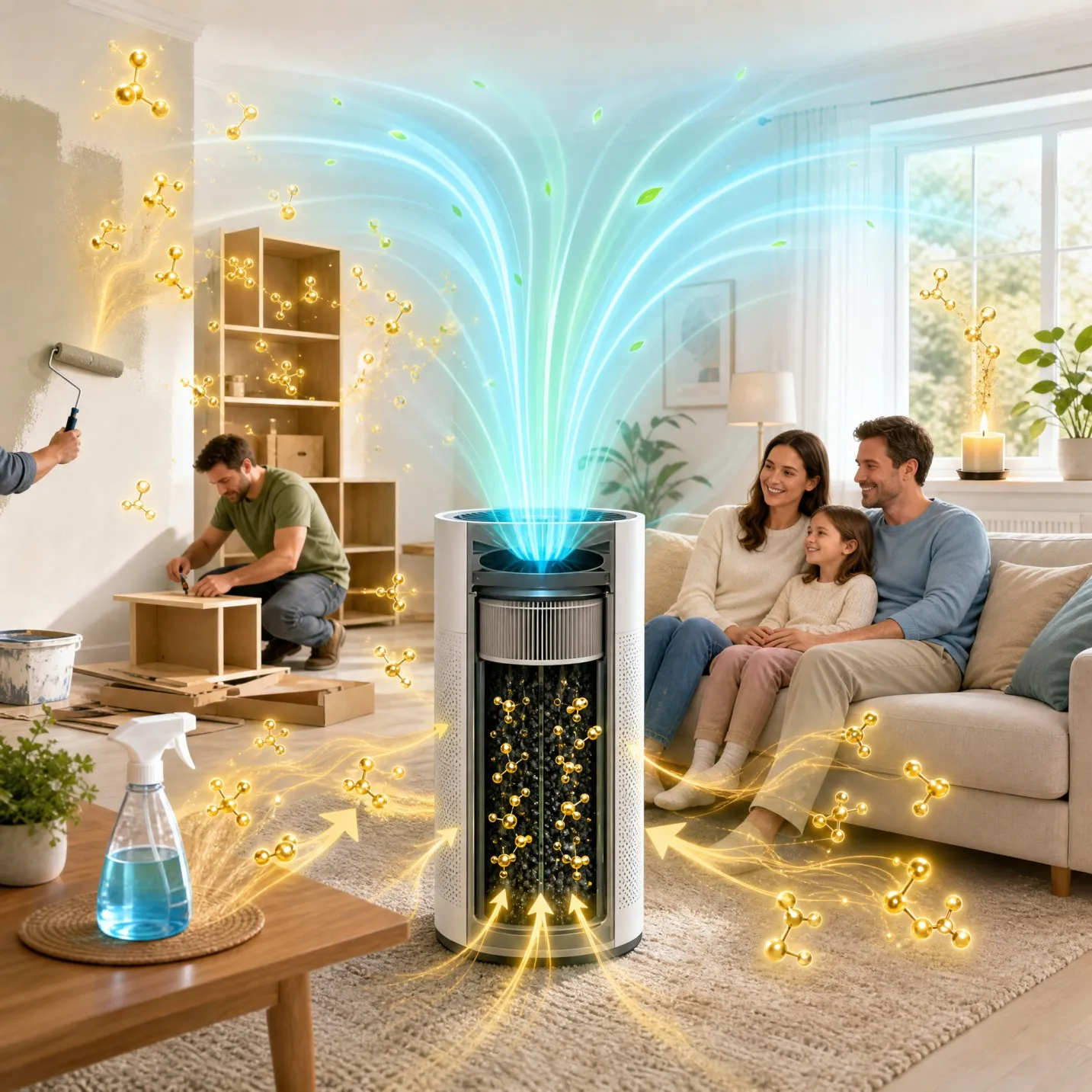

If you have ever noticed a chemical smell in your home that you could not quite identify or trace to a single source, you have experienced VOCs firsthand. Volatile organic compounds are gaseous chemicals released by hundreds of everyday household products, and they are one of the most common yet least understood sources of indoor air pollution in American homes. The problem is that a standard HEPA air purifier does nothing to remove them. You need a dedicated voc air cleaner with a substantial activated carbon filter to actually adsorb these gases from the air and make your indoor environment genuinely safer for everyone who breathes it.
What Are VOCs and Where Do They Come From?
VOC stands for volatile organic compound, which is a category of carbon-based chemicals that evaporate at room temperature and become gaseous in the air around us. They are released by an enormous range of everyday products and materials, including paint, varnish, and wood stain, synthetic flooring and carpets, adhesives and sealants used in construction, pressed wood furniture and cabinetry, cleaning sprays and disinfectants, air fresheners and scented candles, personal care products like hairspray and perfume, and the toner and ink used in home printers. Some VOCs, like formaldehyde and benzene, are classified as known or probable human carcinogens. Others cause immediate symptoms including headaches, dizziness, throat irritation, and nausea at concentrations commonly found in poorly ventilated homes. According to Wikipedia's article on volatile organic compounds, indoor VOC concentrations are typically two to five times higher than outdoor levels, and can spike dramatically during activities like painting, cleaning, or assembling new furniture. This persistent and often invisible chemical background is what makes a proper VOC air cleaner such an important investment for any home.
Why Activated Carbon Is the Only Real Solution for VOCs
The most important thing to understand when buying a voc removing air purifier is that HEPA filtration alone is completely ineffective against gases and chemical vapors. HEPA filters are mechanical filters made of tightly woven fibers that physically trap particles, including dust, pollen, mold spores, and bacteria. But VOC molecules are gases, not particles, and they pass straight through HEPA fibers without being captured at all. The technology that removes VOCs from indoor air is activated carbon filtration. Activated carbon is a highly porous material with an enormous internal surface area, where gas molecules bond chemically through a process called adsorption and are permanently trapped inside the carbon structure. The amount of activated carbon in a purifier's filter is directly related to how well it performs and how long it lasts. A thin carbon coating weighing just a few grams will saturate within days in a VOC-heavy environment. A deep-bed filter containing one to two pounds or more of granular activated carbon provides lasting, meaningful chemical protection over months of continuous use.
When a Chemical Air Purifier Becomes Essential
A chemical air purifier is particularly essential in a number of common situations that millions of American households encounter every year. If you have just moved into a newly built home or completed a renovation, the fresh paint, new flooring, and new furniture are all actively off-gassing VOCs that will continue for weeks or months. If you use strong cleaning products regularly or live in a tightly sealed, energy-efficient home where ventilation is limited, chemical concentrations in your air will be significantly higher than in a more naturally ventilated space. If you or a family member has chemical sensitivities, asthma, or respiratory conditions that make you more reactive to low-level chemical exposure, a chemical air purifier is not a luxury but a medical necessity. And if you work from home using a laser printer regularly, the toner emissions from printing equipment add a consistent daily chemical load to your indoor air that accumulates over time without active filtration to remove it.
Choosing the Right VOC Purifier for Your Home or Office
When shopping online for a VOC or chemical air purifier in 2026, the specifications that matter most are the carbon filter weight and the room coverage. These two figures tell you more about real-world performance than any other number on the product page. For a standard home environment with everyday VOC sources, look for at least one to two pounds of granular activated carbon combined with a True HEPA filter for particle removal. For more intensive environments such as newly renovated spaces, homes with chemical sensitivities, or professional workspaces with heavy chemical exposure, a heavier carbon bed of five pounds or more will provide better protection and longer filter life before replacement is needed. Always verify that the unit is CARB certified and ozone-free, and look for AHAM Verifide certification that independently confirms the manufacturer's performance claims. According to Wikipedia's overview of activated carbon, the extraordinary internal surface area of activated carbon, which can exceed 3,000 square meters per gram, gives it a remarkable and unmatched ability to capture a vast range of gaseous chemical pollutants from indoor air.
Clean Your Air of Invisible Chemical Threats Today
The chemical compounds floating in your indoor air right now are invisible, odorless in many cases, and completely harmless-feeling in the short term, but that does not mean they are without consequence over months and years of daily exposure. VOCs from furniture, flooring, cleaning products, and building materials accumulate in poorly ventilated spaces and contribute to the kind of low-grade, persistent indoor air pollution that affects cognitive performance, sleep quality, and long-term respiratory health in ways that are difficult to attribute to any single source. The solution is straightforward and widely available online today. A properly specified activated carbon purifier running continuously in your home removes these chemicals from your air every hour of every day, progressively reducing the background chemical load that you and your family are exposed to. Explore purpose-built voc air cleaner and chemical air purifier options engineered specifically for VOC and chemical vapor removal, and give your home the kind of genuinely clean air that a HEPA-only purifier can never provide on its own.






















Sign in to leave a comment.