

To stay competitive, companies require far more than manual processes or traditional inventory methods. This is precisely where Warehouse Management Solutions (WMS) play a central role.
Warehouse Management Solutions are advanced digital platforms designed to optimize, automate, and streamline every aspect of warehouse operations—from inventory tracking to order fulfillment, labor management, and real-time reporting. These solutions ensure higher efficiency, accuracy, cost control, and operational agility, enabling businesses to deliver consistent and reliable service to customers.
What Are Warehouse Management Solutions?
A Warehouse Management Solution is a software-driven system that manages day-to-day warehouse and distribution activities. It provides complete visibility of inventory movement and automates processes such as receiving, putaway, picking, packing, replenishment, and shipping. A WMS also integrates with ERP, TMS, e-commerce platforms, and barcode/RFID systems to create a unified supply chain ecosystem.
Whether adopted by retailers, manufacturers, distributors, or 3PL providers, warehouse management solutions help streamline operations and eliminate inefficiencies that can lead to lost sales, inaccurate inventory counts, or high operational costs.
Why Warehouse Management Solutions Are Essential Today
1. Explosive Growth of E-Commerce
The e-commerce boom has dramatically increased warehousing activities. Customers expect fast deliveries, real-time tracking, and error-free order fulfillment. A robust WMS ensures businesses keep pace with these demands without compromising accuracy.
2. Rising Operational Complexity
From multi-warehouse networks to omnichannel fulfillment, modern warehouses face diverse challenges. Warehouse management solutions simplify these complexities by automating workflows and enabling seamless coordination across locations.
3. Need for Real-Time Visibility
Manual processes cannot match the accuracy or speed required in modern supply chains. WMS provides real-time inventory visibility, helping businesses prevent stockouts, overstocks, and fulfillment delays.
4. Pressure to Reduce Costs
Labor inefficiencies, fulfillment errors, and storage mismanagement are costly. Warehouse management solutions help reduce costs through intelligent automation, optimized workforce utilization, and data-driven decision-making.
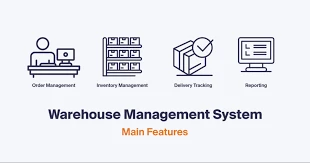
Key Features of Modern Warehouse Management Solutions
1. Inventory Tracking and Control
WMS systems provide up-to-the-minute visibility of inventory levels, locations, and status. Features include:
- Real-time quantity updates
- Auto-replenishment alerts
- Batch/lot tracking
- FIFO, LIFO, FEFO management
Accurate inventory control ensures that businesses can better plan demand, avoid shortages, and reduce carrying costs.
2. Automated Receiving and Putaway
The system guides warehouse staff using mobile devices or barcode scanners, ensuring items are stored in the optimal locations. Smart putaway rules improve space utilization and reduce picking time.
3. Efficient Picking and Packing
Picking is one of the costliest warehouse processes. WMS optimizes it using:
- Wave, batch, and zone picking
- Pick-to-light or voice picking
- Optimized routes for warehouse staff
- Automated packing suggestions
This leads to faster and highly accurate order fulfillment.
4. Labor and Workforce Management
Modern WMS platforms include tools to measure worker productivity, allocate tasks, and monitor performance. This ensures optimal labor utilization and reduces workload imbalances.
5. Warehouse Automation Integration
Warehouse management solutions seamlessly connect with automated systems such as:
- Conveyors
- AS/RS systems
- Robotics
- Drones
- Automated guided vehicles (AGVs)
This integration enhances speed, accuracy, and efficiency across operations.
6. Shipping and Dispatch Management
The system automates processes like label generation, carrier selection, load planning, and shipment tracking. It also integrates with major logistics partners for smooth order movement.
7. Reporting and Analytics
Data-driven insights are essential for continuous improvement. WMS analytics offer:
- Inventory trends
- Order accuracy rates
- Labor productivity metrics
- Space utilization analysis
- Bottleneck identification
Businesses can make informed decisions to increase profitability and operational efficiency.
Benefits of Implementing Warehouse Management Solutions
1. Higher Accuracy and Fewer Errors
WMS reduces manual intervention and eliminates mistakes in picking, packing, and stock counting, ensuring near-perfect order accuracy.
2. Improved Operational Efficiency
Automated workflows, optimized routes, and intelligent task distribution reduce effort and boost productivity, enabling faster turnaround times.
3. Lower Operational Costs
By improving labor efficiency, minimizing errors, and preventing overstocking, warehouse management solutions significantly reduce operating expenses.
4. Better Space Utilization
Smart slotting and putaway strategies help utilize every inch of available warehouse space, delaying the need for costly expansions.
5. Faster Order Fulfillment
A robust WMS supports quick processing, real-time updates, and smooth coordination, ensuring fast and timely customer deliveries.
6. Better Customer Satisfaction
Consistent accuracy, real-time tracking, and timely delivery result in superior customer experiences, fostering loyalty and long-term relationships.
7. Scalability and Flexibility
Whether a company handles 1,000 or 1 million SKUs, modern WMS platforms scale easily with changing business needs.
Warehouse Management Solutions and Digital Transformation
WMS is at the core of smart warehouse transformation. By integrating with IoT, robotics, artificial intelligence, and predictive analytics, WMS empowers businesses to move toward highly automated, resilient, and cost-effective warehouse ecosystems.
- AI-powered forecasting predicts demand and replenishment needs.
- IoT sensors monitor environmental conditions and track assets.
- Robotics streamline picking, sorting, and movement.
- Cloud-based systems enable multi-warehouse visibility from anywhere.
The future of warehousing lies in connected, intelligent, and automated systems—and warehouse management solutions are the foundation of this evolution.
Conclusion
Warehouse management solutions have become indispensable for modern businesses seeking to optimize their supply chains. By offering real-time visibility, intelligent automation, accurate inventory control, and actionable insights, a WMS helps organizations reduce costs, improve efficiency, and deliver exceptional customer experiences.
As consumer expectations rise and logistics networks evolve, investing in a robust warehouse management solution is no longer optional—it is a strategic imperative. Businesses that embrace these powerful tools today will be better prepared for the competitive, technology-driven marketplace of tomorrow.






























Sign in to leave a comment.