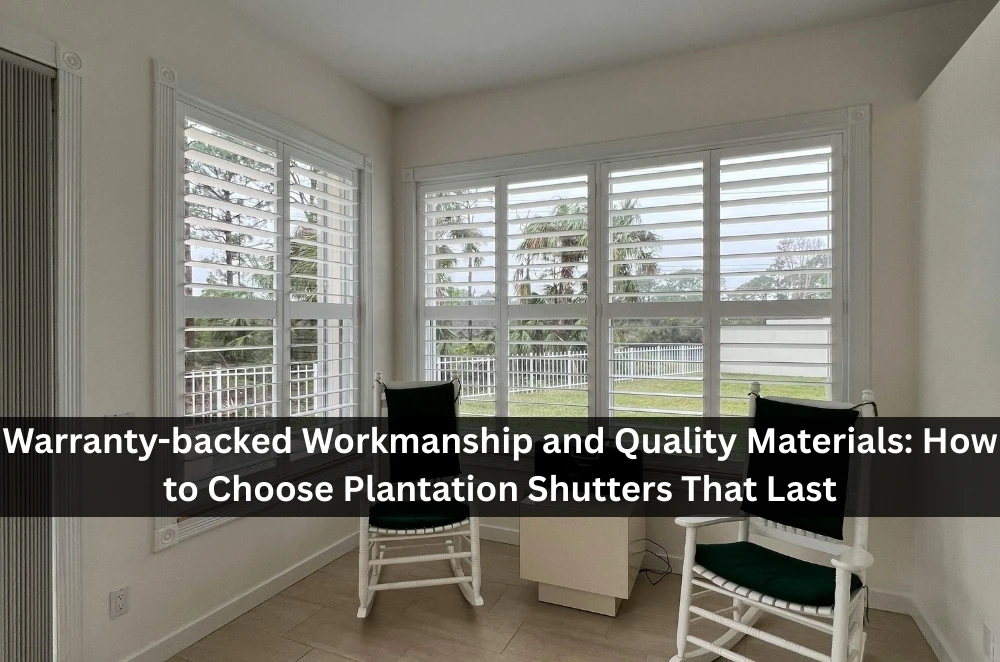

A plantation shutter can look flawless on day one and still disappoint years later—usually for one of two reasons: the material wasn’t right for the room, or the build/installation quality didn’t match the promise. Warranty-backed workmanship and quality materials sounds like a slogan until you break it into specifics you can actually check: what the shutter is made of, how it’s finished and assembled, how it’s fitted to your window, and what the warranty genuinely covers (and doesn’t).
Sydney homes add their own twist to this decision. Sun, humidity swings, coastal air in some suburbs, and the everyday bumps of family life all test moving parts and finishes. The good news: you can assess durability upfront with a few practical questions and a quick scan for red flags.
Start with the warranty—but don’t stop at the headline
A strong warranty can be a useful signal, but only if you understand what sits behind it.
What to look for in warranty language
When you read any shutter warranty, try to find clear answers to:
- What’s covered: structure/frame, louvres, paint/finish, hardware, and (sometimes separately) installation workmanship.
- What’s excluded: moisture damage, harsh chemicals, “normal wear and tear”, misuse, or changes in the building (like movement). Exclusions aren’t automatically bad—vague exclusions are.
- What remedy you get: repair, replacement parts, replacement shutters, or refund—and who decides.
- Transferability: some warranties apply only to the original purchaser.
- Proof requirements: photos, maintenance records, invoices, and timeframes for reporting faults.
On the product side, the plantation shutters page from plantation shutters (Shutters Australia) states that its premium range is covered by a “100% Life Time Warranty,” and describes its shutters as manufactured to its standards for Australian conditions.
That’s meaningful as a starting point—but you still want to confirm the written terms: what “lifetime” refers to, which components are included, and what conditions apply.
Remember: warranties sit alongside your legal rights
In Australia, consumer guarantees under the Australian Consumer Law exist regardless of any voluntary warranty offered. If a product or service doesn’t meet the guarantees, you may be entitled to remedies depending on whether the problem is major or minor.
This matters because a warranty document shouldn’t be treated as the only pathway to a fix.
Materials: “quality” depends on the room
Plantation shutters are commonly made from timber varieties, PVC/vinyl-type materials, composites, or aluminium. Each has trade-offs.
Timber: warm look, but moisture and heat need respect
Timber shutters can suit living rooms and bedrooms beautifully, especially where you want a softer, furniture-like finish. But timber is organic: it can move with humidity and temperature shifts. Quality timber shutters depend heavily on:
- Stability of the core material (how well it resists warping)
- Sealing and finish quality (especially edges and cut-outs)
- Joinery and reinforcement at stress points (hinges, tilt rods, louvre pivots)
If you’re considering timber for kitchens, bathrooms, or windows that cop strong afternoon sun, ask what precautions are recommended and what the warranty says about moisture-related issues.
PVC/vinyl and polymer composites: practical in wet or high-use spaces
Moisture-resistant materials are often favoured for bathrooms, laundries, and some kitchens because they’re less likely to swell or absorb water. The trade-off can be feel and finish—lower-quality options may look plasticky, and some finishes can mark more easily.
On the referenced plantation shutter page, one material described is a “High Tech Polymer” shutter with an aluminium core, positioned as resistant to warping, cracking, or splitting under normal use.
Regardless of brand, the principle holds: if you want low-fuss durability, ask how the product handles heat, steam, and daily cleaning.
Aluminium: strong and stable, especially for certain conditions
Aluminium shutters can be a smart option where strength and stability are priorities (including some outdoor applications). They’re less prone to moisture movement than timber, but they rely on good coating systems and well-made hardware to avoid issues like scratching, chipping, or corrosion in harsher environments.
If you’re nearer the coast, it’s worth asking about coating performance and care recommendations.
Workmanship: the hidden difference between “fine” and “fantastic”
Two shutters can use similar materials and still age very differently. Workmanship is the multiplier.
Build quality checkpoints you can actually inspect
When you’re in a showroom—or reviewing samples—look for:
- Straightness and squareness: frames should sit flat with consistent spacing; louvres should align cleanly when closed.
- Joinery strength: corners shouldn’t show gaps; joints should feel tight and solid.
- Smooth operation: louvres tilt evenly; panels swing without rubbing or catching.
- Finish consistency: even colour, no thin patches, drips, or rough edges—especially around cut-outs and hinges.
- Hardware feel: hinges, magnets, and tilt mechanisms should feel firm, not flimsy.
Installation workmanship is part of durability
Even a well-made shutter can be compromised by rushed measuring or fitting. Good installation should account for:
- Slight window irregularities (common in older homes)
- Clearance for handles, taps, and window cranks
- Proper anchoring into suitable substrates
- Panel alignment so moving parts aren’t under stress
If an installer has to “force” alignment, you can end up with premature wear—exactly the kind of issue that leads to arguments later about whether it’s “installation” or “product.”
Questions that separate confidence from guesswork
Before you commit, these questions tend to reveal how robust the product-and-warranty package really is:
- Which material is recommended for my specific room and window exposure? (Sun, steam, coastal air, high traffic.)
- What parts are most likely to wear, and how are they handled under warranty? (Hardware and moving parts matter.)
- What maintenance is expected to keep coverage valid? (Cleaning products, frequency, humidity control.)
- What happens if a panel doesn’t sit right after installation? (Adjustment process and responsibility.)
- Are replacement parts available years later? (Colour matching and component continuity.)
- Can I see the written warranty terms before purchase? (Not a summary—actual terms.)
What “warranty-backed” should mean in practice
A warranty that’s worth something usually has three traits:
- Specificity: it names components and scenarios rather than relying on broad promises.
- Fair remedies: it explains repair vs replacement pathways without burying everything in discretion.
- Plain-language limits: exclusions are sensible and clearly explained (for example, not implying that all humidity-related movement is automatically “your fault”).
If you can’t find that clarity, treat the warranty as marketing until proven otherwise.
Sydney realities: heat, glare, and humidity cycles
In Sydney, the day-to-day environment can be tough on finishes and moving parts:
- UV exposure can fade or stress some coatings over time (especially on sun-facing windows).
- Humidity swings can affect organic materials and even the way frames sit in older, shifting walls.
- Salt air (in coastal areas) can accelerate wear on certain hardware if coatings and materials aren’t suited.
None of this means you must avoid timber or choose aluminium—it just means “quality materials” is shorthand for “the right material in the right place, finished well, and installed precisely.”
Maintenance: the quiet factor in long-term performance
Even premium shutters benefit from simple care:
- Dust regularly so grit doesn’t grind into hinges and tilt mechanisms
- Clean with mild products (avoid harsh solvents unless specifically recommended)
- Keep wet areas ventilated to reduce persistent moisture exposure
- Address small alignment issues early—don’t let rubbing or catching become a long-term stress point
Maintenance expectations should match the product: if a shutter is marketed as low-maintenance, the care instructions shouldn’t read like a specialist manual.
Key Takeaways
- “Quality materials” is room-specific: choose based on moisture, sun exposure, and daily use.
- Workmanship shows up in joinery, finish consistency, smooth operation, and hardware quality.
- Installation quality is as important as the product—poor fitting can shorten lifespan quickly.
- A good warranty is specific about coverage, exclusions, remedies, and documentation.
- Consumer guarantees under Australian Consumer Law apply regardless of any voluntary warranty.


























Sign in to leave a comment.