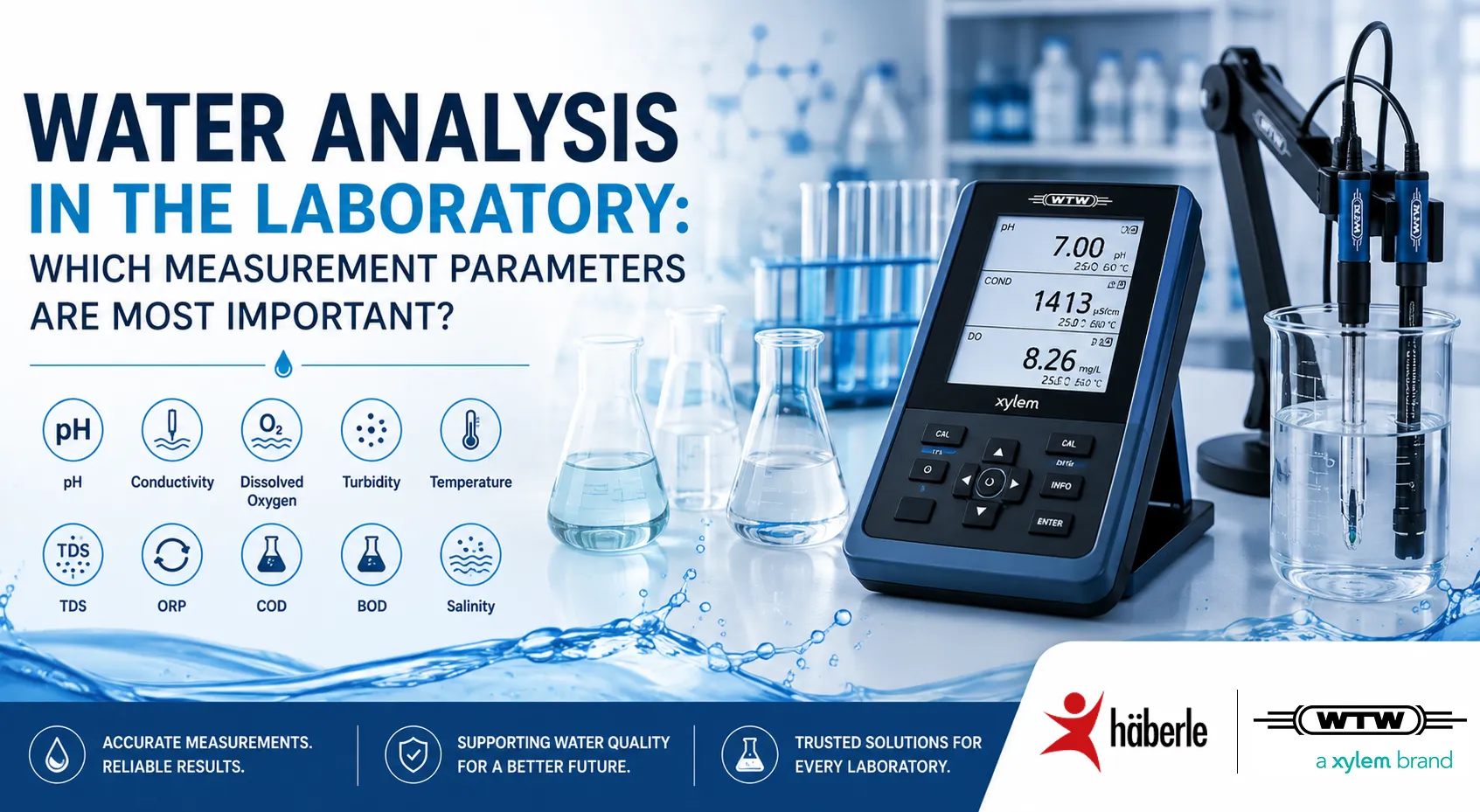

Water analysis plays an important role in environmental monitoring, drinking water quality control, wastewater treatment, industrial processes, and research. Regular testing helps laboratories determine the physical, chemical, and biological characteristics of a water sample.
Different applications require different measurements. While some tests focus on basic water quality, others require detailed analysis of specific chemical compounds or contamination levels.
Understanding the most important measurement parameters helps laboratories select suitable instruments and create reliable testing procedures.
Why Is Water Analysis Important?
Water quality can change depending on its source, treatment process, storage conditions, and surrounding environment.
Laboratory water analysis helps identify changes in water quality and provides information for:
- Drinking water monitoring
- Wastewater treatment
- Environmental testing
- Industrial process control
- Aquaculture
- Research and development
- Food and beverage production
Pharmaceutical applications
The required parameters depend on the purpose of the analysis and the applicable regulatory requirements.
1. pH Value
pH is one of the most common parameters measured during water analysis.
It indicates whether water is acidic, neutral, or alkaline. Changes in pH can affect chemical reactions, biological processes, corrosion, and the effectiveness of water treatment.
A pH value below 7 indicates acidic conditions, while a value above 7 indicates alkaline conditions. A value around 7 is considered neutral.
Accurate pH measurement is therefore important for routine water quality monitoring and many industrial processes.
2. Electrical Conductivity
Electrical conductivity indicates how easily water conducts an electrical current.
It is closely related to the concentration of dissolved ions in the water. Higher conductivity often indicates a higher concentration of dissolved salts or minerals.
Conductivity measurements are useful for:
- Drinking water monitoring
- Wastewater analysis
- Process water control
- Environmental monitoring
Checking water purity
Because conductivity measurements are fast and straightforward, they are often included in routine water testing.
3. Dissolved Oxygen
Dissolved oxygen (DO) refers to the amount of oxygen present in water.
It is an important parameter for aquatic ecosystems and wastewater treatment. Microorganisms and aquatic organisms depend on available oxygen, while oxygen levels also influence biological and chemical processes.
Dissolved oxygen measurements are commonly used for:
- Surface water monitoring
- Wastewater treatment
- Aquaculture
- Environmental research
- Biological process control
Temperature, pressure, salinity, and biological activity can all influence dissolved oxygen levels.
4. Turbidity
Turbidity describes how clear or cloudy a water sample is.
Suspended particles such as sediment, microorganisms, organic matter, and other fine particles scatter light and increase turbidity.
High turbidity can indicate changes in water quality or treatment performance.
Turbidity measurements are useful for:
- Drinking water testing
- Surface water monitoring
- Wastewater treatment
- Process control
Environmental studies
5. Temperature
Water temperature is a basic but important measurement parameter.
Temperature influences chemical reactions, dissolved oxygen levels, biological activity, and the behavior of other water quality parameters.
For accurate measurements, temperature is often recorded alongside parameters such as pH, conductivity, and dissolved oxygen.
6. Total Dissolved Solids
Total dissolved solids (TDS) refers to the concentration of dissolved substances present in water.
These substances can include dissolved minerals, salts, and other inorganic or organic materials.
TDS measurements provide useful information about overall water composition and are commonly considered in drinking water, industrial, and environmental applications.
In some applications, conductivity is used as an indirect indicator of dissolved ionic content, but conductivity and TDS are not identical measurements.
7. Oxidation-Reduction Potential
Oxidation-reduction potential (ORP), also called redox potential, indicates the tendency of a solution to gain or lose electrons.
ORP measurements are useful in processes where oxidation and reduction reactions are important.
Applications include:
- Wastewater treatment
- Disinfection processes
- Water treatment
- Environmental monitoring
- Chemical processes
ORP is often evaluated together with other parameters to understand the chemical conditions within a water system.
8. Chemical Oxygen Demand
Chemical oxygen demand (COD) indicates the amount of oxygen required to chemically oxidize substances present in a water sample.
COD is widely used in wastewater analysis and treatment because it provides information about the amount of oxidizable material in the sample.
Regular COD testing helps treatment facilities monitor process performance and identify changes in wastewater composition.
9. Biochemical Oxygen Demand
Biochemical oxygen demand (BOD) measures the oxygen consumed by microorganisms as they break down biodegradable organic matter in water under defined test conditions.
BOD is particularly important in wastewater treatment and environmental monitoring.
Comparing BOD with other parameters, such as COD and dissolved oxygen, provides additional information about the characteristics of wastewater and biological treatment processes.
10. Salinity
Salinity refers to the concentration of dissolved salts in water.
It is particularly important for:
- Marine and coastal water monitoring
- Aquaculture
- Environmental research
Industrial water systems
Salinity is often related to conductivity and temperature, so these parameters might be measured together depending on the application.
Which Parameters Should Be Measured?
There is no single set of parameters suitable for every water analysis. The correct combination depends on the water source and the purpose of the test.
| Application | Commonly Important Parameters |
|---|---|
| Drinking water | pH, conductivity, turbidity, temperature, TDS |
| Wastewater | pH, DO, COD, BOD, conductivity, turbidity |
| Surface water | pH, DO, temperature, conductivity, turbidity |
| Aquaculture | pH, DO, temperature, conductivity, salinity |
| Industrial water | pH, conductivity, temperature, TDS, ORP |
| Research | Depends on the specific study and sample |
These are general examples. Laboratories should always follow the relevant standards, regulations, and validated testing procedures for their specific application.
Choosing the Right Water Analysis Equipment
Once the required parameters are identified, the next step is selecting suitable measurement equipment.
Important factors include:
- Measurement range
- Required accuracy
- Resolution
- Sample type
- Measurement environment
- Calibration requirements
- Data recording options
- Portability
- Maintenance requirements
- Connectivity and software
Multiparameter instruments can be useful when several water quality parameters need to be measured regularly. Individual meters or specialized instruments might be more appropriate for applications requiring specific measurement methods or higher levels of control.
Water Analysis Solutions from Xylem Analytics Germany (WTW)
Xylem Analytics Germany (WTW) is known for measurement and analysis solutions used in water and wastewater applications. Its equipment portfolio includes instruments for parameters such as pH, conductivity, dissolved oxygen, turbidity, and other water quality measurements.
For laboratories, selecting the appropriate WTW instrument depends on the parameters being measured, required accuracy, sample type, and intended application.
Through Häberle Labortechnik, laboratories can explore water analysis equipment from established manufacturers such as Xylem Analytics Germany (WTW). This makes it easier to compare suitable instruments according to specific laboratory and water testing requirements.
Importance of Calibration and Proper Measurement
Accurate water analysis depends not only on the instrument but also on proper measurement practices.
Laboratories should pay attention to:
- Regular calibration
- Suitable calibration standards
- Correct sample handling
- Clean measurement sensors
- Proper storage of electrodes and sensors
- Following manufacturer instructions
- Recording measurement conditions
Poor sample handling or an incorrectly calibrated instrument can affect the reliability of test results.
Conclusion
Water analysis involves a wide range of measurement parameters. pH, conductivity, dissolved oxygen, turbidity, temperature, TDS, ORP, COD, BOD, and salinity are among the parameters frequently used to evaluate water quality.
The right measurement parameters depend on the water source, testing purpose, and applicable standards. Laboratories should therefore define their testing requirements before selecting instruments.
With suitable equipment from manufacturers such as Xylem Analytics Germany (WTW) and access to laboratory solutions through Häberle Labortechnik, laboratories can select measurement systems that match their water analysis needs and support reliable, consistent results.

























Sign in to leave a comment.