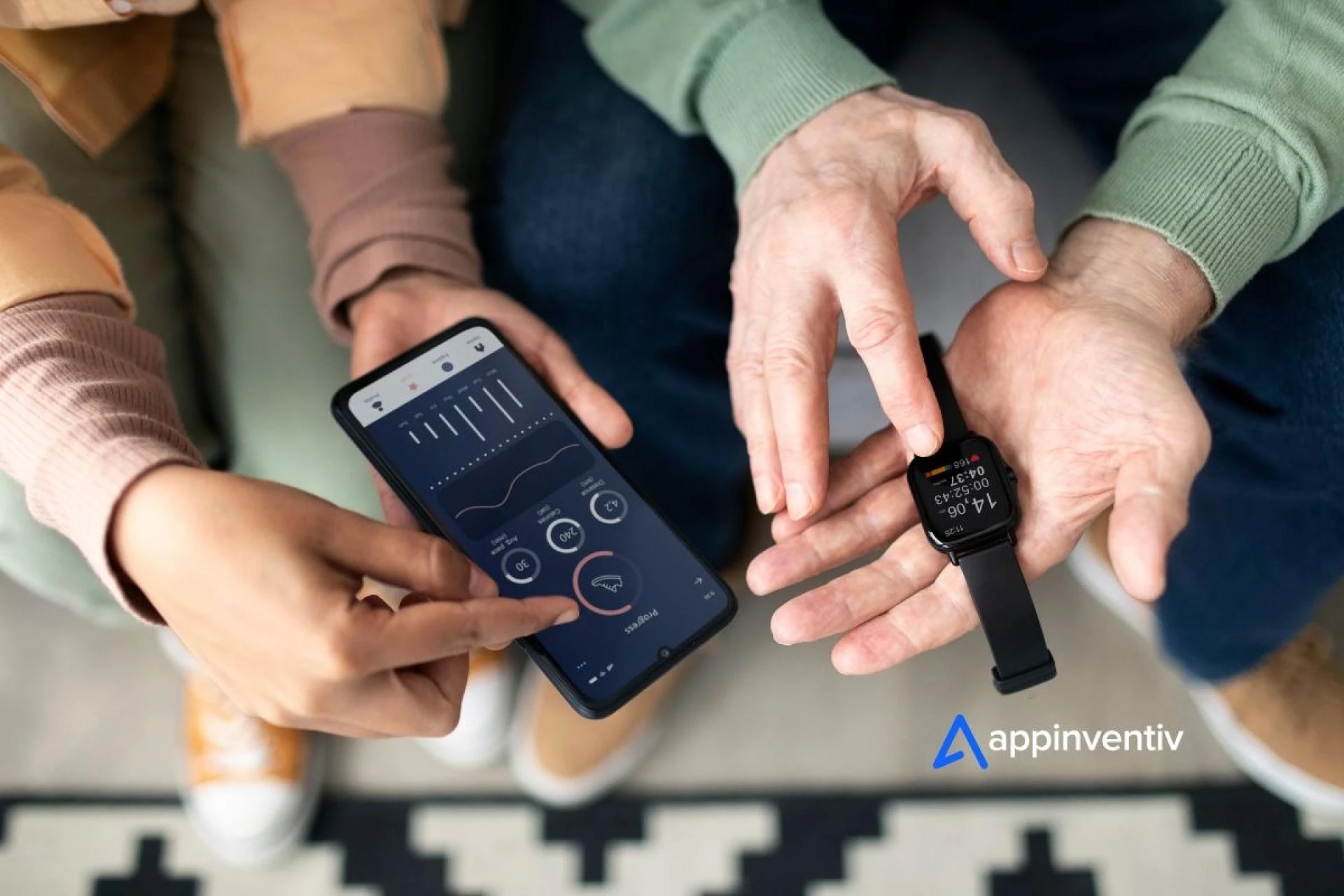

Healthcare delivery is steadily shifting from hospital-centric models to continuous, data-driven care. Wearable technology plays a critical role in this transition by enabling real-time health monitoring, early risk detection, and personalized treatment pathways. Behind these smart devices lies the expertise of a wearable app development company, responsible for transforming raw sensor data into actionable health insights.
This article explores how wearable app developers contribute to real-time health monitoring, their impact across healthcare ecosystems, and why businesses and providers increasingly rely on specialized development partners.
Understanding Real-Time Health Monitoring Through Wearables
Real-time health monitoring refers to the continuous tracking of physiological metrics such as heart rate, blood oxygen levels, sleep patterns, activity levels, glucose, and ECG signals. Wearable devices like smartwatches, fitness bands, and medical-grade sensors collect this data and transmit it instantly to connected applications.
A wearable app development company designs and engineers the software layer that ensures accurate data capture, seamless device connectivity, and meaningful visualization for users, caregivers, and clinicians. Without robust applications, even the most advanced hardware cannot deliver clinical or consumer value.
How Wearable Apps Enable Continuous Health Tracking
Wearable applications are built to function around the clock, collecting data without interrupting daily routines. These apps integrate with sensors using Bluetooth Low Energy (BLE), cloud platforms, and mobile operating systems.
A reliable wearable app development company ensures:
- Stable real-time data synchronization
- Low battery consumption
- Accurate signal processing
- Secure data transmission
By combining healthcare app development expertise with IoT healthcare solutions, wearable apps help users stay informed about their health status at all times.
Role of Wearable App Developers in Preventive Healthcare
Preventive care is one of the biggest advantages of real-time health monitoring. Wearable apps can detect irregular patterns long before symptoms become severe.
For example:
- Abnormal heart rhythms trigger instant alerts
- Sudden drops in oxygen saturation prompt medical attention
- Sleep irregularities indicate stress or chronic conditions
A wearable app development company builds intelligent alert systems, threshold-based notifications, and AI-powered analytics that support early diagnosis and preventive intervention.
Supporting Remote Patient Monitoring (RPM)
Remote patient monitoring has gained significant adoption among hospitals, clinics, and home-care providers. Wearable devices allow doctors to monitor patients outside clinical settings, reducing hospital visits and operational costs.
A skilled wearable app development company enables RPM by:
- Integrating wearable apps with EHR and EMR systems
- Building clinician dashboards for real-time patient insights
- Ensuring compliance with healthcare data standards
- Supporting multi-device interoperability
These solutions are especially valuable for managing chronic diseases, post-surgical recovery, and elderly care.
Enhancing Fitness and Lifestyle Management
Beyond clinical use cases, wearable apps are widely adopted for fitness tracking and lifestyle improvement. Users rely on fitness wearable apps to monitor steps, calories, workouts, stress levels, and sleep quality.
A wearable app development company focuses on:
- User-friendly UI/UX design
- Gamification and goal tracking
- Personalized health recommendations
- Integration with mobile health platforms
Such applications improve user engagement while encouraging long-term wellness habits.
Data Security and Compliance in Wearable Health Apps
Health data is highly sensitive, making security a top priority in wearable app development. Wearable applications must adhere to data protection regulations and healthcare compliance standards.
An experienced wearable app development company implements:
- End-to-end data encryption
- Secure cloud storage
- Role-based access controls
- Regulatory compliance frameworks
This ensures patient trust while enabling safe data sharing among healthcare stakeholders.
AI and Analytics in Real-Time Health Insights
Modern wearable applications go beyond data collection by applying artificial intelligence and advanced analytics. AI models analyze large volumes of health data to detect trends, predict risks, and personalize recommendations.
A forward-thinking wearable app development company integrates:
- Machine learning algorithms
- Predictive health analytics
- Behavioral pattern analysis
- Decision-support tools for clinicians
These capabilities turn wearable apps into intelligent healthcare assistants rather than simple tracking tools.
Integration with Broader Healthcare Ecosystems
Wearable apps do not operate in isolation. They are part of a connected digital health ecosystem that includes telemedicine platforms, hospital systems, insurance providers, and wellness programs.
A professional wearable app development company ensures seamless integration with:
- Telehealth and virtual care platforms
- Hospital management systems
- Pharmacy and medication tracking apps
- Insurance and corporate wellness programs
Such interoperability improves care coordination and patient outcomes.
Future Scope of Wearable App Development in Healthcare
The future of wearable health technology points toward more personalized, predictive, and proactive care models. Advancements in biosensors, AI, and 5G connectivity will further enhance real-time health monitoring capabilities.
As innovation accelerates, a wearable app development services will play a key role in:
- Developing medical-grade wearable applications
- Supporting decentralized clinical trials
- Expanding mental health and wellness tracking
- Enabling population health analytics
These developments will redefine how healthcare is delivered and experienced.
Conclusion
Real-time health monitoring is reshaping healthcare by enabling continuous care, early intervention, and data-driven decision-making. Wearable technology acts as the bridge between patients and providers, while application development brings this technology to life.
By combining healthcare app development, IoT integration, AI analytics, and secure data management, a wearable app development company empowers organizations to deliver smarter, faster, and more personalized healthcare solutions. As demand for connected health continues to rise, wearable apps will remain central to the future of digital healthcare.





























Sign in to leave a comment.