
Introduction
Speed kills in the startup world. Moving fast is essential. No argument there. The problem starts when founders confuse speed with recklessness. They launch without thinking past next month.
Here's what usually happens. A team builds an app in three months. Users love it. Growth kicks in. Then everything breaks. The app can't handle the load. Features conflict with each other. Bug fixes create new bugs.
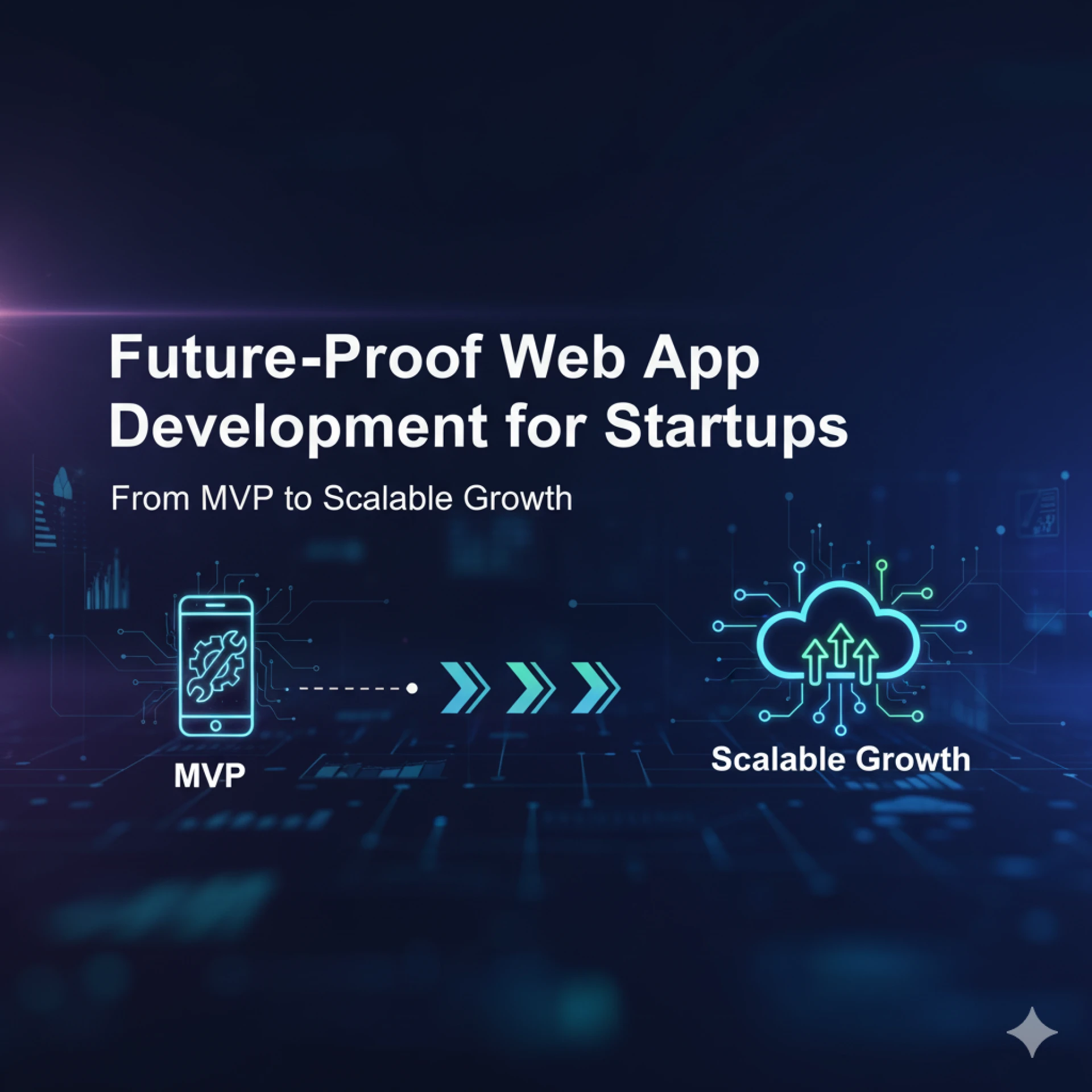
Future-proof web app development services prevent this mess. The MVP becomes a real foundation, not something to throw away and rebuild. A strong web app development company helps you build an app that’s fast enough to test the market and solid sufficient to handle success when it arrives.
The Startup Growth Challenge — From Idea to Scalable Product
Start with 100 users. Everything runs smoothly. Add 10,000 users six months later, and everything becomes chaotic.
This isn't a developer skill problem. Teams make rational choices under pressure. Ship fast or die, right? So they take shortcuts. Build quick fixes. Worry about scalability "later."
Later always comes sooner than expected.
What breaks first:
- Infrastructure collapses under normal growth
- Database performance becomes a daily crisis
- Manual processes consume all developer time
- Issues only surface when users complain publicly
Long-term thinking in web app development services changes this story completely.
Why Scalable Web Apps Are a Startup's Secret Growth Weapon?
Scalability separates winners from cautionary tales. Black Friday arrives. Some apps handle it effortlessly and keep selling. Others display error messages to frustrated customers who are ready to buy. The app either capitalises on the moment or wastes it with downtime.
Real benefits that matter:
- Sudden traffic becomes an opportunity: Launch that risky marketing campaign without fear. Accept that press interview. Handle success gracefully.
- Development speed increases over time: Sounds backwards, but it's true. Good architecture means new features slot in cleanly. Bad architecture means every addition breaks something.
- Financial surprises vanish: Costs scale predictably with users. No emergency credit card charges because the server melted.
A web app development company builds this resilience through boring, reliable methods. Nothing flashy. Just professional work that holds up under pressure.
From MVP to Market Leader — The Phases of Web App Growth
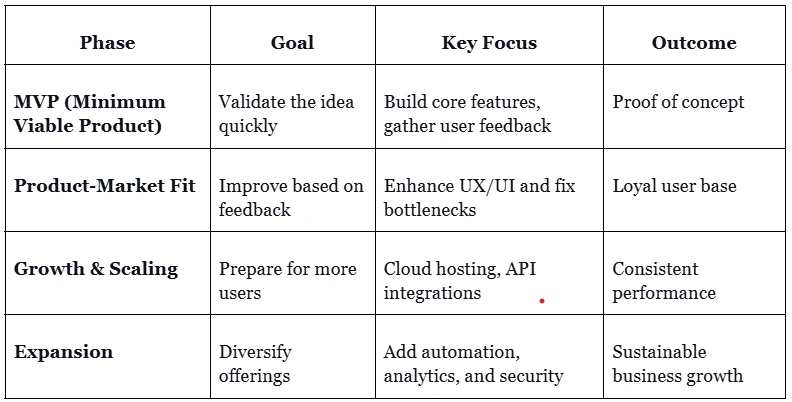
Most startups fail because they skip phases or rush through them.
8 Must-Have Features for a Future-Proof Web App
1. Modular Architecture
Each feature exists independently but connects cleanly to others. The notification service runs separately from the main app. When something breaks, it breaks in isolation instead of taking everything down.
2. Cloud Scalability
Infrastructure grows automatically with demand. Traffic doubles during a successful launch? More servers spin up without human intervention. Quiet Tuesday afternoon? Resources scale down and costs drop. This is a proper cloud configuration that most rushed MVPs skip entirely.
3. Responsive UI/UX
Desktop users expect interfaces with keyboard shortcuts. Mobile users want fast, thumb-friendly experiences. Users notice when apps just stretch mobile designs awkwardly. Great design considers all contexts from the start, not as an afterthought six months later.
4. Automated Testing & CI/CD
Automated tests catch regressions before they ship. Continuous integration runs checks on every code change. Continuous deployment pushes updates smoothly without manual steps that someone inevitably forgets.
5. Real-Time Analytics
Analytics show actual behaviour—where people click, where they abandon, and what confuses them. Track the metrics that matter for the business. Build features people actually use instead of features people claim they want.
6. Secure APIs
Every third-party integration is a potential security hole. Proper API security means these connections don't become vulnerabilities that hackers exploit. One compromised integration can destroy a startup's reputation overnight.
7. Performance Monitoring Tools
Problems caught early become routine fixes. Problems caught late become PR disasters. Monitoring spots slow database queries before users complain. It notices traffic patterns before servers overload. The difference between 99.9% uptime and 95% uptime is often just good monitoring plus fast response.
8. User Feedback Systems
Assumptions kill products faster than competitors do. In-app surveys catch frustrations while they're fresh. Support ticket analysis identifies common pain points. The feedback loop never stops for successful products.
How Web App Development Services Help Startups Scale?
Professional teams know which shortcuts cause problems and which ones are actually fine.
End-to-end support
Means someone owns the entire journey. From whiteboard sketches to production systems serving millions. No handoff confusion. No gaps where things fall through cracks.
Agile delivery
Keeps progress visible and adjustable. Sprint demos every two weeks show working features, not PowerPoint promises. Problems surface early when they're fixable. Pivots happen quickly based on real data.
Tech stack recommendations
These suggestions come from actual project experience. Sometimes the trendy framework makes sense. Sometimes the boring, stable option is smarter. The difference matters more than most founders realise.
Ongoing support
Extends past launch day. Because that's when the real work begins. Security patches drop constantly. User feedback demands responses. Having experienced partners available prevents every issue from becoming an emergency.
A web app development company acts like a technical co-founder. Minus the equity negotiations and the risk of founder conflicts.
Conclusion: Build Smart, Scale Seamlessly
Fast launches create initial buzz. Smart architecture creates lasting businesses. A reliable web app development company makes the second path possible.
FAQs
Why should startups focus on future-proof web app development?
Total cost drops dramatically compared to building twice. Scaling becomes routine instead of requiring complete rewrites. The product adapts naturally as markets shift. Teams focus on features instead of constant firefighting.
What are the benefits of starting with an MVP for web apps?
Real users provide feedback that surveys never capture.. Assumptions get tested quickly when they're cheap to change. Pivots cost thousands instead of millions when needed early.
How can web app development services help startups scale?
Proven frameworks prevent common mistakes that sink products. Architecture is designed for growth from line one of code. Automation handles repetitive work that would consume developer time. Scaling happens predictably on schedule instead of through weekend crisis sessions.
How much does it cost to build and scale a web app for startups?
Simple tools cost less than complex platforms. Real-time features add expense. Heavy data processing increases budgets. Most serious startup projects land somewhere between AUD $25,000 and $120,000+.

























Sign in to leave a comment.