

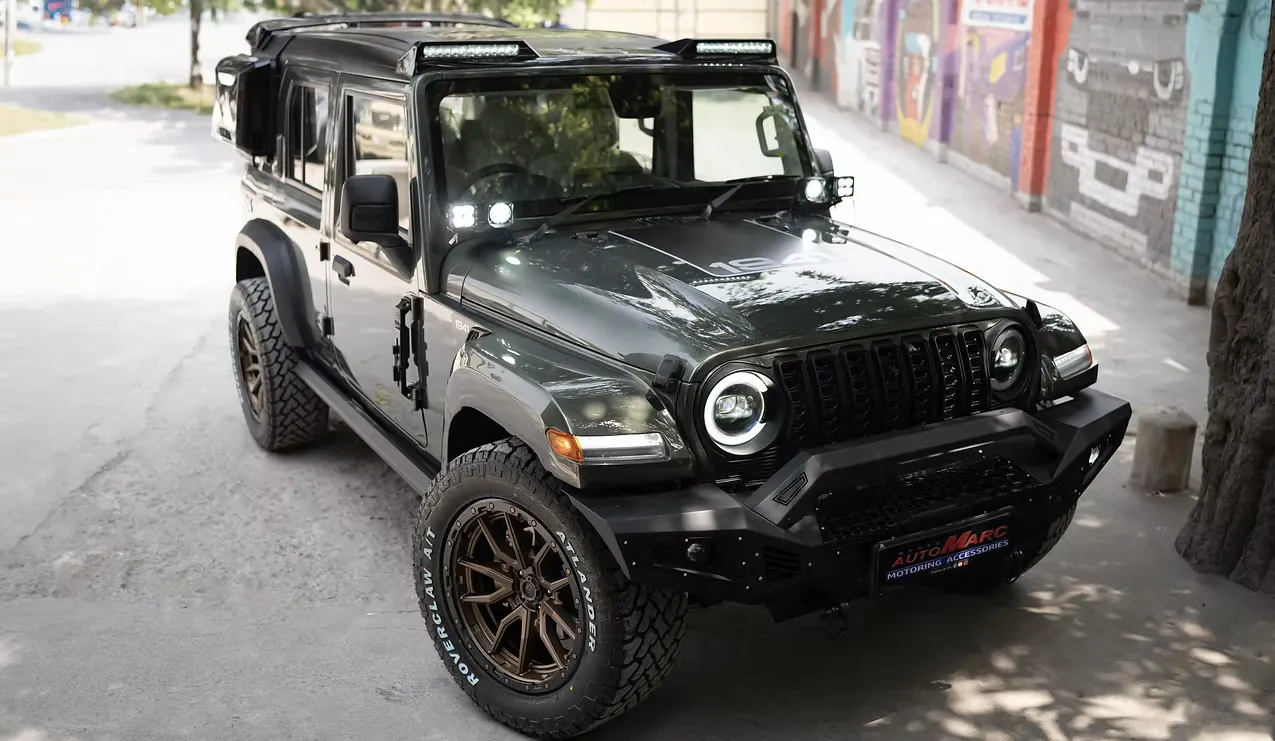
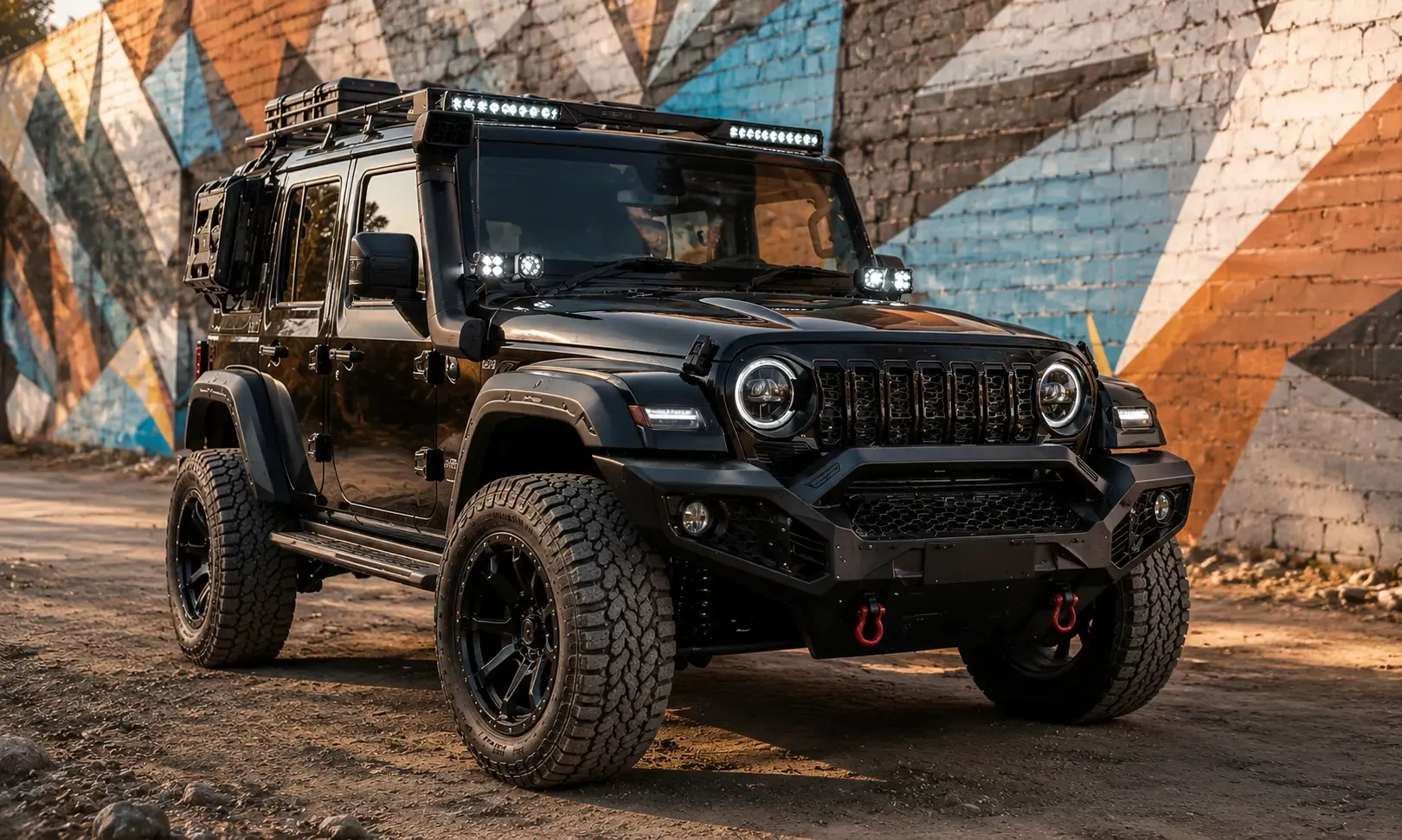
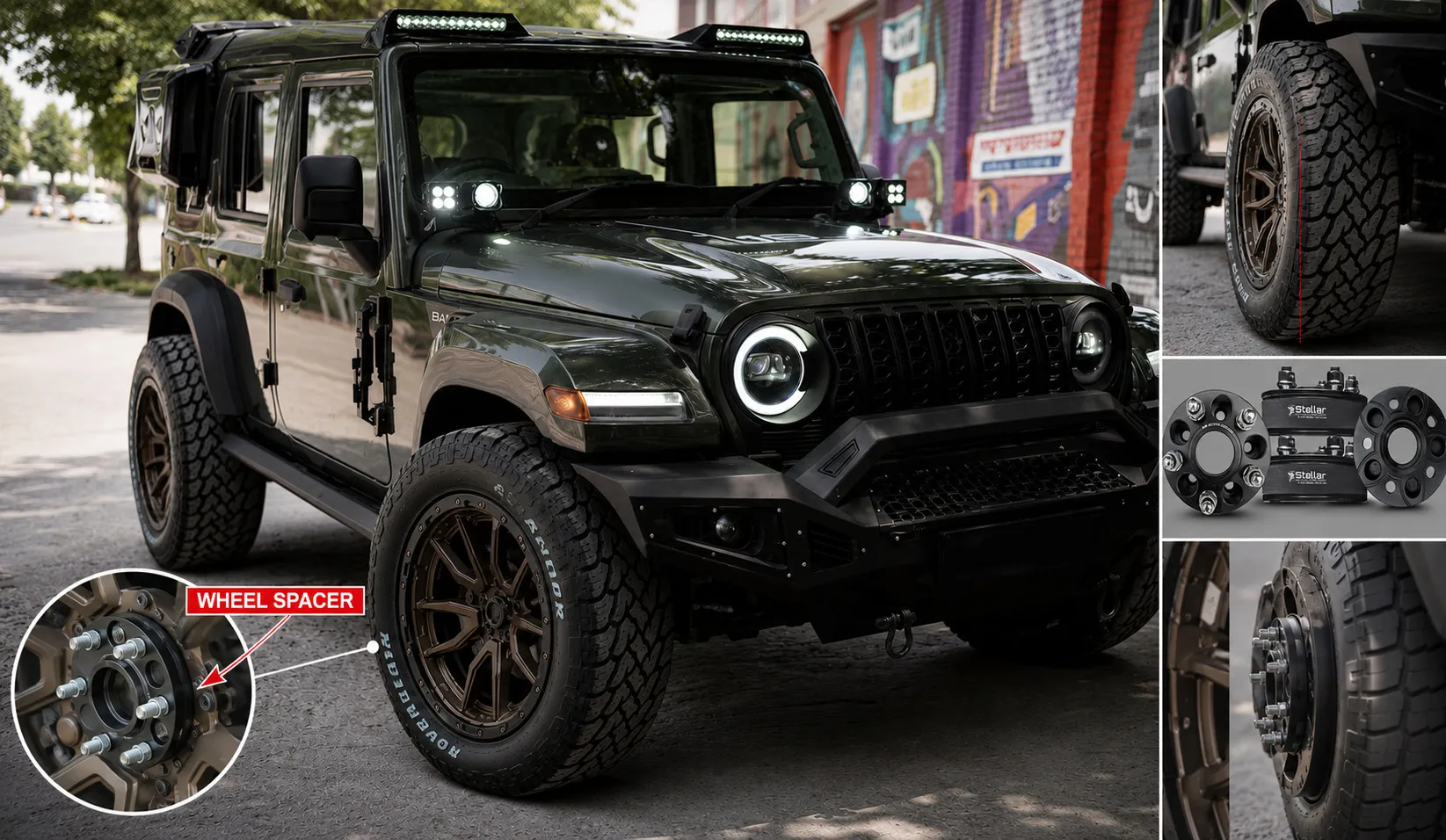
More Thar owners are switching to front-half roof racks instead of full-length ones, and the reasoning behind it is pretty practical once you hear it: most people were carrying extra weight and extra drag for roof space they never actually used. A setup like the Thar Front Half Roof Rack With Light Bar from Stellar 4x4 is a good example of what that shift actually looks like in practice.
Most People Need Far Less Roof Space Than They Think
Roof racks tend to get marketed on size — bigger looks more serious, more capable. But look at what most owners actually pack for a trip: a jerry can, a recovery kit, a couple of bags. That's the real list for most weekend trips, and a front-half rack handles it without the extra weight and wind resistance of a rack built for cargo that never gets loaded.
This matters more on the Thar than people expect. Weight sitting higher and further back on the roof changes handling, and more roof surface disrupted means more drag you'll notice in your fuel bill on the highway. A front-half setup keeps both in check simply by not being bigger than it needs to be.
The Rack and the Light Bar Work Better as One Unit, Not Two Purchases
A common mistake is buying a rack first, then shopping separately for a light bar to bolt on afterward. It rarely turns out well — mismatched mounting points, a light that sits crooked, a setup that looks bolted on rather than built in.
The Thar Front Half Roof Rack With Light Bar avoids this because the rack and the light are engineered together from the start. Beyond just looking cleaner, there's a real functional reason for this: stock headlights are built for tarmac, throwing a narrow beam straight ahead. On an unlit trail, that's not wide enough to catch what actually matters — a rut, a rock, the edge of the path. A light bar built into the rack itself is positioned specifically to close that gap.
Fitment Is the One Detail That Decides How Long This Actually Lasts
Most long-term complaints about roof racks come down to the same root cause — a rack that was adapted to fit a vehicle rather than built for it. That small mismatch between a generic bracket and the Thar's actual mounting geometry is what eventually shows up as rattling, and given enough rough roads, stress cracks around the mounting points.
The question worth asking before buying any rack is simple: does it bolt directly into the Thar's factory roof rail points, using hardware matched to that exact geometry? Get that right, and the most common failure mode in this category is basically ruled out.
The Installation Step Most People Get Wrong
Mounting the rack itself is genuinely simple — most owners manage that part on their own without trouble. The light bar's wiring is where it gets more serious. It draws power from the Thar's electrical system, and doing that properly means a correctly fused connection, cable routed away from interior trim, and a switch wired independently from the headlights.
This is the step people are most tempted to rush or DIY to save some money, and it's exactly the wrong place to cut corners. A poorly wired light bar rarely fails right away — it tends to fail a few months later, as a flickering light or a battery that's dead for no clear reason, and by then the fix costs more than a proper mechanic install would have upfront.
Questions Worth Asking Before Buying One
Q : Is a front-half rack really enough for a multi-day trip?
A : For most trips, yes — recovery gear, fuel cans, and packed bags fit comfortably. It's only genuinely oversized cargo, like a roof tent, that would need a bigger, differently-rated rack.
Q : Does it actually change how the Thar handles compared to a full-length rack?
A : Yes, noticeably — less weight sitting higher and further back means a smaller impact on handling, especially on uneven terrain or sharp turns.
Q : Do the Thar and Thar Roxx share the same mounting points?
A : Not exactly — there's a slight difference between the two, so it's worth confirming the correct bracket kit for your specific variant before ordering.
Q : What happens if the wiring wasn't done properly?
A : Usually a flicker, an unexpectedly drained battery, or interference with other electronics — none of which show up immediately, which is why a proper mechanic install matters from the start.
Q : Is this something people use daily, or just for off-road trips?
A : Plenty of owners use it daily just for the extra storage, keeping the light bar off until an early start or an unlit road actually calls for it.
The Bigger Picture
This shift toward half-length racks isn't really about the racks themselves — it's Thar owners being more deliberate about what they actually need instead of what looks impressive parked outside. The Thar Front Half Roof Rack With Light Bar from Stellar 4x4 is a decent benchmark for that approach: sized for real use, built as one integrated unit, and only as good as the mechanic-handled install behind it. Get those fundamentals right, and a roof rack stops being something you think about at all.
We've covered a related side of this topic before too — worth a look if you're still deciding between rack sizes: thar4x4products.livejournal.com/278.html























Sign in to leave a comment.