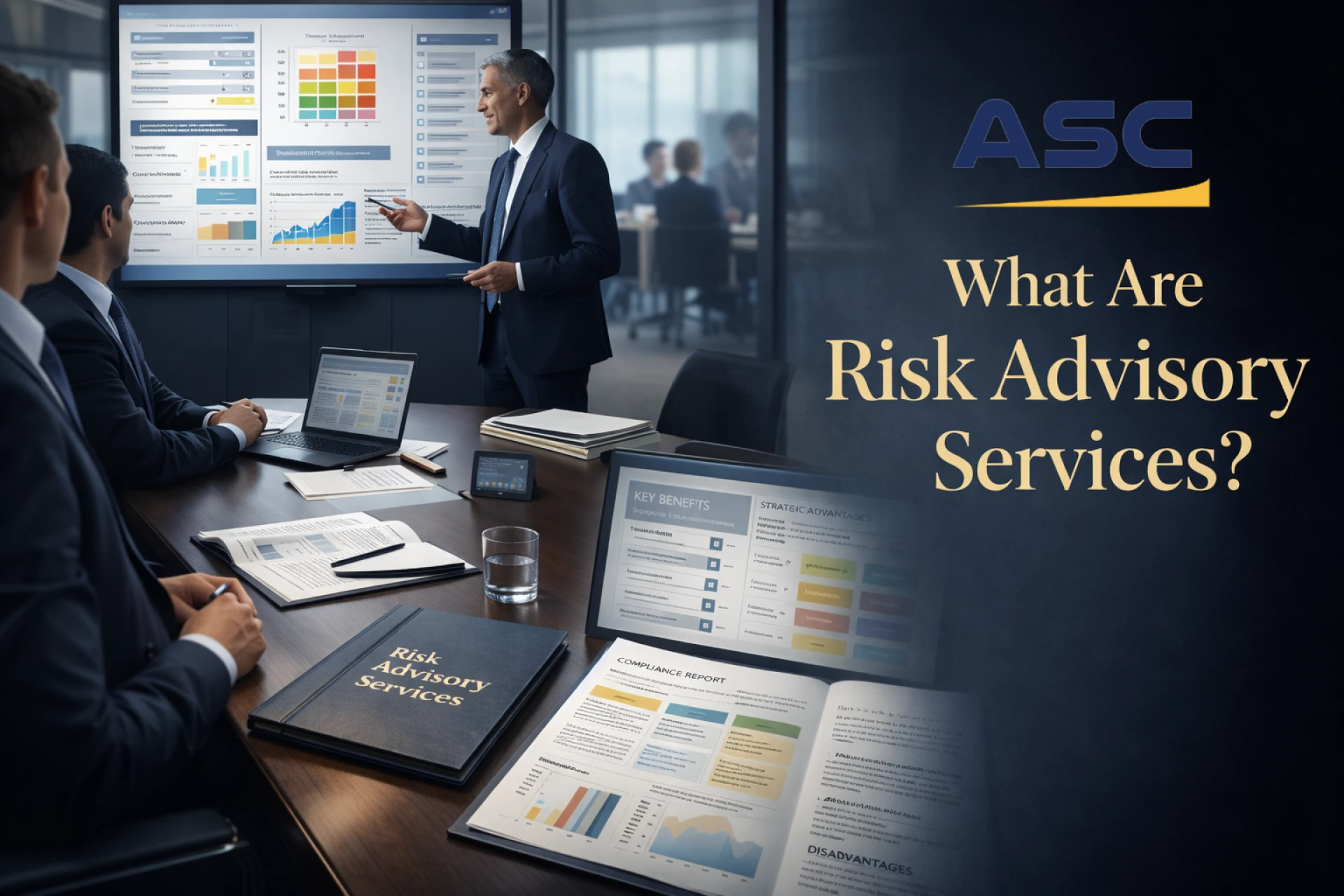

Bottom Line Up Front (BLUF): Relying on reactive compliance is a massive liability in today's heavily regulated Indian market. Risk Advisory Services provide a forward-looking, data-driven framework to identify, quantify, and neutralize financial, operational, and cyber threats before they cause structural damage. By partnering with elite advisory experts, enterprises can fortify their Internal Financial Controls (ICFR), ensure strict adherence to Ministry of Corporate Affairs (MCA) guidelines, and confidently pursue aggressive market growth with a fully protected downside.
What Exactly Does a Risk Advisory Consultant Do for an Indian Enterprise?
What is the day-to-day strategic value of bringing in outside risk experts?
When you bring in a specialized consultant, you are not just hiring someone to check boxes on a statutory compliance sheet. You are bringing in an architect to stress-test your entire business. A Risk Advisory Consultant maps out every single vulnerability across your supply chain, IT infrastructure, and financial reporting systems. They look at how your different departments interact and locate the hidden gaps where capital could leak, or fraud could happen. Instead of just pointing out problems, they build automated, sustainable Standard Operating Procedures (SOPs) to permanently fix them.
The hard proof of this necessity lies directly within the Companies Act. The law mandates that the Board of Directors must lay down robust Internal Financial Controls and ensure they are operating effectively. A specialized consultant uses global frameworks like COSO and ISO 31000 to build these exact controls. If a company fails to maintain this standard, directors can face personal legal liabilities and severe financial penalties from regulatory bodies.
Why Can't an Internal Audit Team Handle Modern Corporate Risks?
Why do growing businesses need to look outside their own walls for threat management?
Your internal audit team is incredibly valuable, but their primary job is to look backward. They review past financial quarters to make sure existing rules were followed. However, the modern corporate landscape moves too fast for rear-view mirror checks. You need a team that looks forward to anticipate new threats—like a sudden shift in Foreign Exchange Management Act (FEMA) policies or a new cyber vulnerability in your payment gateway. Furthermore, internal teams often suffer from operational bias; they are too close to the daily work to see the systemic flaws.
The mandate for independent oversight is clear when you look at the Securities and Exchange Board of India (SEBI). For listed companies, SEBI's Listing Obligations and Disclosure Requirements (LODR) demand a rigorous, unbiased assessment of risk management frameworks. Utilizing top-tier Risk Consulting Firms provides the Audit Committee with an objective, third-party validation that internal reports simply cannot offer, satisfying both institutional investors and government regulators.
How Do the Best Risk Consulting Firms Execute an Enterprise Assessment?
How does an advisory team actually go about securing a massive, complex organization?
The best firms do not rely on outdated spreadsheets and guesswork. They use a highly structured, tech-enabled approach. First, they conduct a top-down risk profiling exercise with the C-suite to understand the company's ultimate growth goals. Then, they deploy advanced data analytics to comb through thousands of daily transactions, flagging anomalies that human eyes would miss. They also run simulated cyber-attacks and vendor background checks to ensure external partners are not introducing hidden risks into the ecosystem.
This rigorous methodology is exactly what is required to comply with modern data laws. For example, under the new Digital Personal Data Protection (DPDP) Act, failing to secure customer data can result in catastrophic fines. Consultants actively map your digital infrastructure against these strict statutory requirements, ensuring that every piece of proprietary and customer data is encrypted, tracked, and legally protected.
What Are the Measurable Benefits of Strategic Risk Advisory?
How does spending money on risk management actually improve the bottom line?
Strong risk management is not a sunk cost; it is a financial shield that protects your working capital and boosts your market valuation.
- Capital Preservation: By identifying supply chain inefficiencies and plugging hidden revenue leaks, advisory experts ensure more cash stays in your business.
- Frictionless Capital Raising: Private equity firms and banks heavily scrutinize corporate governance. A documented, ironclad Enterprise Risk Management (ERM) framework makes securing funding much faster and cheaper.
- Crisis Prevention: Proactive mapping prevents sudden government audits, severe regulatory fines, and damaging public relations disasters.
- Agile Expansion: When executive leadership knows exactly where the guardrails are, they can execute aggressive mergers and acquisitions with absolute confidence.
Advantages and Disadvantages of Outsourcing Your Risk Management
Is it a better strategy to build a massive internal risk department or outsource it to the experts?
Corporate boards must carefully weigh the operational realities of how they manage their enterprise threats.
| Strategic Factor | Advantages of Outsourcing to Experts | Disadvantages (and How to Mitigate Them) |
|---|---|---|
| Complete Objectivity | External advisors deliver the unvarnished truth to the board, completely free from internal office politics or pressure from department heads. | External teams need a brief onboarding period to grasp your unique company culture. (Mitigation: Retain an advisory partner for the long term so they grow with you.) |
| Elite Skillsets | You gain instant, on-demand access to forensic accountants, cyber-security specialists, and former regulatory officials. | It requires an upfront consulting budget. (Mitigation: This cost is vastly lower than the financial impact of a major fraud incident or building an internal team of equivalent caliber.) |
| Advanced Technology | Top firms utilize proprietary AI and machine learning tools to detect real-time threats, tools that are too expensive for most single companies to license. | Integrating outside software with legacy ERP systems requires coordination. (Mitigation: Elite firms manage the IT integration process seamlessly alongside your CIO.) |
How ASC Group Helps
How does ASC Group secure my balance sheet and ensure flawless compliance?
Navigating the dense regulatory environment of the Indian market requires an advisor who understands both the law and commercial realities. ASC Group stands among the premier Risk Consulting Firms in the country, providing a highly tailored, forensic approach to enterprise security.
Acting as your dedicated Risk Advisory Consultant, our seasoned experts deploy advanced diagnostic tools to evaluate your Internal Financial Controls, map out statutory compliance gaps, and uncover hidden operational vulnerabilities. We do not just hand you a list of problems; we engineer sustainable, automated control frameworks. By utilizing our comprehensive Risk Advisory Services, your boardroom and Audit Committee gain the empirical, unbiased assurance necessary to protect your assets, satisfy stringent MCA mandates, and aggressively scale your business with total peace of mind.
Conclusion: The Strategic Future of Corporate Governance
What is the core takeaway for business leaders navigating today's volatile markets?
The mindset around corporate risk must change. Treating compliance and risk management as a mandatory administrative chore leaves a company dangerously exposed to fast-moving digital and regulatory threats. The enterprises that will lead the next decade are those that integrate proactive threat modeling directly into their growth strategies. By embedding elite advisory support into your corporate governance, you transform complex regulatory hurdles from a defensive weakness into a powerful, structured competitive advantage.
Frequently Asked Questions (FAQs)
1. What is the difference between Enterprise Risk Management (ERM) and traditional risk management?
Traditional risk management often operates in silos, where the IT department handles cyber risks and the finance team handles currency risks independently. ERM is a holistic, top-down approach that evaluates how all these different risks interact and impact the entire organization's strategic goals simultaneously.
2. Are Risk Advisory Services only necessary for large, publicly listed companies?
No. While listed companies have stricter legal mandates (like SEBI LODR), mid-sized and rapidly scaling private enterprises are highly vulnerable to fraud, cyber-attacks, and compliance failures. Early integration of a strong risk framework makes scaling much safer and smoother.
3. How often should an enterprise conduct a comprehensive risk assessment?
At a minimum, foundational risk assessments should be thoroughly reviewed annually. However, companies in high-growth phases or heavily regulated sectors (like fintech or manufacturing) should update their threat matrices dynamically, especially after major market shifts or new product launches.
4. Can a risk advisory consultant help prevent corporate fraud?
Absolutely. While no system is entirely foolproof, consultants drastically reduce the opportunity for fraud by implementing strict segregation of duties, automated payment flagging, and secure whistleblower channels, ensuring financial crimes are detected instantly.
5. What is the role of an Audit Committee in risk management?
The Audit Committee, composed primarily of independent directors, is responsible for overseeing the company's financial reporting and internal controls. They rely heavily on the objective data provided by external risk advisory consultants to ensure the executive management team is not taking reckless operational or financial gambles.



























Sign in to leave a comment.