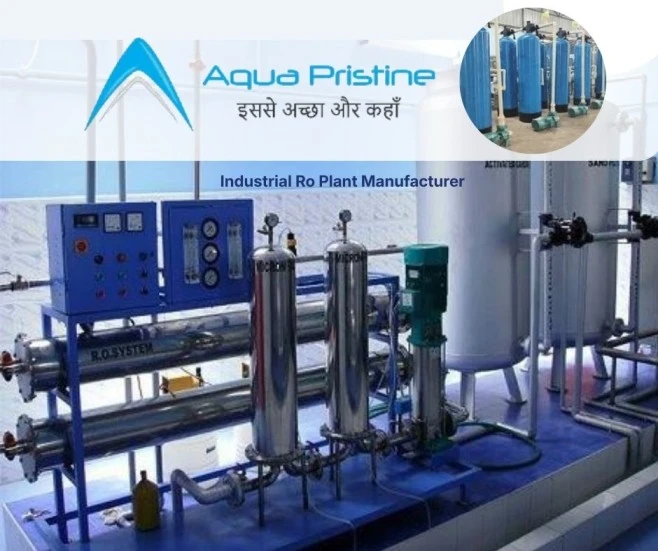
Industrial facilities running multiple processes all day long — purified water isn’t just a luxury, it’s a business necessity. Whether it's manufacturing, chemicals, food & beverage, or pharmaceuticals, water quality matters deeply. Reverse osmosis (RO) plants are often the go-to solution. But while they deliver purity, they also come with a significant investment. In this blog, we break down the true costs involved in installing an industrial RO plant, backed by real pricing from Aqua Pristine, and help you understand what to budget for.
Industries need RO plants to ensure consistently high-purity water, which protects equipment, improves product quality, and reduces downtime. But the cost of an RO plant is not just the sticker price — it's about the total cost of ownership. You need to account for equipment, installation, operating expenses, maintenance, and even waste disposal. To make things concrete, we’ll use real-world examples from Aqua Pristine’s Noida facility to illustrate how these costs add up.
Key Cost Components
When evaluating the cost of an industrial RO plant, there are five main categories to consider:
- Capital Cost (CapEx): The cost of purchasing the RO system itself — membranes, high-pressure pump, housing, frame.
- Installation Costs: This includes civil work, piping, plumbing, electrical setup, and high-pressure pump installation.
- Operating Costs (OpEx): Energy consumption, pre-treatment chemicals or filters, anti-scalants, and water for flushing.
- Maintenance Costs: Periodic servicing, membrane cleaning or replacement, filter changes, labor.
- Miscellaneous Costs: Operator training, quality testing, licensing, and reject-water disposal.
Cost Examples from Aqua Pristine
Here’s a breakdown of how much you might pay, based on Aqua Pristine’s current industrial RO plant models:
- A 100 LPH FRP RO plant from Aqua Pristine costs ₹ 32,000 per unit.
- For a 500 LPH stainless steel plant (semi-automatic), the price is ₹ 1,70,000.
- A 1,000 LPH automatic stainless steel RO plant is listed at ₹ 1,00,000.
- At the higher end, a 5,000 LPH FRP plant is priced at ₹ 3,80,000.
- Aqua Pristine also offers automatic stainless steel RO plants in capacities from 500 up to 2,000 LPH, priced at around ₹ 1,75,000.
These examples illustrate how capacity, materials, and automation influence capital costs.
Why Prices Vary So Much
Several factors contribute to the variation in RO plant pricing:
- Capacity / Throughput: Plants with higher litre-per-hour (LPH) capacity require more membranes, a stronger pump, and a larger frame — all of which raise costs.
- Construction Material: FRP (fiber-reinforced plastic) is more economical and lighter, while stainless steel is sturdier and corrosion-resistant — hence more expensive.
- Automation: Semi-automatic systems are cheaper; fully automatic RO plants (with PLCs, sensors, and control panels) drive up the price.
- Feed Water Quality & Pre-treatment: If raw water has high TDS, turbidity, or other impurities, you may need pre-filters, softeners, or anti-scalants, which add to both CapEx and OpEx.
- Recovery Efficiency: RO systems with higher recovery rates need better-quality membranes and more advanced designs — increasing upfront cost but reducing water waste over time.
- Brand Reputation & Service: Firms with strong after-sales support, transparent pricing, and quality assurance may charge a premium, but can save cost in maintenance and downtime.
Hidden Costs to Watch Out For
Many buyers focus on the unit price, but underestimate additional expenses:
- Civil & Infrastructure Work: A proper foundation, platform, and plumbing need to be built.
- Power Supply & Pumping: High-pressure pumps and stable power lines may require specialized electrical work.
- Membrane Replacement: RO membranes don’t last forever — depending on water quality, they may need replacement every 12–24 months.
- AMC / Service Contracts: Annual maintenance contracts can smooth out maintenance budgets but are an added cost.
- Commissioning & Testing: Quality testing, performance validation, and staff training also need to be budgeted for.
Operating Cost Estimation
Running costs are ongoing, and some of the major contributors are:
- Energy Consumption: High-pressure pumps are energy-intensive.
- Consumables: Chemicals (like anti-scalants), filters, and cleaning solutions eat into your budget.
- Labor: Even semi-automatic plants need operators for monitoring, maintenance, and troubleshooting.
- Water Rejection: RO systems reject a portion of feed water. This reject water either needs to be managed or disposed of.
- Service Frequency: Membrane cleaning, filter changes, and inspections involve recurring costs.
A rough estimate: Though exact figures depend on configuration, these O&M costs can amount to a significant percentage of your annual operating budget.
ROI & Payback Analysis
To estimate the return on investment (ROI):
- Calculate savings: Determine how much you save each month by producing purified water rather than buying it or using less efficient methods.
- Divide CapEx by monthly savings: This gives you a payback period in months.
- Factor in non-monetary benefits: Improved water quality may reduce maintenance on downstream equipment, minimize product defects, and strengthen regulatory compliance — all of which add value beyond direct financial savings.
With the right sizing and use case, many industrial RO systems can pay for themselves in a few years.
Risks & Cost Pitfalls
Be aware of common mistakes:
- Oversizing: Buying a plant that’s too large can mean under-utilization and unnecessary costs.
- Undersizing: A smaller unit may become a bottleneck in operations.
- Ignoring Pre-treatment Needs: Poor feed water can shorten membrane life and raise long-term costs.
- Skipping Maintenance: Deferred servicing can lead to performance degradation or failure.
- Not Budgeting for Hidden Items: Civil, electrical, commissioning — these are often forgotten but costly.
Tips to Control or Reduce Costs
Here are practical strategies to save money:
- Get multiple quotes, including detailed breakdowns (CapEx, installation, O&M).
- Pilots test smaller capacity systems before scaling.
- Invest in good pre-treatment, such as softeners or sediment filters, to protect expensive RO membranes.
- Opt for higher recovery designs if water resources are costly or scarce.
- Negotiate a comprehensive AMC to include membrane cleaning, filter replacement, and technical support.
Conclusion
Installing an industrial ro plant manufacturer in Delhi is a substantial investment, but it’s not just about buying equipment — it’s about understanding the full lifecycle costs. By breaking down capital, installation, operating, and maintenance expenses, and by using real-world pricing from Aqua Pristine, you can make a well-informed decision.
At Aqua Pristine, we believe in transparency and value. With our range of industrial RO plants — from compact 100 LPH FRP units to high-capacity stainless steel systems — we help businesses across Noida, Delhi, and beyond choose the right solution and manage costs effectively. Contact us to explore a tailored RO plant that meets your capacity, quality, and budget needs.



























Sign in to leave a comment.