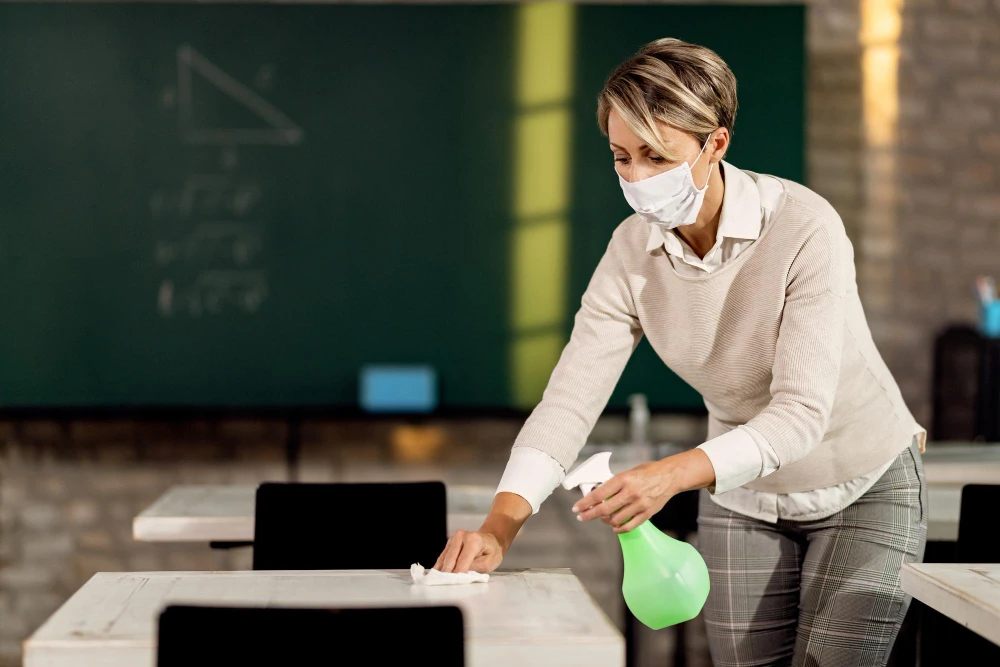
School, college, and university cleanliness has never been more challenging. As student numbers grow and standards of hygiene change, education facility cleaning has evolved from traditional janitorial practice to a strategic imperative to the health, safety, and productivity of students and employees alike. Providing a clean learning environment involves meeting both operational and logistical challenges and staying abreast of current compliance and sustainability needs.
In this blog, we look at the most common issues educational institutions encounter in keeping facilities clean and propose practical solutions to overcoming them.
Key Challenges in Maintaining Clean Educational Facilities
1. Heavy Daily Usage and Ongoing Use
Schools and universities have high daily usage, and hence high wear and tear and rapid buildup of dirt. Classrooms, cafeterias, and corridors are the areas with the highest concentration of germs and spills. Ongoing usage brings with it a number of problems:
- Quick build-up of dirt, dust, and debris.
- Regular cleaning necessary without interfering with classes.
- Higher risk of contracting infections and diseases.
Schools need to have flexible and frequent cleaning schedules to avoid interruptions while ensuring hygiene.
2. Maintaining Health and Safety Standards
Regulations for health and safety standards for schools are tighter than ever. Schools have to adhere to local, state, and federal hygiene practices, such as proper cleaning of restrooms, cafeterias, and public areas. Some of the most important challenges are:
- Compliance with COVID-19 and other infectious disease protocols.
- Proper cleaning chemical and equipment safe handling.
- Cleaning staff training in good hygiene practices.
Failure to maintain these standards may lead to fines, health risks, and reputational damage.
3. Limited Budgets and Resources
Budget limitations are a common occurrence in schools and universities, which can restrict access to quality cleaning equipment and manning. Limited resources can cause:
- Inadequate cleaning material and protective equipment.
- Overworked janitorial personnel and increased turnover.
- Reduced cleaning quality due to lack of time.
Spending on effective cleaning solutions and environmentally friendly products will enable schools to optimize resources while sustaining high levels of performance.
4. Handling Specialized Cleaning Requirements
Schools contain laboratories, gyms, libraries, and cafeterias, each with specialized cleaning requirements. Problems in specialized cleaning are:
- Proper sanitizing of labs to avoid contamination.
- Cleaning the gym and sporting equipment to avoid infections.
- Keeping computer labs and electronic hardware intact.
Meeting these demands necessitates trained personnel and suitable cleaning technology.
5. Sustainability and Environmental Issues
Educational institutions today are more concerned than ever with sustainability. This means one more responsibility for facility cleaning teams:
- Employing green cleaning chemicals.
- Conserving water and energy.
- Enacting recycling and waste reduction programs.
Achieving the balance between sanitation and sustainability needs thoughtful planning and ingenuity.
6. Embracing Technology for Effective Cleaning
Advanced educational cleaning is shifting towards technology and automated solutions. Nevertheless, it is challenging to incorporate these solutions:
- Acquiring sophisticated cleaning robots and automated systems.
- Training personnel to operate new technology effectively.
- Tracking effectiveness in cleaning using digital tools and reporting.
Utilizing technology can make cleaning more efficient, safer, and allow employees to be more strategically focused.
Wrapping Up
Keeping clean school buildings these days is a complex issue. From dealing with high volumes of pedestrian traffic and standards for compliance to handling specialized cleaning requirements and sustainability initiatives, schools need to take a proactive and systematic approach. By making investments in trained personnel, cutting-edge technology, and environmentally friendly methods, schools can provide students and employees with safe, healthy, and productive learning environments.
Prioritizing cleaning of education facilities is not only about sanitation—it's about creating a safe, inclusive, and high-performing educational environment that will benefit all.












Sign in to leave a comment.