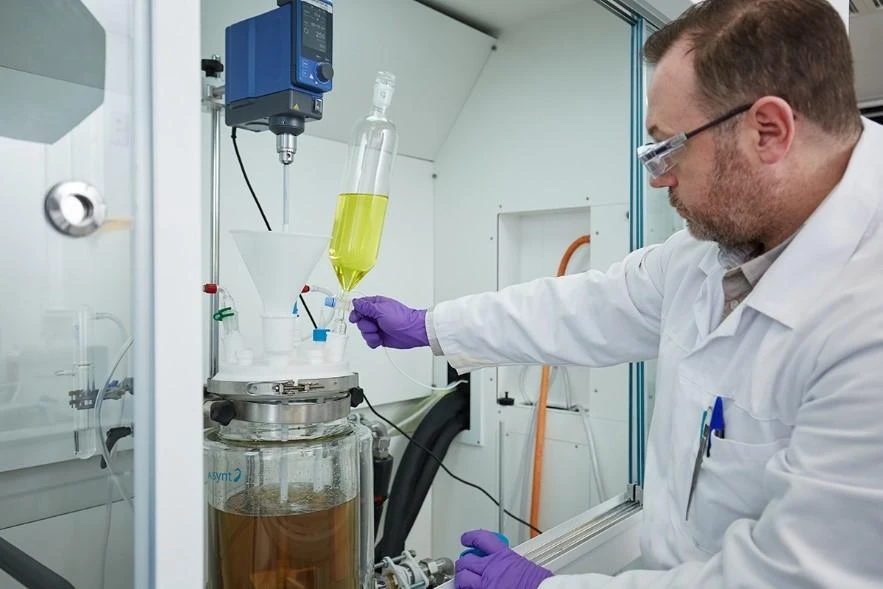

In the ever-evolving landscape of drug discovery, medicinal chemistry services play a crucial role in the development of new and effective drug candidates. These services involve the application of chemical principles and techniques to design, synthesize, and optimize molecules with the potential to become therapeutic agents.
The success of drug discovery heavily relies on the careful consideration of various factors throughout the medicinal chemistry process. This article explores the key considerations in designing drug candidates through medicinal chemistry services, highlighting their significance in the pursuit of innovative and impactful medications.
Target Identification and Validation
The initial step in designing drug candidates involves identifying and validating a specific biological target implicated in a disease. Medicinal chemists collaborate closely with biologists and pharmacologists to gain a deep understanding of the target's molecular structure, function, and mechanisms of action. Comprehensive target validation ensures that the drug discovery efforts are focused on the most promising avenues and increases the chances of success in later stages.
Structure-Activity Relationship (SAR) Analysis
Structure-activity relationship analysis is a fundamental aspect of medicinal chemistry that explores the relationship between the chemical structure of a compound and its biological activity. By synthesizing and testing a series of structurally related compounds, medicinal chemists can identify the key functional groups and structural elements responsible for the desired biological activity. SAR analysis provides valuable insights into the optimization of lead compounds and guides the subsequent design iterations.
Lead Identification and Optimization
Lead identification involves the discovery of a compound or a series of compounds with a desirable biological activity against the target. Medicinal chemists employ various strategies, such as high-throughput screening and virtual screening, to identify potential leads from large compound libraries or through computational methods. Once a lead compound is identified, medicinal chemists embark on lead optimization, a process that aims to improve the compound's potency, selectivity, pharmacokinetic properties, and safety profile. Iterative rounds of chemical synthesis, biological testing, and SAR analysis are performed to fine-tune the lead compounds and enhance their drug-like properties.
ADME-Tox Considerations
The absorption, distribution, metabolism, excretion, and toxicity (ADME-Tox) profile of a drug candidate significantly influences its success or failure in clinical development. Medicinal chemists must consider these factors early on during the drug design process. The compound's ability to be absorbed into the bloodstream, its distribution within the body, metabolism by enzymes, elimination, and potential toxicity are carefully evaluated. Optimization strategies focus on enhancing desirable properties (e.g., oral bioavailability) while minimizing undesirable effects (e.g., toxicity or drug-drug interactions).
Patentability and Intellectual Property (IP) Considerations
Protecting intellectual property is crucial in the pharmaceutical industry, as it provides incentives for investment in drug discovery and development. Medicinal chemists need to consider patentability throughout the design process to ensure that the resulting drug candidate or its related compounds can be protected. Collaboration with patent attorneys or experts in intellectual property is often necessary to navigate the complex landscape of patent law and secure appropriate protection for the drug candidate and related inventions.
Synthetic Feasibility and Scalability
While designing drug candidates, medicinal chemists must carefully consider the synthetic feasibility and scalability of the synthetic routes. Developing efficient and cost-effective synthetic methodologies is essential for large-scale production of the drug candidate once it progresses to clinical trials and commercialization. Considerations such as availability and cost of starting materials, reaction yields, and complexity of the synthetic steps are weighed to ensure a viable and sustainable manufacturing process.
Conclusion
Medicinal chemistry service play a vital role in the design and development of potential drug candidates. Through a multidisciplinary approach, medicinal chemists optimize lead compounds, taking into account factors such as target identification and validation, structure-activity relationship analysis, ADME-Tox considerations, patentability, and synthetic feasibility.
By addressing these key considerations, medicinal chemistry services pave the way for the discovery of innovative and effective medications that have the potential to significantly impact human health. As the field of medicinal chemistry continues to evolve, these considerations will remain essential in the pursuit of novel therapeutic interventions.





























Sign in to leave a comment.