

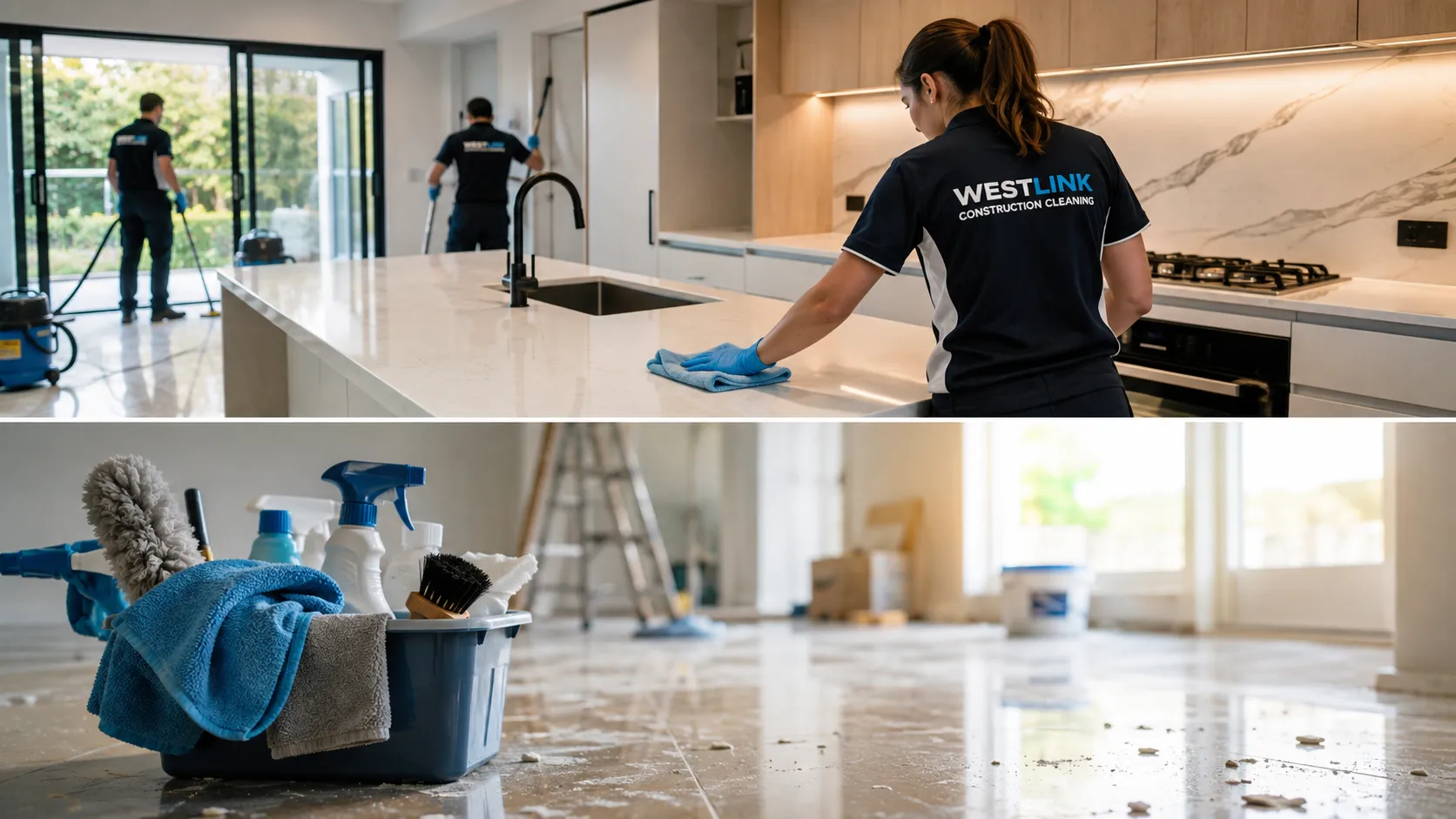
Builder cleaning covers the parts of a property where construction dust, debris, marks, and residue tend to collect before handover. In most Construction Cleaning Sydney projects, that means more than vacuuming floors and wiping benches. Cleaners often work through kitchens, bathrooms, windows, tracks, cabinetry, skirting boards, fixtures, floors, doors, high ledges, and other detailed areas that can make a new or renovated property still feel unfinished.
A builder clean is a detailed post-construction clean carried out after building, renovation, fit-out, or finishing work.
The exact scope can change from one project to another, but the goal stays the same: remove the mess left by construction and prepare the site for final inspection, presentation, or handover.
That usually means dealing with more than everyday dirt.
Construction sites can leave behind fine dust, paint spots, adhesive, stickers, protective film, plaster residue, grout haze, sawdust, silicone marks, fingerprints, and small debris.
Some areas collect much more of this material than others.
That is why a good builder clean works through the property in sections rather than treating the whole site like a normal house clean.
The cleaner needs to look at both the large visible surfaces and the smaller places where residue hides.
Kitchens
Kitchens are one of the most detailed areas in a builder clean.
They contain many surfaces packed into a relatively small space.
A typical kitchen may include cabinetry, drawers, benchtops, splashbacks, sinks, taps, handles, appliances, kickboards, shelving, and sometimes stone or metal finishes.
Fine dust settles easily inside cupboards and drawers during construction.
It can collect around hinges, behind handles, along shelf edges, and in the corners where two panels meet.
Benchtops may look clean from a distance but still show a light film when sunlight hits them from the side.
Splashbacks can also hold adhesive, grout residue, dust, or fingerprints.
A detailed kitchen clean may include:
- wiping cabinet doors
- cleaning inside cupboards and drawers
- removing dust around hinges and runners
- cleaning benchtops
- detailing splashbacks
- cleaning sinks and taps
- wiping appliance fronts
- removing suitable stickers and protective film
- cleaning kickboards and floor edges
- removing fingerprints from polished surfaces
The exact method depends on the materials installed.
A cleaner should not use the same product on natural stone, stainless steel, painted cabinetry, and glass.
That is why surface knowledge matters.
Bathrooms
Bathrooms are another major focus because they combine many different materials.
A single bathroom may contain tile, grout, glass, mirrors, chrome, stainless steel, stone, porcelain, cabinetry, silicone, and painted surfaces.
Construction residue can show up in several forms.
Grout haze may remain on tiles.
Dust can settle around taps and behind fixtures.
Silicone smears may be visible around shower screens or basins.
Labels and protective film may remain on new fittings.
Mirrors and glass can show fingerprints, dust, and installation marks.
A thorough bathroom clean often includes:
- cleaning tiles and grout surfaces
- detailing shower glass
- wiping mirrors
- cleaning taps and fittings
- cleaning basins and vanities
- wiping toilets
- cleaning around baths
- removing dust from vanity interiors
- detailing floor edges
- removing suitable labels and residue
- wiping chrome or metal fittings
Bathrooms may look simple because they are small, but they can take a lot of time because of the number of different surfaces.
Windows and Glass
Windows are one of the most common problem areas after construction.
The glass itself may be covered with dust, fingerprints, stickers, adhesive, paint marks, silicone, or protective film.
Frames and tracks can be even dirtier.
During the building process, window tracks often collect:
- sawdust
- plaster dust
- tile dust
- screws
- grit
- tiny offcuts
- dried paint
- adhesive
- silicone residue
A normal glass clean does not always address these areas.
Builder cleaning may include the glass, frames, sills, and tracks if they are part of the agreed scope.
Tracks usually need detailed vacuuming and brushing because dirt can pack into the corners.
Glass also needs careful treatment.
The wrong scraper or abrasive tool can scratch the surface.
A good cleaner should inspect the glass and residue before deciding how to remove construction marks.
Window Tracks and Sliding Door Tracks
Tracks deserve their own attention because they collect more debris than almost any other small area.
Dust settles into the grooves.
Small screws, chips, plaster pieces, and grit can lodge in the corners.
Sliding doors can push this debris back and forth, making the track look dirty again even after a quick wipe.
A detailed clean usually starts with loose material.
A crevice tool or suitable vacuum attachment can remove dust and grit.
Brushes may help loosen packed material.
The track can then be wiped in detail.
This is one of those jobs where rushing shows quickly.
A track can look acceptable from standing height but still contain visible dirt when viewed closely.
Cabinet Interiors and Storage Areas
Cabinet interiors often get missed during normal cleaning.
During construction, however, cupboards and drawers may stay open for long periods while trades work around them.
That allows fine dust to settle inside.
Common areas include:
- kitchen cupboards
- drawers
- wardrobes
- vanity cabinets
- laundry storage
- linen cupboards
- built-in shelving
Dust often collects in corners and around hardware.
Drawer runners can also hold residue.
A detailed builder cleaning should remove loose dust before wet wiping.
If a damp cloth is used too early, fine plaster dust can turn into a streaky paste.
Cleaning from dry to controlled damp usually gives a better result.
Floors
Floors are one of the largest areas covered during builder cleaning.
They also vary greatly.
A project may include:
- timber
- vinyl
- tiles
- stone
- laminate
- polished concrete
- carpet
- specialty commercial flooring
The first step is usually removing loose grit and dust.
That matters because grit trapped under a mop, pad, or floor machine can scratch the finish.
After that, the method depends on the material.
Some floors may need careful damp mopping.
Others may suit a commercial scrubber.
Textured surfaces can need more mechanical action.
Stone may require a suitable pH-neutral cleaner.
The cleaner should also watch for:
- paint spots
- adhesive
- plaster residue
- grout haze
- shoe marks
- construction dust
- protective tape
- sticker residue
Not every mark should be attacked aggressively.
The safest method depends on the finish underneath.
Skirting Boards and Floor Edges
Skirting boards are easy to overlook because they sit at the edge of the room.
Construction dust tends to settle there.
Fine particles can collect along the top edge of the skirting, in corners, and in the narrow line where the floor meets the wall.
These areas can make a room still look dusty after the main floor has been cleaned.
A proper builder clean usually works along the edges carefully.
The cleaner may vacuum first and then wipe.
Corners often need more attention because dust and debris gather where walls meet.
This is a small detail, but it has a large effect on the final appearance.
Doors and Door Frames
Doors pass through many hands during construction.
That means they often collect fingerprints, dust, paint marks, and general handling residue.
Door frames can also hold fine dust along the sides and upper edges.
The top of a door is a common dust trap.
It may look perfectly clean from normal standing height while holding a visible layer of fine powder.
Builder cleaning may include:
- wiping door faces
- cleaning handles
- detailing edges
- wiping frames
- cleaning upper door surfaces
- removing suitable labels or adhesive
- checking around hinges
Doors that lead outside can also carry extra dust and dirt from worker traffic.
Light Switches, Power Points, and Fittings
Small fittings collect dust quickly during building work.
Light switches, power points, control panels, and other wall fittings can gather fine residue around their edges.
Workers also touch them often.
That leaves fingerprints and marks.
These areas need careful wiping.
The cleaner should avoid excess moisture around electrical fittings.
Detail brushes or controlled cloth work may help around the edges.
They may seem like minor items, but clients notice them because they sit at eye level and are touched frequently.
Air Vents and Grilles
Air vents and grilles are another common dust collection point.
Fine particles settle around the openings during sanding, cutting, and other building work.
If the system starts running before those areas are cleaned, some of the dust can move again.
Accessible vents may need careful vacuuming and wiping.
The cleaner should work around the surface rather than pushing loose dust deeper into the system.
If there is concern about contamination inside ducts or mechanical systems, that may require a specialist service outside a standard builder clean.
The normal builder cleaning scope usually focuses on accessible external surfaces.
High Ledges and Upper Surfaces
Dust does not only settle at floor level.
It collects on any horizontal surface.
That can include:
- cabinet tops
- door frames
- shelves
- bulkheads
- ledges
- accessible beams
- high window frames
These areas matter because dust can fall later.
A room may look clean until someone closes a door or air movement disturbs an upper ledge.
That is why professional cleaning usually follows a top-to-bottom sequence.
High surfaces come first.
Floors come later.
This reduces repeat work.
Stairs and Landings
Stairs collect a surprising amount of building dust.
Workers use them constantly during construction.
That means they can hold:
- grit
- plaster dust
- sawdust
- shoe marks
- paint spots
- debris along edges
The stair treads need cleaning, but so do the corners, risers, rails, and landings.
Dust often packs into the edges where the tread meets the wall.
Handrails may also show fingerprints and handling marks.
A proper stair clean looks at the whole area, not just the centre of each step.
Balconies and External Areas
Some builder cleaning scopes also include balconies and nearby external areas.
These spaces can collect construction dust, mud, packaging, paint residue, and debris.
Balcony glass may need detailing.
Tracks can hold dirt.
Outdoor tiles may have cement or grout residue.
The cleaning method depends heavily on the surface and drainage.
Pressure washing may be suitable in some outdoor areas, but not everywhere.
Water should not be used carelessly near finished interiors or areas with poor drainage.
External cleaning should always match the actual surface and site conditions.
Laundry Areas
Laundry rooms often receive less attention than kitchens and bathrooms, but they still collect construction residue.
Cabinets can hold fine dust.
Benchtops may show plaster or adhesive residue.
Sinks and taps can have fingerprints.
Floor edges can collect dust and small debris.
If appliances have been installed, dust can sit behind or beside them.
A builder clean may include:
- cabinetry
- benchtops
- sinks
- taps
- storage interiors
- floors
- skirting
- fittings
These areas are usually small, but they still need detailed work before handover.
Wardrobes and Built-In Storage
Wardrobes can look finished while hiding dust inside.
Shelves, drawers, rails, and internal corners can all collect fine particles.
Because wardrobes may remain open during painting, electrical work, flooring, or carpentry, dust can build up before the doors are closed.
A detailed clean may include vacuuming the interiors, wiping shelves, cleaning drawer edges, and checking corners.
This is important because the client may start placing clothes or belongings inside soon after handover.
Fixtures and Fittings
New fixtures and fittings often need a final detail clean.
These can include:
- taps
- handles
- rails
- shower fittings
- door hardware
- sinks
- basins
- appliance fronts
- mirrors
- switches
Fingerprints are common.
Protective stickers may still be attached.
Fine dust can settle around the edges.
The cleaner should use suitable materials so polished or coated finishes do not get scratched.
Matte-black and polished metal surfaces can show marks easily.
Careful wiping makes a large difference.
Walls and Painted Surfaces
Walls are not always washed during a builder clean, but accessible marks may need attention.
New paint can be sensitive.
That means aggressive scrubbing can cause damage.
The cleaner may remove light dust or suitable marks if the surface allows it.
Heavier paint defects, dents, chips, or unfinished areas belong on the builder's defect list rather than the cleaning list.
This distinction matters.
Cleaning should improve the finished surface, not attempt to repair poor workmanship.
Removing Stickers and Protective Film
New products often arrive covered with labels, tape, or protective film.
These materials can appear on:
- windows
- appliances
- cabinetry
- bathroom fittings
- glass
- metal surfaces
- tiles
Some come off easily.
Others leave adhesive behind.
A builder clean may include removing these materials if the scope says so.
However, cleaners should not automatically strip every label they see.
Some product labels may need to remain.
Some protective film may stay in place until another stage.
The builder should confirm what needs removal.
Paint, Adhesive, Silicone, and Grout Residue
These are some of the most common construction residues found during final cleaning.
They require careful treatment.
Paint splatter may need a suitable scraper or remover.
Adhesive may need softening.
Silicone residue can require detailed work.
Grout haze may need a surface-safe product.
The cleaner should always consider the material underneath.
A method that works on tile may damage coated glass.
A product safe for one stone may not suit another.
This is where experience becomes important.
The aim is to remove residue without harming the finish.
Common Areas in Commercial Builder Cleaning
Commercial projects can include many of the same areas as residential jobs, but often on a larger scale.
Typical areas may include:
- reception areas
- offices
- meeting rooms
- kitchens
- bathrooms
- corridors
- stairwells
- lifts
- glass partitions
- shopfronts
- common areas
- storage rooms
- plant-access areas
- large hard-floor zones
Large commercial floors may need floor machines.
Glass partitions can require significant detailing.
Corridors and common areas may need repeated touch-ups because many trades still move through them.
The cleaning plan should match the size and use of the site.
Areas That May Not Be Included Automatically
Not every cleaning task forms part of a standard builder clean.
Possible exclusions can include:
- large-scale rubbish removal
- high-access external glass
- pressure washing
- carpet extraction
- specialist stone restoration
- deep duct cleaning
- hazardous material removal
- floor polishing or restoration
- difficult stain removal
These services may still be available, but they should be confirmed separately.
Builders should never assume that "full builder clean" includes every possible task.
A written scope is much safer.
Why a Room-by-Room Checklist Helps
A checklist makes builder cleaning more consistent.
Instead of relying on memory, the cleaner can work through each room in a set order.
For example, a bedroom may need:
- high dusting
- wardrobe interiors
- window and track cleaning
- door detailing
- skirting
- switches
- floor cleaning
A bathroom needs a different checklist.
A kitchen needs another.
This approach helps reduce missed areas.
It also makes the final inspection easier.
The builder and cleaning company can compare the completed work against the agreed scope.
FAQs About Areas Covered During Builder Cleaning
Does builder cleaning include inside cupboards and drawers?
It can. Cabinet interiors, drawers, wardrobes, and storage areas are often included in detailed cleaning, but they should be listed clearly in the scope.
Are windows included in a builder clean?
Windows are commonly included, but the service may cover internal glass only unless external cleaning is specified. Frames, tracks, stickers, and residue should also be confirmed.
Does builder cleaning include floors?
Yes, floors are usually a major part of the service. The cleaning method should match the flooring material and the type of construction residue present.
Are bathroom grout and tiles cleaned?
Bathroom tiles, grout surfaces, fixtures, glass, and vanities are commonly cleaned. Heavy grout haze or specialist restoration may need separate treatment.
Are walls cleaned during builder cleaning?
Light dust or suitable marks may be addressed, but full wall washing is not always standard. Fresh paint also needs careful handling.
Are balconies included?
Balconies may be included if they form part of the scope. External areas, pressure washing, and high-access work should be confirmed before the job starts.
Does builder cleaning remove paint and adhesive?
Suitable paint spots, adhesive, stickers, and other residue may be removed where it can be done safely. The method depends on the surface underneath.
Are air vents cleaned?
Accessible external vent surfaces may be vacuumed and wiped. Deep cleaning inside ducts is normally a separate specialist service.
Is heavy construction waste included?
Not always. Small debris may form part of the clean, while large amounts of building waste may need separate removal.
Why Detailed Area Coverage Matters Before Handover
A property can look clean from the middle of the room and still feel unfinished when someone starts looking closely.
Dust inside drawers, residue in window tracks, fingerprints on fittings, grime along skirting edges, and marks on glass all affect the final impression.
That is why builder cleaning needs to cover the detailed areas as well as the obvious ones.
Westlink Construction Cleaning approaches post-construction cleaning room by room, with attention to surfaces, fine dust, tracks, fixtures, cabinetry, floors, and other areas that matter at handover.
If your project is nearing completion, Westlink Construction Cleaning can prepare a clear cleaning scope based on the property, site condition, finishes, and areas that need attention before final presentation.



























Sign in to leave a comment.