
Losing a few strands of hair every day is completely normal. But when you start noticing more hair on your pillow, in your comb, or circling the shower drain, it is worth paying attention. Hair loss is one of the most common concerns people visit a dermatologist for, and if you have been searching for reliable hair loss treatment in Noida, understanding the root cause is always the right place to start.

This blog breaks down the most common reasons for hair loss and the treatments that genuinely make a difference.
Understanding the Hair Growth Cycle
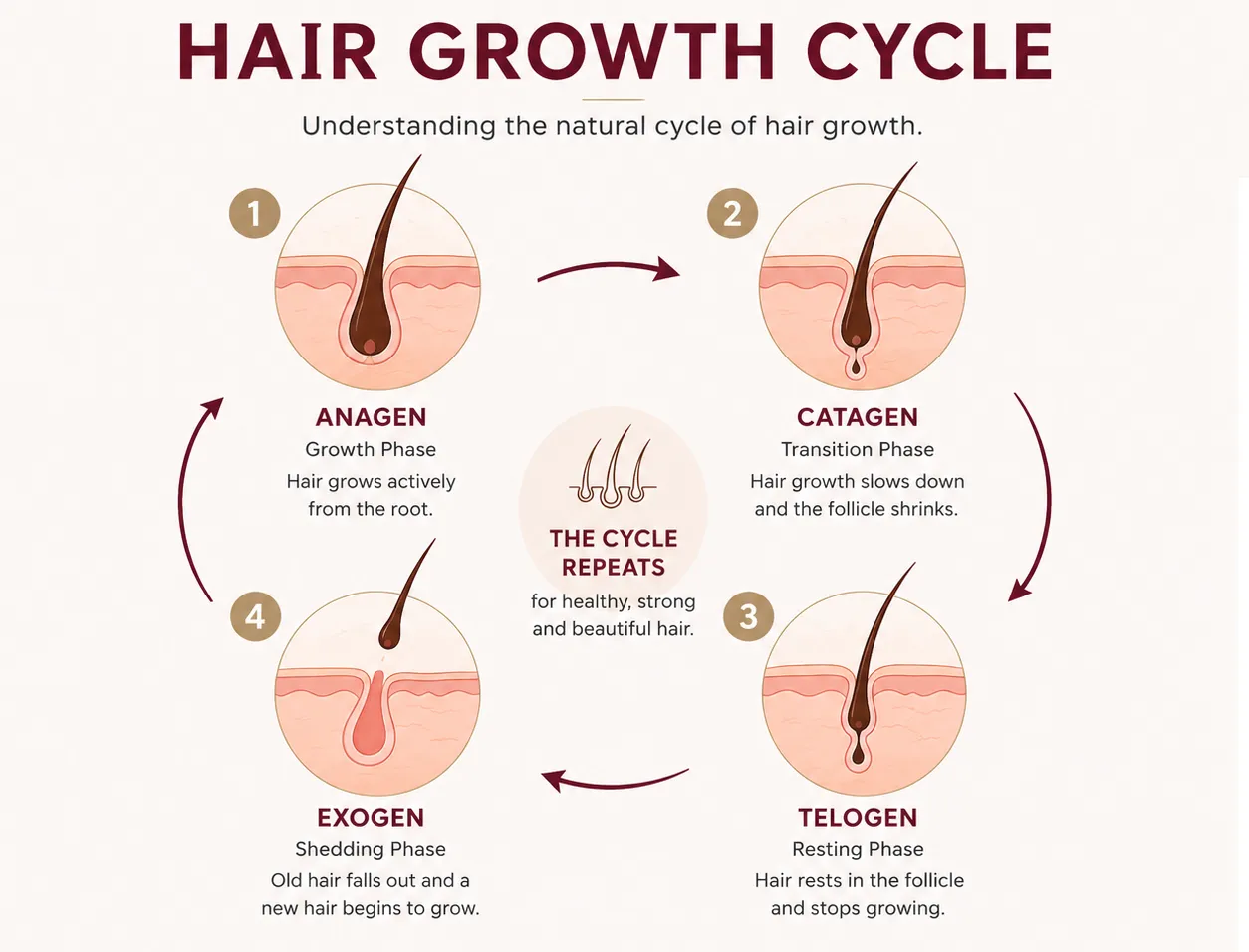
Hair naturally grows, rests, and sheds in a continuous cycle. When this cycle is disrupted, excessive hair fall and thinning can occur. Identifying the reason behind this disruption is essential for successful treatment.
Common Causes of Hair Loss
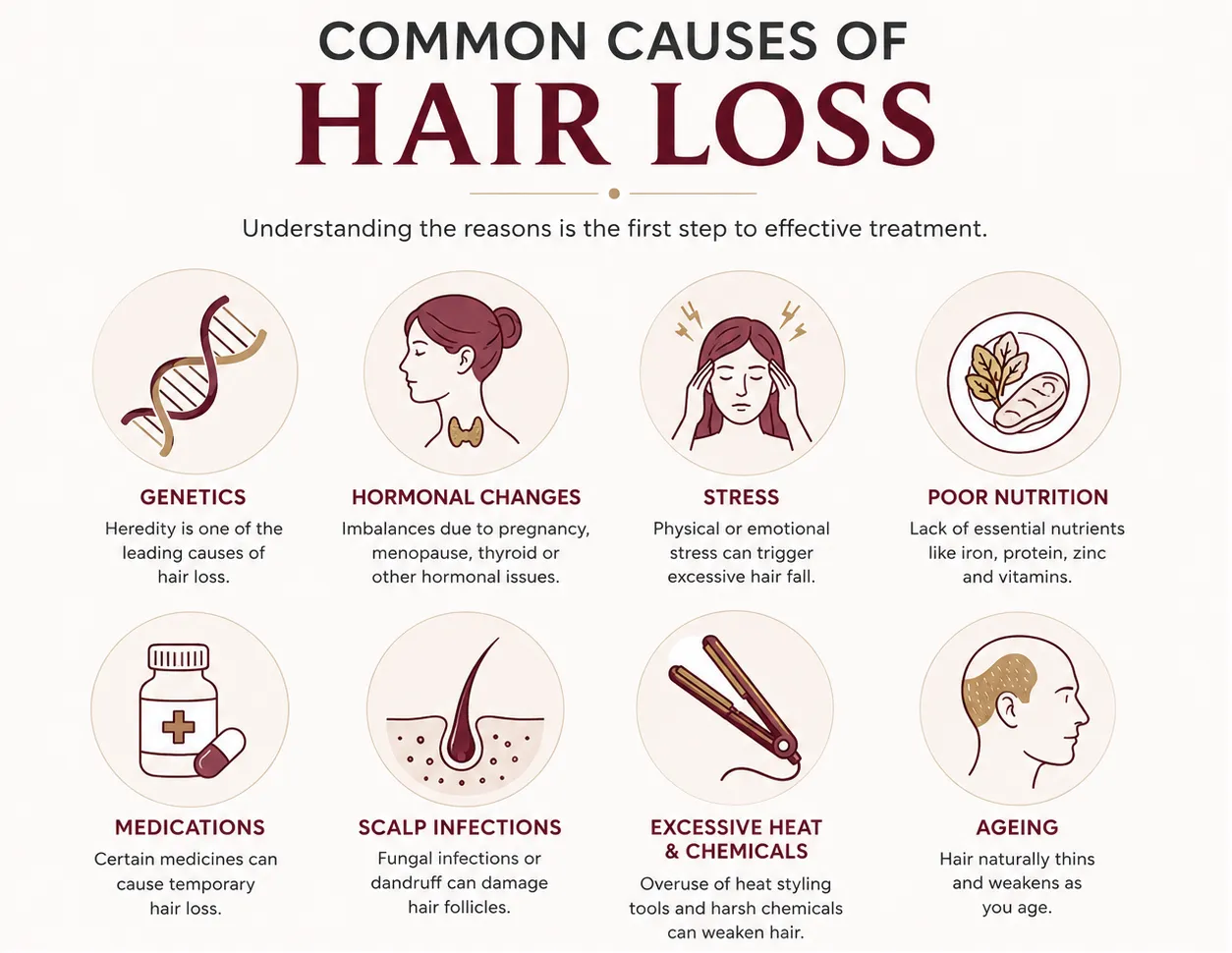
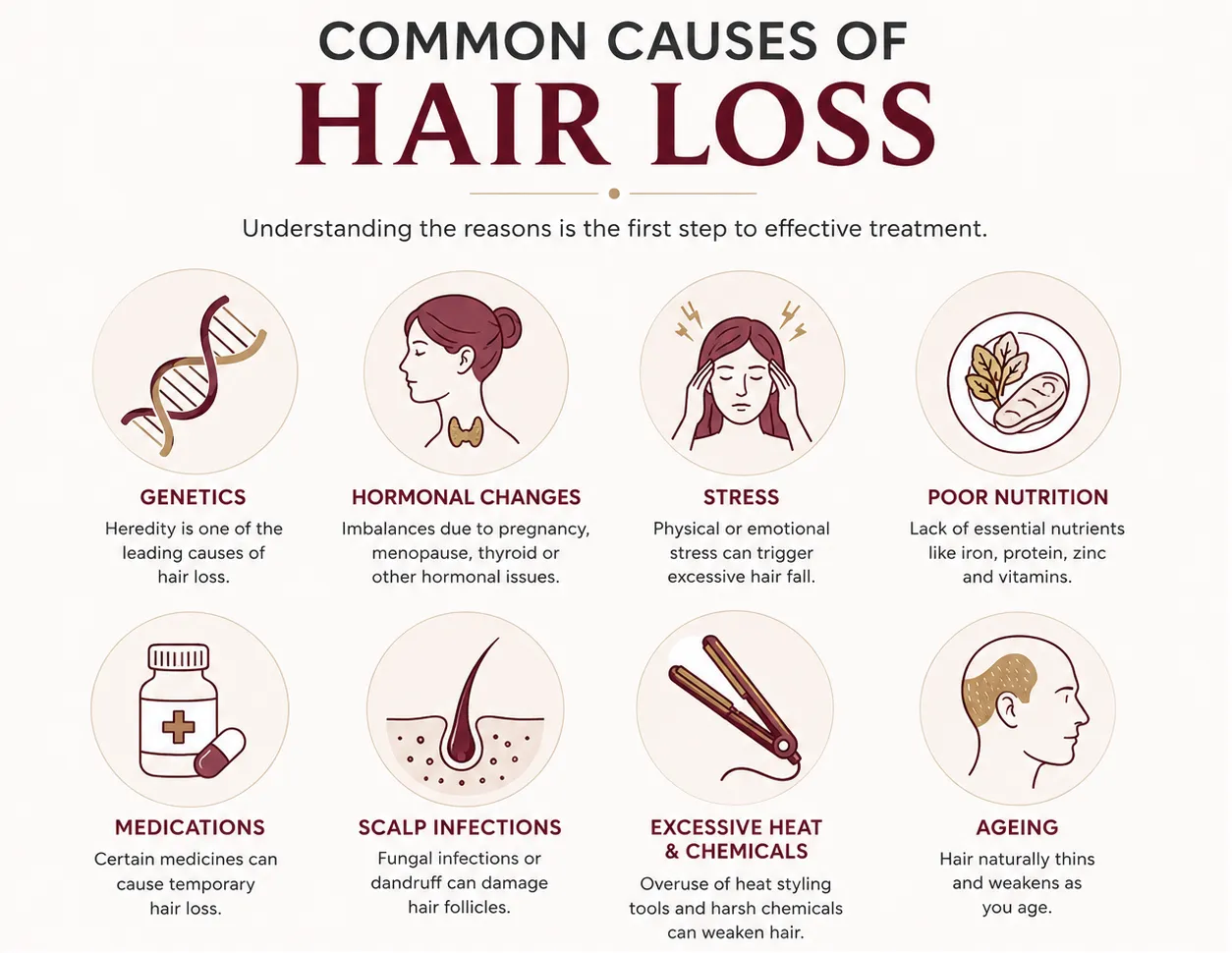
Hair loss rarely has a single cause. In most cases, it is a combination of factors working together. Here are the most common ones:
1. Genetics
Hereditary hair loss, known as androgenetic alopecia, is the most prevalent cause in both men and women. In men, it typically presents as a receding hairline. In women, it usually shows as overall thinning across the crown.
2. Hormonal Changes
Hormones play a significant role in hair health. Conditions like thyroid disorders and hormonal shifts during and after pregnancy can all trigger excessive shedding.
3. Nutritional Deficiencies
Low levels of iron, Vitamin D, Vitamin B12, zinc, and protein are commonly linked to hair fall. These deficiencies are particularly widespread in India due to dietary patterns, and they are often overlooked.
4. Stress
Both physical and emotional stress can push hair follicles into a resting phase, leading to noticeable shedding two to three months after the stressful event. This is called telogen effluvium, and it is more common than most people think.
5. Scalp Conditions
Dandruff, scalp infections, or conditions like seborrheic dermatitis can weaken the hair at the root and cause increased fall over time.
6. Medications and Illness
Certain medications, including those for blood pressure, thyroid, and depression, can cause hair loss as a side effect. Prolonged illness or surgery can also disrupt the hair growth cycle.
How Is the Cause Diagnosed?
Before recommending any treatment, a dermatologist will assess your hair and scalp properly. This typically involves:
- A detailed discussion about your medical history, diet, and stress levels
- Examination of the scalp and hair pattern
- Blood tests to rule out deficiencies or hormonal imbalances
- A trichoscopy (a scalp examination using a specialised lens) in some cases
This step matters because the treatment for genetic hair loss differs greatly from the treatment for a deficiency-related one. Jumping in without a diagnosis often leads to wasted time and money.
Hair Loss Treatments That Actually Work
Once the cause is identified, there are several effective treatment options available.
1. Topical and Oral Medications
Minoxidil (applied to the scalp) and finasteride (for men, taken orally) are the most commonly prescribed options for androgenetic alopecia. They help slow hair loss and, in many cases, stimulate regrowth when used consistently.
2. PRP Therapy (Platelet-Rich Plasma)
PRP involves drawing a small amount of your blood, processing it to concentrate the growth factors, and injecting it into the scalp. It stimulates dormant follicles and is particularly effective for early-stage hair thinning.
3. Nutritional Supplementation
When deficiencies are identified, addressing them through targeted supplementation can make a significant difference. Many patients see improvement in hair density within three to four months of correcting iron or Vitamin D levels.
4. Low-Level Laser Therapy (LLLT)
This non-invasive treatment uses light energy to stimulate hair follicles. It is often used alongside other treatments to enhance results.
5. Hair Transplant
For advanced or long-standing hair loss where follicles are permanently affected, a hair transplant may be appropriate. This is typically considered after other options have been explored.
When Should You See a Dermatologist?
Many people wait too long before consulting a specialist. Early intervention almost always leads to better outcomes. You should consider seeing a dermatologist if:
- Hair loss has been going on for more than two to three months
- You notice visible thinning or bald patches
- Your scalp feels itchy, flaky, or inflamed
- Hair fall increased suddenly after illness, stress, or a change in medication
Why Early Treatment Matters
The earlier hair loss is diagnosed, the more treatment options are typically available.
Benefits of early intervention include:
- Preserving existing hair
- Preventing further thinning
- Improving treatment success rates
- Supporting healthier long-term hair growth
Conclusion
Hair loss is rarely just a cosmetic concern - it can affect confidence and quality of life in real ways. The good news is that most causes are treatable, especially when caught early. If you are looking for trustworthy hair loss treatment in Noida, seeking guidance from a qualified dermatologist is the most important step you can take.

At Skinlogics, Dr. Vandana Malik, one of the most sought-after and best dermatologist in Noida, offers personalised hair loss consultations designed around your specific condition.
Book your consultation today and discuss what’s best for you. Visit Skinlogics to book your appointment.





















Sign in to leave a comment.