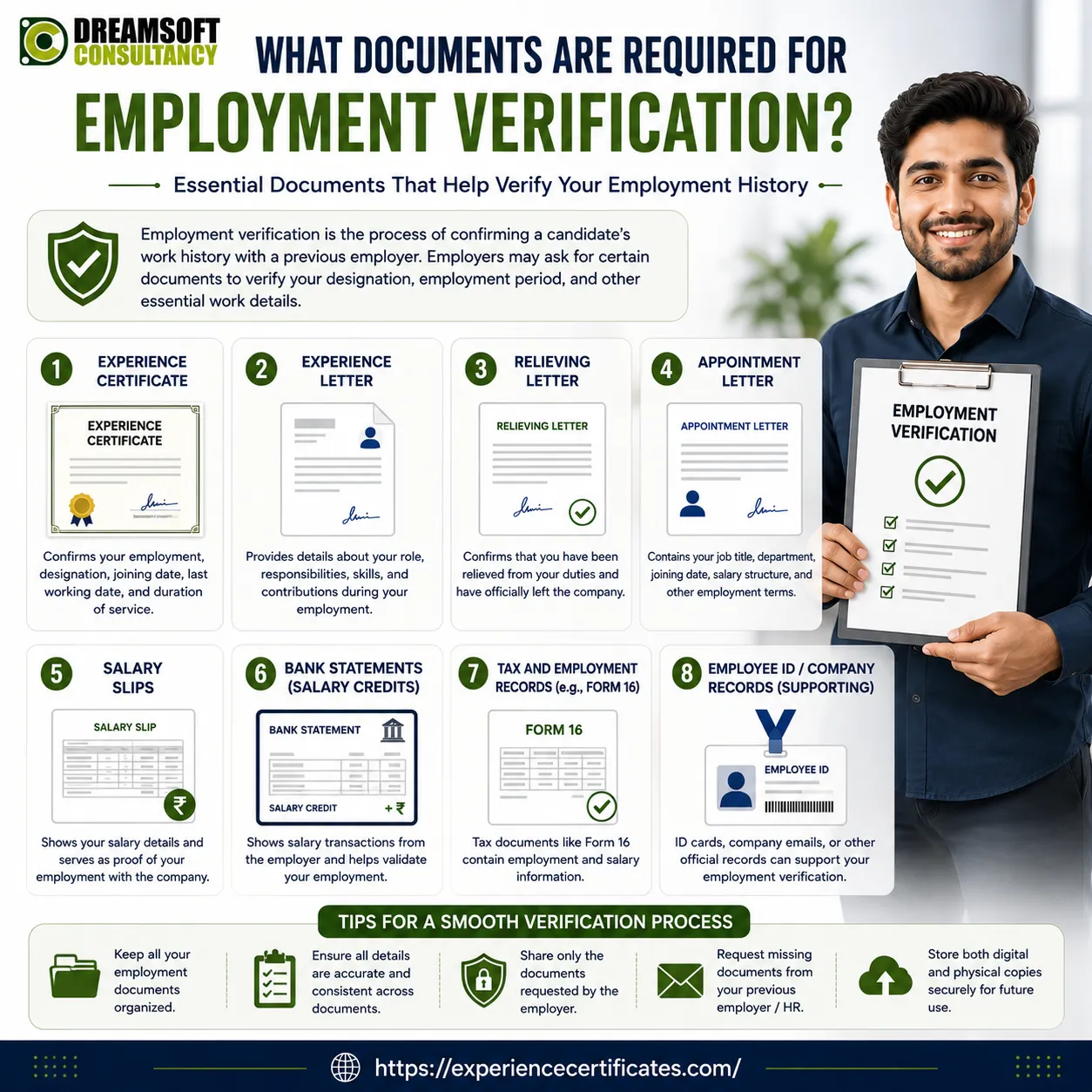

Employment verification is a common process used by companies to confirm a candidate’s previous work history. During recruitment, an employer may verify information such as job title, employment dates, company name, and responsibilities. To complete this process, candidates may be asked to provide different employment verification documents.
The exact documents required for employment verification can vary depending on the employer, job position, industry, and company policy. Some organizations may only need basic employment records, while others may request additional documents. Keeping your employment documents organized can make the verification process easier and faster.
What Is Employment Verification?
Employment verification is the process of confirming whether a person has worked for a particular organization. A prospective employer may contact a previous employer or review documents provided by the candidate.
The purpose of employment verification is to confirm important information included in a candidate’s application or resume. This may include the employee’s designation, employment period, department, and other relevant details.
An experience certificate is one of the commonly used documents for employment verification because it can confirm an employee’s association with a company and their period of service.
Why Is Employment Verification Important?
Employment verification helps employers understand a candidate’s professional background before making a hiring decision. It can help confirm whether the information provided during recruitment matches the candidate’s previous employment records.
For employees, having proper documents can make employment verification more convenient. Accurate employment records can also help avoid delays when a new company requests proof of previous experience.
Common information checked during employment verification may include:
- Employee's full name
- Previous company name
- Job title or designation
- Joining date
- Last working date
- Duration of employment
- Department
- Employment status
- General job responsibilities
1. Experience Certificate
An experience certificate is one of the most useful documents for employment verification. It is generally issued by an employer after an employee leaves the organization.
An experience certificate usually includes the employee’s name, designation, joining date, last working date, and duration of employment. Depending on the company, it may also include a brief description of the employee’s responsibilities.
When submitting an experience certificate for employment verification, employees should make sure that the information is accurate and matches their other employment records.
2. Experience Letter
An experience letter can also be useful for employment verification. Depending on the company, an experience letter may provide more information about an employee’s role, responsibilities, skills, and contribution.
Although an experience letter and an experience certificate are sometimes used interchangeably, their formats can differ between organizations.
A prospective employer may use an experience letter to understand a candidate’s previous role and professional responsibilities.
3. Relieving Letter
A relieving letter is another important employment document. It generally confirms that an employee has formally left an organization after completing the required exit procedures.
During employment verification, a relieving letter can provide additional evidence of an employee’s previous association with a company.
The relieving letter may include the employee’s name, designation, department, and last working date. It can be particularly useful when a new employer wants to confirm that the previous employment ended officially.
4. Appointment Letter
An appointment letter is normally issued when an employee joins an organization. It can contain information such as job title, department, salary structure, joining date, and employment conditions.
Although an appointment letter is not always requested for employment verification, it can serve as supporting evidence of employment. Employees should keep their appointment letter safely along with their other career documents.
5. Salary Slips
Salary slips can provide additional information about an employee’s employment and compensation. They may contain the employee’s name, company name, salary details, pay period, and other payroll information.
In some cases, an employer may request salary slips as supporting documents during employment verification. Employees should only provide the documents specifically requested by the organization and should handle sensitive financial information carefully.
6. Bank Statements Showing Salary Credits
In certain situations, bank statements showing salary credits may be requested as supporting evidence. These records can demonstrate that salary payments were received from a particular employer.
However, bank statements contain sensitive financial information. Therefore, they should only be provided when legitimately required and through an appropriate and secure process.
7. Tax and Employment Records
Depending on the country and employment situation, tax-related or government employment records may sometimes support employment verification.
In India, employees may have documents such as Form 16 or other tax-related records that contain information connected to employment and salary. Whether these documents are required depends on the employer’s verification procedure.
8. Employee ID or Company Records
An employee ID card, official company email records, or other company-issued documents may sometimes be used as supporting evidence. These documents can help establish an employee’s association with an organization.
However, such documents may not be sufficient by themselves for complete employment verification. Employers generally prefer official records or documents issued by the previous organization.
Tips for a Smooth Employment Verification Process
To make employment verification easier, keep all important employment documents organized. Store digital copies in a secure location and keep physical copies where appropriate.
Before submitting documents, check that your name, designation, employment dates, and company information are consistent. Differences between your resume and employment documents can lead to additional questions.
You should also provide only the documents requested by the prospective employer. Avoid sharing unnecessary sensitive information.
If an experience certificate or another employment document is missing, contact your previous employer or HR department and request the appropriate document.
Final Thoughts
The documents required for employment verification depend on the employer and the type of verification being conducted. Common documents include an experience certificate, experience letter, relieving letter, appointment letter, salary slips, and other employment records.
An experience certificate can be particularly useful because it generally confirms an employee’s designation and employment period. Other documents can provide additional information when required.
Maintaining accurate employment records can make employment verification easier during future job applications. Always ensure that the documents you provide are genuine, accurate, and issued or verified through the appropriate organization.

























Sign in to leave a comment.