
When you have purchased a car and heard the term Car Service Contract, you may have nodded along without really knowing what it is.
Is it the same as a warranty?
Is it insurance?
Does it cover everything?
Or is it merely a costly addition?
These are fair questions.
A car service contract can save you the huge repair bills only when you know what is covered in it and what is not. We will simplify it and put it in clear terms so that you know what you are getting.
What Is a Car Service Contract?
A Car Service Contract is a contract that helps cover some repair expenses after your manufacturer's warranty has expired. It can be referred to as an extended warranty, but in an actual sense, it is a distinct contract between you and a provider.
The main purpose is simple:
In case of failure of covered mechanical or electrical parts, repair is done as per the contract agreement.
You are no longer required to spend thousands of dollars out of pocket, but you pay your deductible (where applicable), and the contract covers the approved repair. It is to cover you against unforeseen breakdown costs. And not all contracts are equal.
What does a Car Service Contract Generally Covers?
It is covered depending on the amount of protection you want. The majority of plans can be divided into three categories.
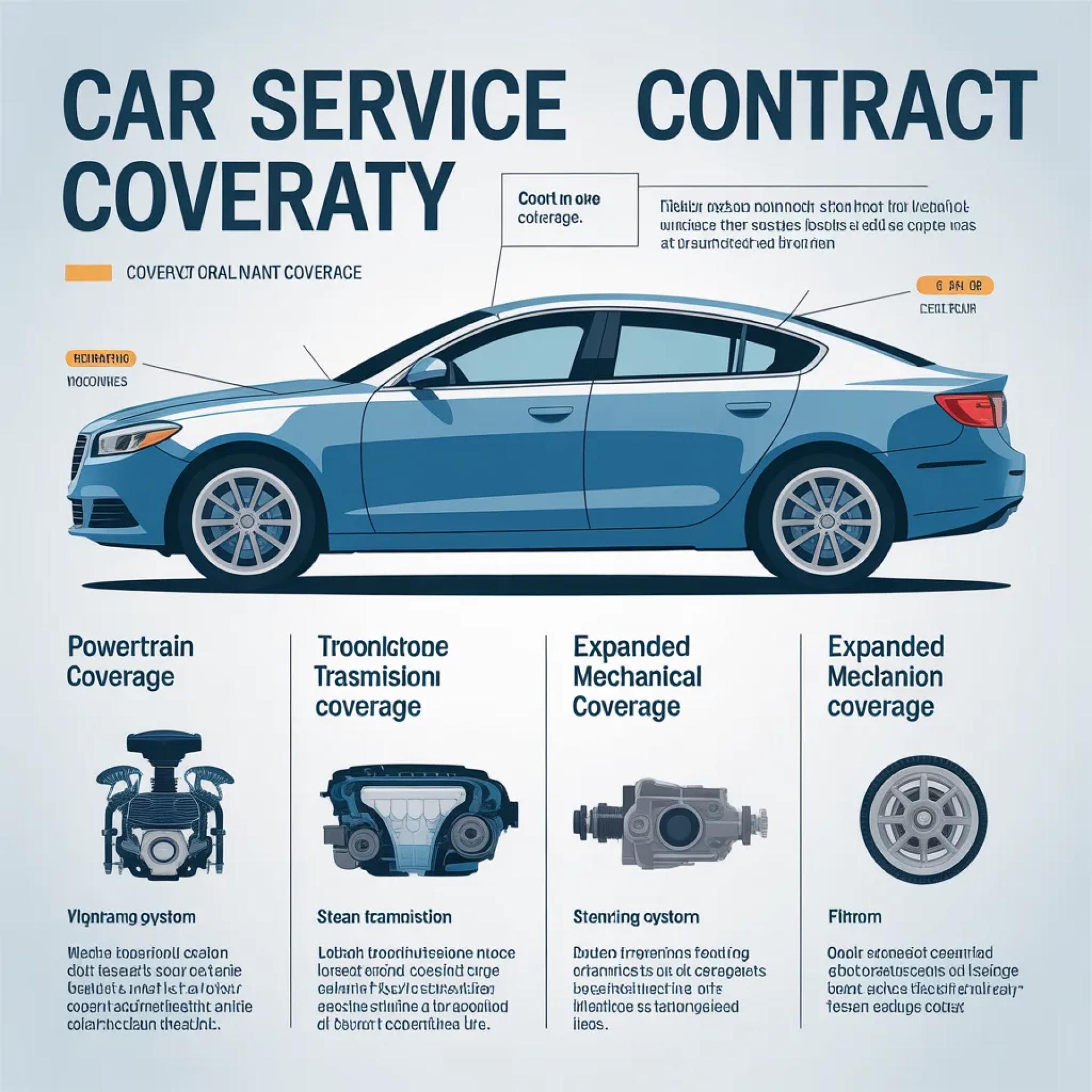
1. Powertrain Coverage
This is the most basic level. Power-train coverage typically covers:
- Engine
- Transmission
- Drive axle
- Transfer case
These are the parts that are costliest to fix. When your transmission breaks or your engine has serious internal issues, the bill may get into the thousands of dollars. Power-train plans can be a good choice for drivers who do not need to spend much money on extensive coverage but still want to be covered in case of major mechanical failures.
2. Expanded Mechanical Coverage.
This is not only the engine and transmission level. It may include:
- Steering system
- Suspension components
- Cooling system
- Fuel system
- Electrical components
With the sophistication of vehicles, electrical systems have a much larger role. Control modules, sensors, and built-in systems may be costly to troubleshoot and fix. This kind of contract offers a wider coverage and concentration on mechanical reliability.
3. Comprehensive Coverage
Complete plans are nearest to bumper-to-bumper coverage. They may cover:
• Advanced electronics
• Air‑conditioning systems
• Advanced driver-assistance technologies.
• Interior mechanical components.
Other electrical systems. Modern cars are very much dependent on technology. Failure of the infotainment screen or advanced safety sensor may cost more than most drivers can anticipate. Comprehensive coverage can make ownership more predictable to those who prefer to have a stronger peace of mind.
What a Car Service Contract Does NOT Generally Cover.
Knowing what is not covered is as important as knowing what is covered. Most contracts do not cover:
• Regular check-ups (oil changes, brakes, filters, etc.)
• Cosmetic damage
• Wear‑and‑tear items
• Tires
• Accidents (that’s insurance)
They are not meant to be serviced; they are meant to be broken down. Coverage can also be compromised in case something collapses because of not taken care of or maintained. That is why it is important to maintain service records.
The Importance of Purchasing the Right Provider.
Not every contract is made equal. Others are sold at a fast rate within dealership finance offices and are packaged into loan packages. You might not have time to really compare options in such an environment.
Dealership markup is usually part of the pricing. It does not imply that the protection is poor-- but it may imply that you are overpaying. Autopair Warranty is developed to make this process easier. Autopair does not force its coverage into a hurried sales process; rather, customers can buy a contract directly.
That means:
• Clear pricing
• No dealership pressure
• Flexible coverage options
• Protection at dealer cost
The focus is transparency. Drivers are able to consider options and are able to comprehend what is covered and select protection that fits their car and their budget.
Is a Car Service Contract Worth the Price?
It is a matter of perception of risk. There are those drivers who save money to repair and pay out of pocket when necessary. Some like orderly protection to evade huge unforeseen costs.
Contemporary cars are costly to repair. The rate of labour in Canada keeps increasing. Even diagnostic costs may be high. When a single repair is more expensive than the contract price, a significant number of drivers will feel that the investment was justified. It is not only about money, but it is also about emotional value. It is worth driving without thinking about each strange sound.
Frequently Asked Questions About Car Service Contracts
Is a Car Service Contract the same as an extended warranty?
They are often used interchangeably, but technically, a service contract is a separate agreement that extends protection beyond the manufacturer's warranty.
Does it cover routine maintenance?
No. Routine services like oil changes and brake pads are typically not included.
Can I choose my repair shop?
Most contracts allow licensed repair facilities, but always confirm with your provider.
Is it worth it for used cars?
It can be especially helpful for used vehicles that no longer have active factory warranty coverage.
Does coverage start immediately?
Some contracts have waiting periods. Always review terms before purchase.
Final Thoughts
A Car Service Contract isn’t magic coverage that fixes everything. But it can be a smart financial tool. It protects you from unexpected mechanical failures. It reduces stress when something breaks. It makes long-term ownership more predictable. The key is understanding exactly what it covers, and buying from a provider that values transparency. Autopair Warranty was created to bring fairness and clarity to automotive protection. By removing dealership markup and simplifying the buying process, drivers get coverage that makes sense, without pressure. At the end of the day, the real question isn’t Does a Car Service Contract cover everything?
The real question is:
Do you want to handle major repair costs alone, or have protection in place before they happen?































Sign in to leave a comment.