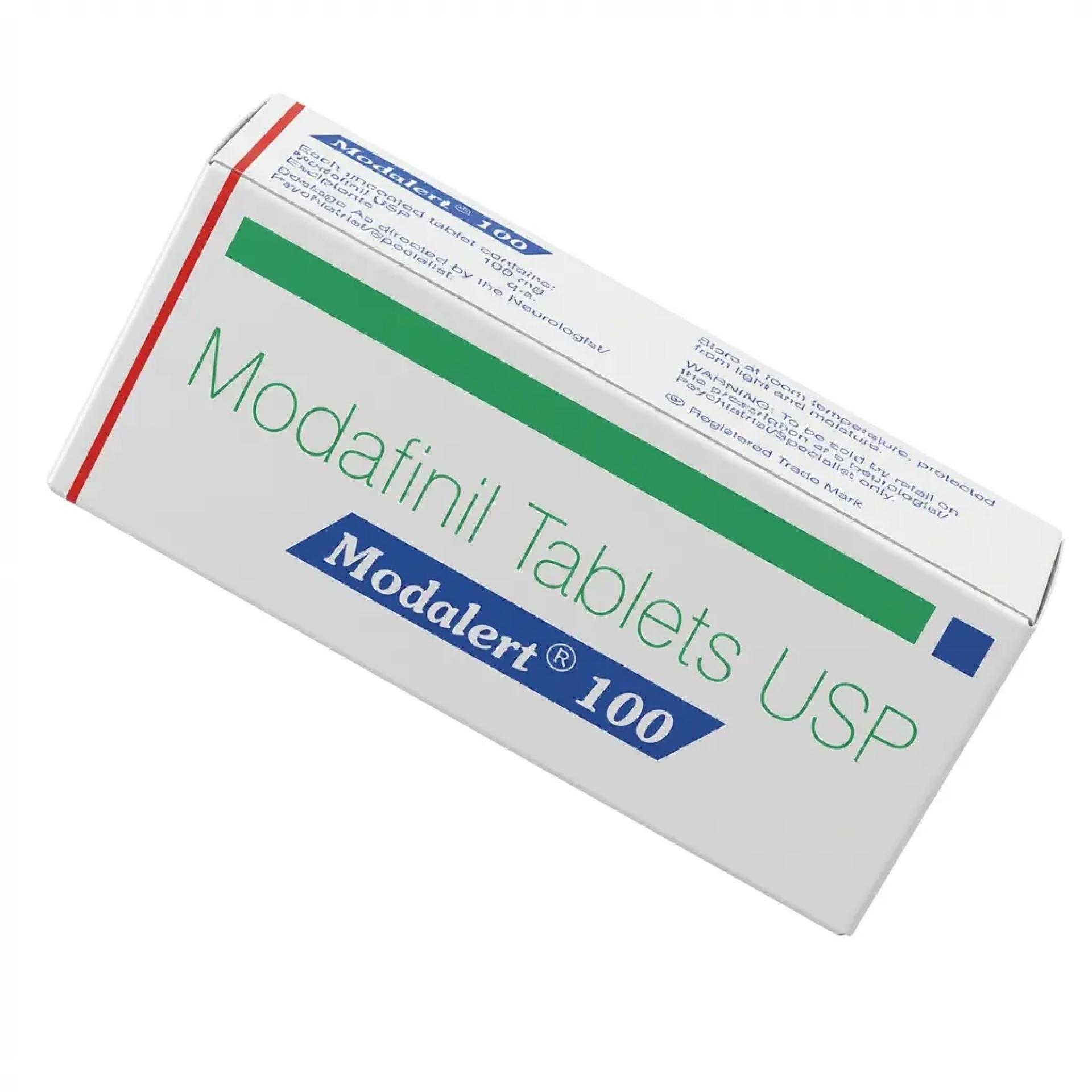

So, what does modafinil feel like?
For a lot of people, the best description is: less sleepy, more “online.” Not necessarily euphoric, not necessarily “wired,” but awake in a clean, practical way. The classic report is that the fog lifts, task-starting becomes easier, and you can stay on a single track without negotiating with your eyelids every five minutes.
It can feel almost too subtle at first—like nothing is happening—until you realize you’ve been doing admin work for two hours without wandering off to reorganize your sock drawer “for mental clarity.”
That’s the “quiet switch” vibe.
But here’s where the experience gets funny (and sometimes annoying): modafinil can also make you laser-focused on the wrong thing. You know… like spending 40 minutes perfecting an email subject line that should’ve been “Quick question.” If you’ve ever felt intensely productive and slightly ridiculous, welcome to the club.
Now for the very unknown fact most casual posts skip:
Modafinil is secretly two drugs wearing one trench coat.
Technically, it’s a racemic mixture—a 50/50 blend of two mirror-image versions of the molecule (enantiomers). And these two “twins” behave differently in your body: one hangs around much longer, while the other leaves early like it remembered it left the oven on. A pharmacokinetics study reports the R-isomer’s half-life is ~15 hours, while the S-isomer’s half-life is ~4–5 hours.
Translation in normal-human language: by later in the day, you’re not really experiencing a 50/50 mix anymore. Your bloodstream becomes increasingly dominated by the longer-lasting side. The FDA label even notes that at steady state, the trough concentration after once-daily dosing is roughly 90% R-modafinil and 10% S-modafinil.
So if you’ve ever heard someone say, “It feels sharper earlier, smoother later,” this is one plausible reason: the “cast of characters” in your system shifts over time.
As for the “feel” in real life, people commonly describe:
- Wakefulness without a big rush (less “buzz,” more “I can function”)
- More patience for boring tasks (spreadsheets suddenly become… tolerable?)
- Reduced sleepiness rather than an emotional high
And yes, it can come with downsides. The official prescribing info lists common adverse reactions such as headache, nausea, nervousness, anxiety, insomnia, dizziness, and dyspepsia. That matches the “I’m awake, but my brain is filing taxes at 2 a.m.” experience some people report if timing or dose doesn’t agree with them.
One more small “reality check” that keeps this blog honest: modafinil isn’t a personality upgrade. If you’re already stressed, it may feel like you’re stressed… but in HD. And if you’re tired because your schedule is chaos, it may just help you stay awake long enough to notice the chaos more clearly. Rude, but accurate.
So… When people ask what does modafinil feel like, the most consistent answer is alertness with a calm edge—often more “awake and capable” than “hyped and euphoric.” And the obscure fact is that modafinil’s two mirror-image halves clear at different speeds, meaning the drug you “feel” later can be chemically weighted differently than the drug you “feel” earlier.
Educational only — not medical advice.



























Sign in to leave a comment.