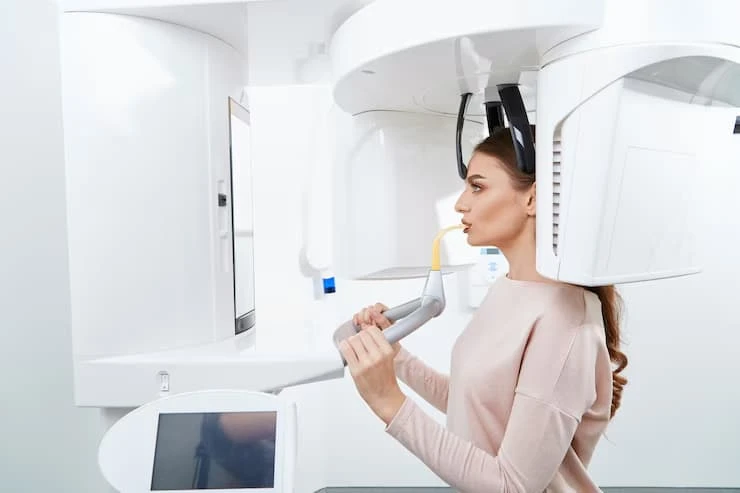

In the realm of modern dentistry and medical imaging, a CBCT scan, or Cone Beam Computed Tomography scan, represents a significant advancement that has transformed diagnostic practices. This imaging technique stands out due to its ability to provide three-dimensional images of hard tissues, making it an invaluable tool in various fields, particularly in dentistry and maxillofacial surgery. Understanding what a CBCT scan entails and when it becomes necessary can greatly enhance both patient care and treatment outcomes.
Understanding CBCT Scans
CBCT scans utilize a specialized X-ray equipment that captures images in a cone-shaped beam rather than the traditional fan-shaped beams used in conventional CT scans. This innovative approach allows for the gathering of a large volume of data in a single rotation, which is then reconstructed into high-resolution 3D images using sophisticated software. The resulting images provide a comprehensive view of the anatomy, enabling healthcare professionals to assess conditions in greater detail than ever before.
The precision of a CBCT scan is particularly beneficial in the dental field, where practitioners require accurate representations of teeth, bone structures, and surrounding tissues. Unlike standard X-rays that offer only two-dimensional views, CBCT images can be manipulated to reveal various anatomical perspectives, thus allowing for more accurate diagnoses and treatment planning. This capability is crucial, especially when dealing with complex cases that involve intricate bone structures.
When Is a CBCT Scan Needed?
The utilization of a CBCT scan is dictated by specific clinical scenarios where enhanced imaging is essential. One of the most common applications is in dental implantology. Dentists often rely on CBCT imaging to evaluate the quality and quantity of bone available for implant placement. With this information, they can make informed decisions regarding implant size, type, and placement angles, ultimately leading to more successful outcomes.
Furthermore, a CBCT scan is instrumental in diagnosing and managing various dental conditions. For instance, it can assist in identifying impacted teeth, such as wisdom teeth, which may require surgical intervention. The detailed images produced by CBCT allow for a clear assessment of the relationship between the teeth and the surrounding anatomical structures, helping to avoid complications during extraction procedures.
In cases of orthodontics, a CBCT scan provides essential insights into the spatial relationships of teeth and jaws. This imaging modality allows orthodontists to develop more precise treatment plans, as they can visualize the three-dimensional positioning of teeth and assess how they will move during treatment. Such advanced planning not only enhances the efficiency of orthodontic procedures but also improves patient comfort by minimizing the number of adjustments needed.
The Benefits of CBCT Scans
One of the standout advantages of a CBCT scan is its ability to deliver a lower radiation dose compared to traditional CT scans. This is particularly crucial in the field of dentistry, where patients may require multiple imaging studies over time. By minimizing radiation exposure while still obtaining high-quality images, CBCT scans represent a safer option for both patients and practitioners.
Moreover, the speed and efficiency of CBCT scans cannot be overlooked. The scanning process is relatively quick, often taking just a few minutes to complete. This efficiency translates into shorter appointment times, which is beneficial for both patients and healthcare providers. Additionally, the immediate availability of images allows for on-the-spot diagnostics and decision-making, enhancing the overall patient experience.
The comprehensive nature of the images produced by CBCT is another significant benefit. The ability to visualize complex anatomical relationships in three dimensions aids in surgical planning, improving the precision of procedures. Surgeons can simulate their approaches based on the detailed images obtained, leading to enhanced outcomes and reduced recovery times for patients.
The Role of CBCT in Treatment Planning
When it comes to treatment planning, the integration of CBCT scans into the workflow has revolutionized how dental professionals approach various procedures. For instance, in endodontics, the detailed visualization of root canal systems is crucial for successful treatment. CBCT scans can reveal the intricate anatomy of root canals, allowing endodontists to identify variations that may not be visible through conventional imaging methods. This improved understanding of tooth morphology can significantly increase the likelihood of successful outcomes in root canal treatments.
In oral and maxillofacial surgery, CBCT scans play a pivotal role in pre-surgical planning. Surgeons can assess the anatomical structures surrounding impacted teeth or tumors, enabling them to devise strategies that minimize risks and complications. The detailed information garnered from CBCT imaging can lead to more precise surgical approaches and ultimately better patient outcomes.
Additionally, CBCT scans can assist in the evaluation of temporomandibular joint (TMJ) disorders. By providing a clear view of the joint structure and its relationship to surrounding tissues, healthcare providers can identify issues such as joint dislocation or degeneration. This information is invaluable for developing appropriate treatment plans, whether they involve physical therapy, orthodontic intervention, or surgical options.
Summary
In summary, a CBCT scan is an essential tool in contemporary medical imaging, particularly within the dental and maxillofacial domains. Its ability to generate detailed three-dimensional images enhances diagnostic accuracy and treatment planning, ultimately benefiting patient care. As technology continues to evolve, the role of CBCT scans is likely to expand, further solidifying their place in modern healthcare practices. By embracing this advanced imaging modality, healthcare professionals can continue to improve patient outcomes and advance the standard of care in their respective fields.































Sign in to leave a comment.