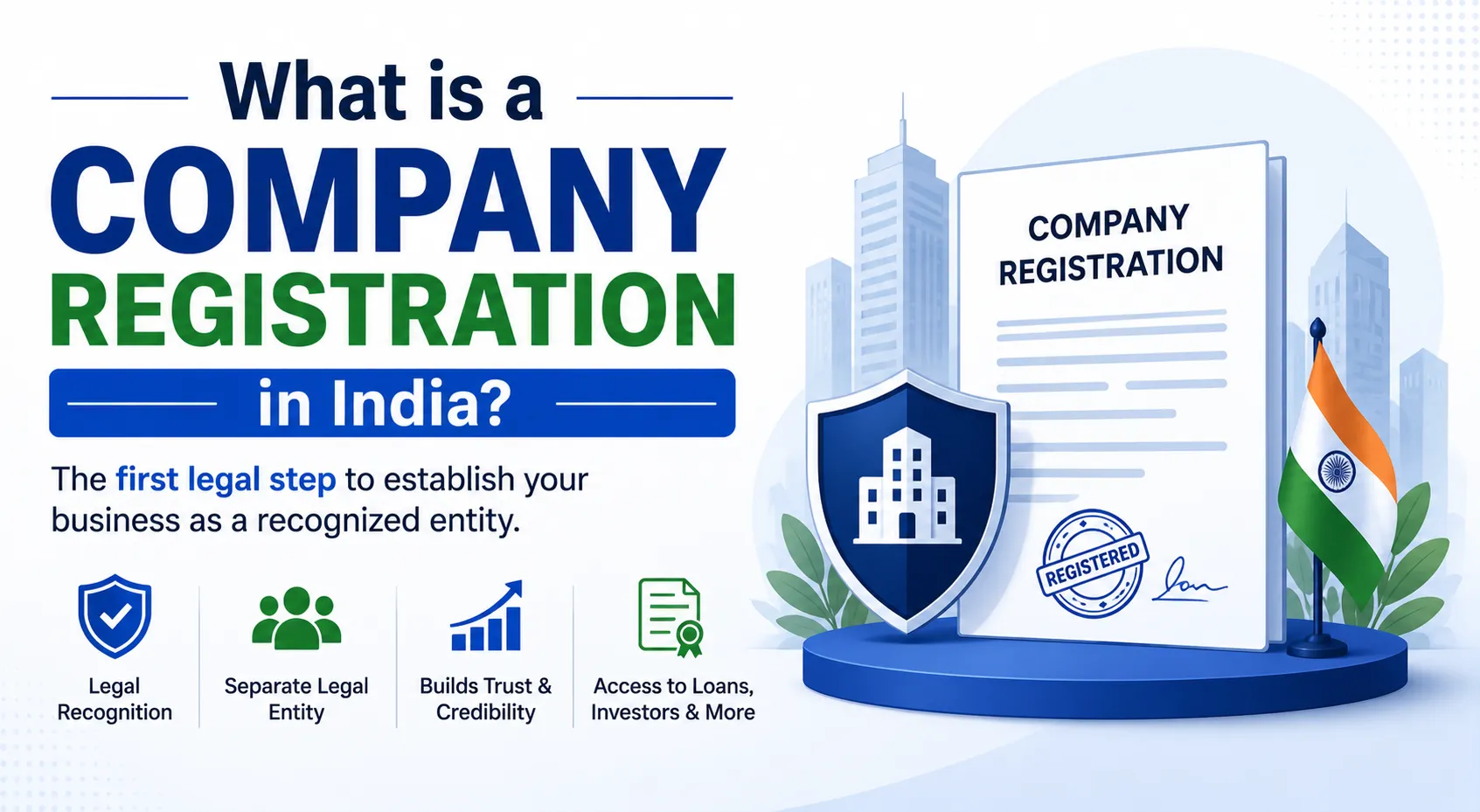

Starting a legal business entity in India is one of the most significant milestones for any entrepreneur. However, before diving into the operational dynamics of supply chains, funding, or product development, understanding the foundational legal architecture of a business is crucial.
In India, corporate entities are governed by a robust legal framework that transforms a mere business idea into a legally recognized corporate citizen. This article breaks down the fundamental concepts of what a company is, its characteristics, and how corporate registration operates under Indian law.
What is a Company? The Legal Definition
In layman's terms, a company is an association of individuals who come together for a common purpose, usually to carry out a commercial or industrial enterprise. However, legally speaking, a company has a much deeper definition.
Under Section 2(20) of the Companies Act, 2013, a company is defined as:
"A company incorporated under this Act or under any previous company law."
This means an entity does not legally exist as a "company" until it goes through the formal process of incorporation overseen by the Ministry of Corporate Affairs (MCA). Once registered, it ceases to be just a group of people and transforms into a separate legal entity.
The Famous Legal Precedent
The true nature of a corporate body was established in the landmark English case of Salomon v. A. Salomon & Co. Ltd. (1897), which is universally accepted in Indian jurisprudence. The court established that once a company is legally incorporated, it is an entirely separate person in the eyes of the law, distinct even from its founders and shareholders.
Core Characteristics of a Registered Company
To truly understand what a company is, one must understand the distinct features that differentiate it from other business structures like Sole Proprietorships or traditional Partnership firms:
- Separate Legal Entity: A registered company can buy property, incur debts, enter into contracts, and sue or be sued in its own name. The assets of the company belong to the company, not to the shareholders.
- Perpetual Succession: An incorporated company never dies unless it is legally wound up. As the famous saying goes, "Members may come, and members may go, but the company goes on forever." The death, retirement, or insolvency of its members does not affect the existence of the company.
- Limited Liability: This is the primary reason why entrepreneurs choose company registration. The liability of the shareholders is limited only to the nominal value of the shares held by them. If the company faces immense losses or bankruptcy, the personal assets of the directors or shareholders cannot be seized to pay off the corporate debts.
- Common Seal: Though made optional by recent amendments to the Companies Act, a common seal acts as the official signature of the company for executing formal deeds and contracts.
- Transferability of Shares: The shares of a company (especially a Public Limited Company) are movable property and can be transferred freely subject to certain restrictions mentioned in the Articles of Association (AOA).
What is Company Registration in India?
Company Registration (also known as Incorporation) is the formal, legal process used to form a corporate entity or a company in India. This process is entirely digitized and regulated by the Ministry of Corporate Affairs (MCA) through the Registrar of Companies (RoC).
Without formal registration, a business cannot enjoy the status of a corporate body, nor can it legally issue shares, protect its brand liability completely, or scale seamlessly in institutional markets.
The Statutory Regulator
The entire lifecycle of company registration from name approval to its final dissolution is monitored strictly by the Registrar of Companies (RoC) appointed under the MCA across various states in India.
Types of Company Registrations in India
Depending on your business model, scale, investment requirements, and partner structure, the Companies Act, 2013 allows for several types of registration:
| Company Type | Minimum Members | Ideal For | Key Benefit |
| Private Limited Company (Pvt. Ltd.) | 2 | Startups looking for funding & high scalability | Easy to raise equity, limited liability. |
| One Person Company (OPC) | 1 | Solo entrepreneurs wanting corporate status | Complete control with limited liability protection. |
| Public Limited Company | 7 | Large-scale enterprises looking to list on stock exchanges | Access to public capital and high credibility. |
| Section 8 Company | 2 or 3 | Non-Profits, NGOs, and charitable institutions | Tax exemptions, focused on social welfare. |
The Core Process of Company Registration (Brief Snapshot)
While the explicit step-by-step procedural workflow involves deep statutory compliance, the macroeconomic workflow of registering a company in India involves:
- Obtaining DSC (Digital Signature Certificate): Since the entire portal is digital, directors need a secure DSC to sign electronic forms.
- Name Reservation (RUN Facility): Choosing a unique, non-infringing name that reflects your brand identity and complies with the MCA guidelines.
- Filing the SPICe+ Form: The integrated, omnibus digital application form that applies for the Incorporation certificate, PAN, TAN, EPFO, ESIC, and corporate bank account simultaneously.
- Drafting Charter Documents (MOA & AOA): Framing the Memorandum of Association (defining the company's objective) and Articles of Association (defining internal rules).
- Issuance of Certificate of Incorporation (CoI): The RoC reviews the compliance validity and issues the official birth certificate of your business containing your unique Corporate Identification Number (CIN).
Why Should You Formally Register a Company?
Operating in the unorganized sector limits your growth. Securing a formal registration changes the trajectory of your business by opening up the following pathways:
- Enhanced Market Credibility: B2B clients, vendors, and multinational corporations prefer dealing with registered corporate entities over unregistered setups.
- Access to Institutional Capital: Banks, venture capitalists (VCs), and angel investors rarely invest in partnerships or proprietorships. A registered Private Limited structure is a baseline requirement for equity funding.
- Ease of Global Expansion: If you plan to set up cross-border operations or register subsidiaries in international trade hubs like Dubai or Delaware, having a structured parent corporate registry in India simplifies regulatory due diligence.
Conclusion
Company registration is not merely a legal chore; it is the ultimate statutory foundation that builds enterprise value and shields your personal wealth from commercial risks. Selecting the right structure early determines your compliance workload, tax liabilities, and funding capabilities for years to come.
To kickstart your business setup journey seamlessly and evaluate specific eligibility requirements or cost breakdowns, you can explore our comprehensive master handbook on Company Registration. Navigating this framework with expert oversight ensures your corporate structure remains ironclad, legally compliant, and perfectly optimized for future market opportunities.





























Sign in to leave a comment.