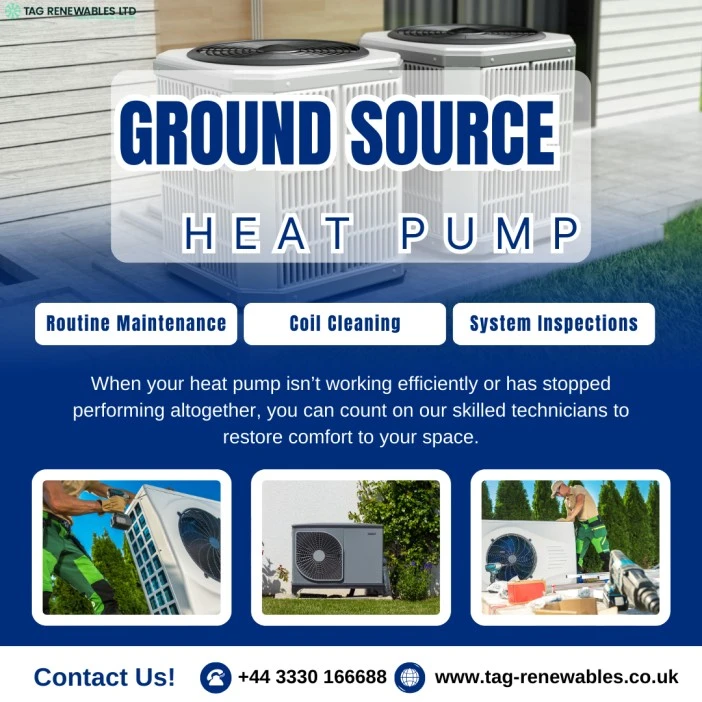

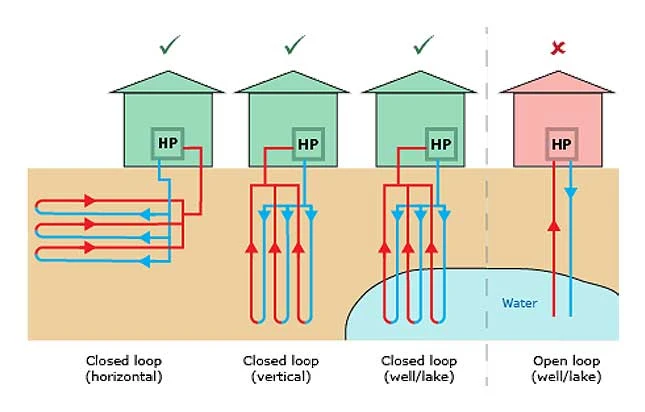
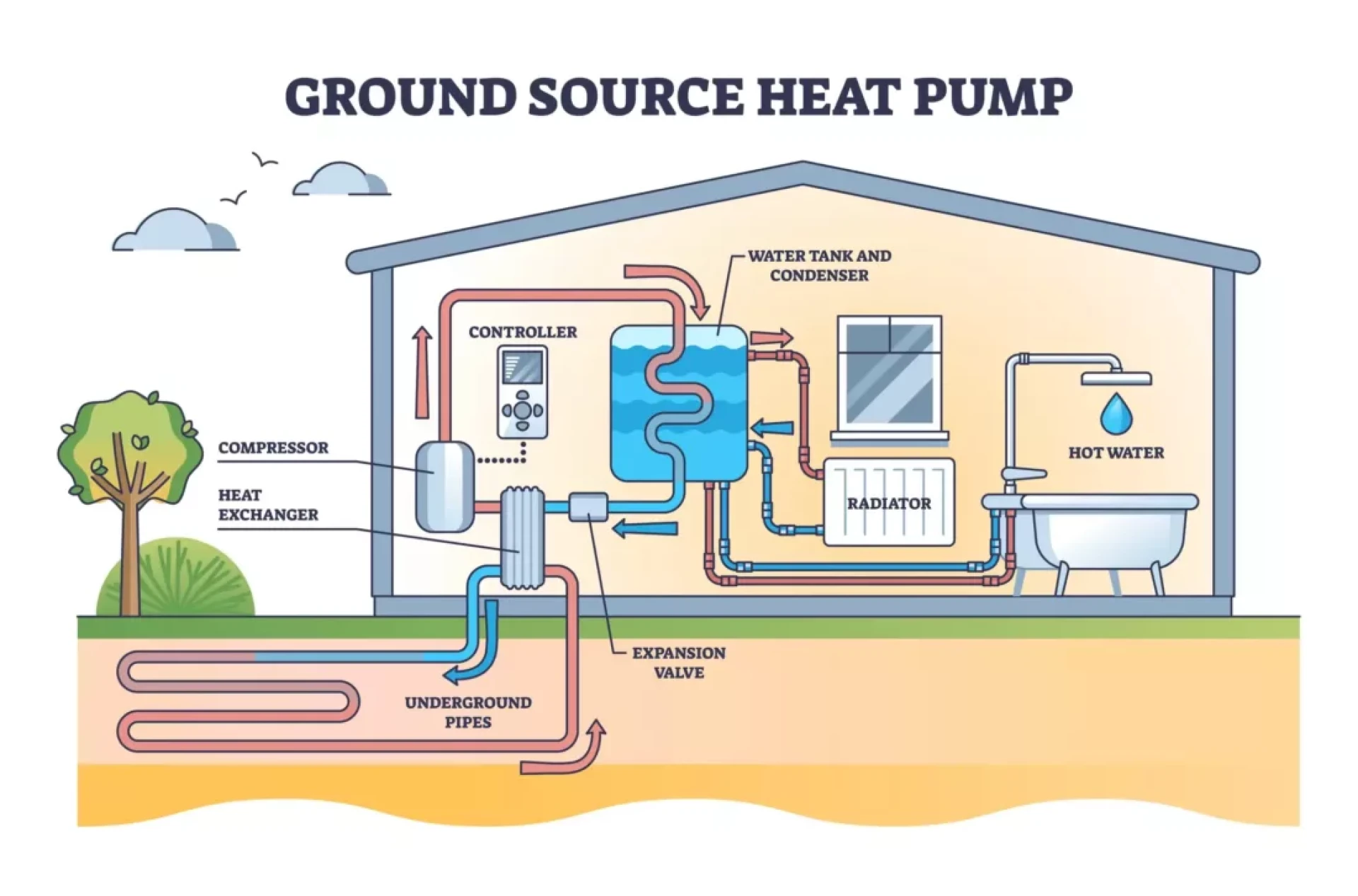
An energy-efficient device called a Ground Source Heat Pump (GSHP), sometimes referred to as a geothermal heat pump, uses the earth's constant temperature to heat and cool buildings.Through a system of underground pipes called a "ground loop," it circulates a water-based solution that, in the summer, transfers heat back into the earth to keep the building cool.
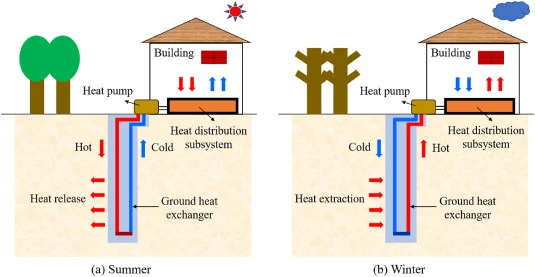
The system is an economical and environmentally responsible substitute for conventional HVAC systems since it transfers heat between the interior and the ground using a heat pump unit located inside the structure. Ground source heat pumps are a sustainable option for both residential and commercial buildings due to its longer lifespan, lower energy usage, and lower carbon emissions.
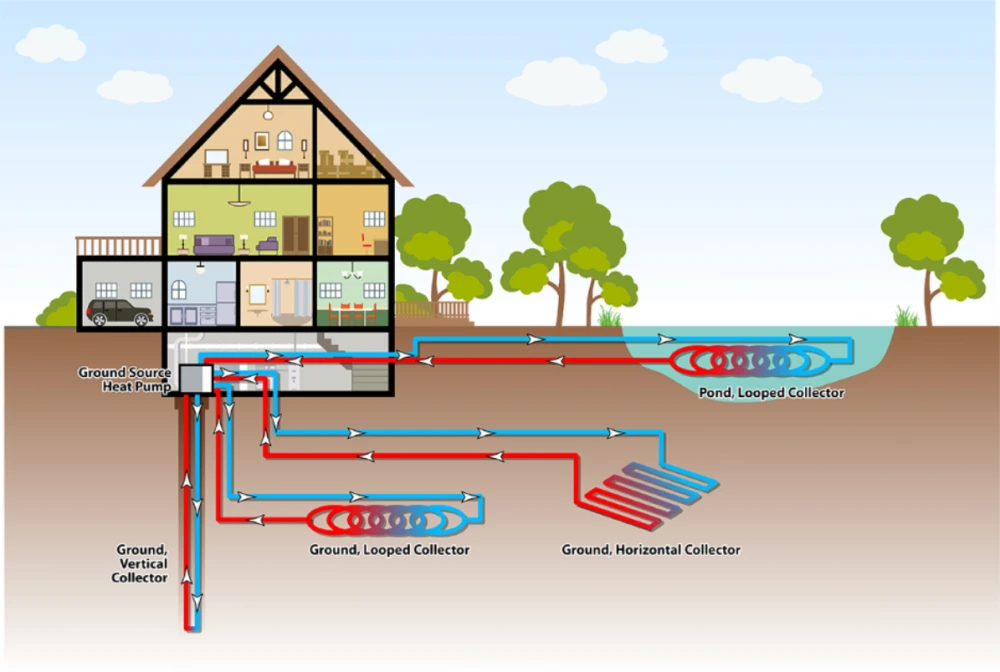
How It Works ➖
- Heating Mode: The system extracts heat from the ground and transfers it indoors.
- Cooling Mode: It removes heat from the building and releases it back into the ground.
- Water Heating: Some systems can also provide domestic hot water.
An air source heat pump, also known as a geothermal heat pump, is a highly efficient heating and cooling system that uses the stable temperature of the ground to regulate indoor climates. It works by circulating a heat transfer fluid through underground pipes (known as a ground loop) to absorb heat from the ground during winter and release heat into the ground during summer.
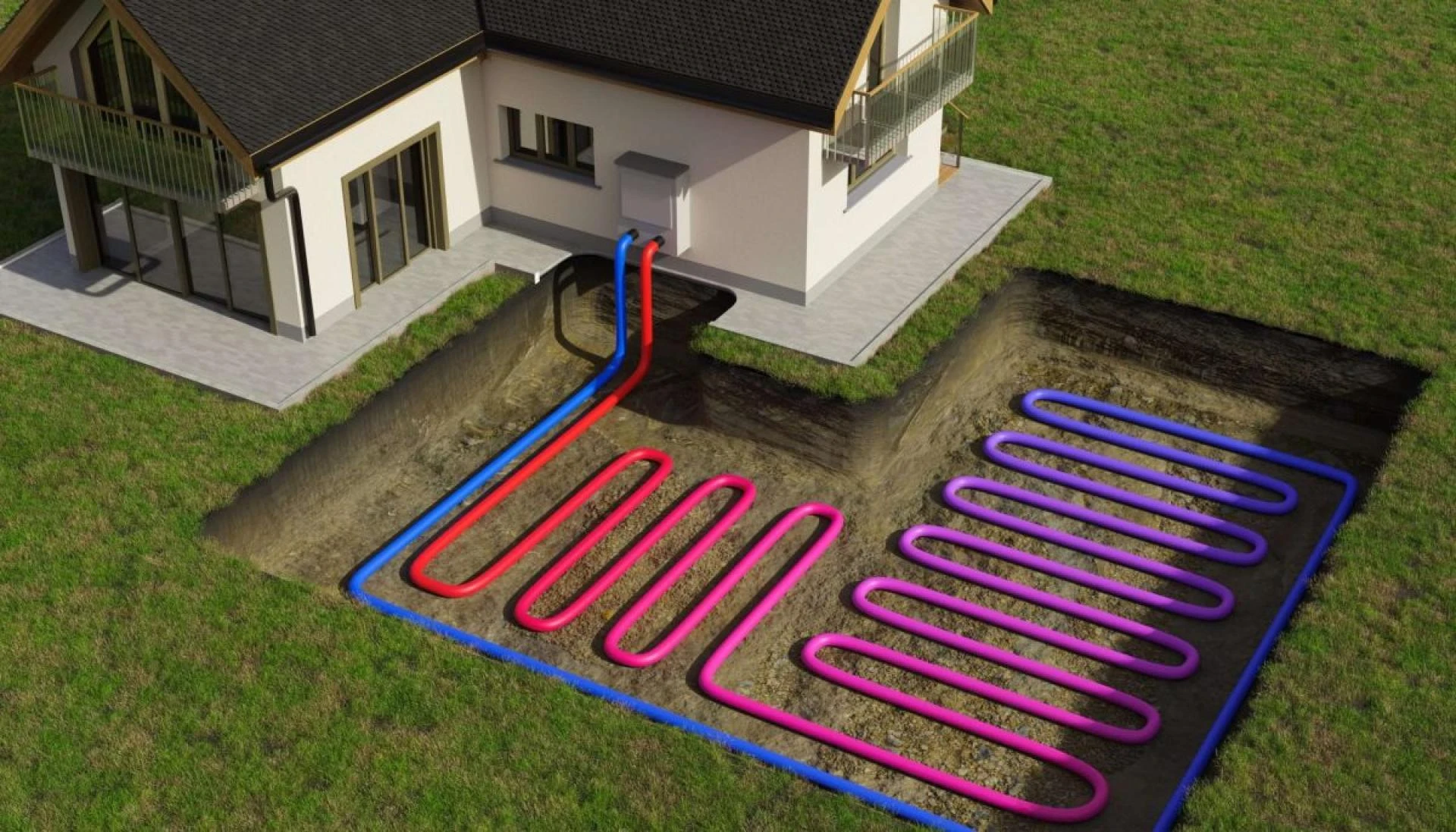
Uses of Ground Source Heat Pumps ➖
- Residential Buildings: Heating, cooling, and hot water supply.
- Commercial Buildings: Large-scale heating and cooling for offices, schools, and hospitals.
- Industrial Applications: Temperature control in manufacturing and greenhouses.
- District Heating Systems: Heating multiple homes or facilities from a centralized geothermal system.
Benefits of Ground Source Heat Pumps ➖
- Energy Efficiency: Can be 300–600% more efficient than traditional systems.
- Lower Operating Costs: Reduced electricity or fuel bills over time.
- Environmentally Friendly: Uses renewable ground energy, lowering carbon emissions.
- Year-Round Comfort: Provides consistent heating and cooling regardless of outdoor temperature.
- Longevity and Durability: Ground loops can endure more than 50 years, whereas interior systems last 20 to 25 years.
- Quiet Operation: Less noise compared to air-source systems or conventional HVAC.
- Low Maintenance: Requires minimal servicing compared to combustion-based systems.
- Potential Incentives: Many regions offer tax credits or rebates for installing GSHPs.
Get in touch with TAG Renewables LTD if you're prepared to increase the energy efficiency of your house or place of business. Just complete the form on the opposite side, and a member of our team will contact you to discuss your choices.




























Sign in to leave a comment.