
A Master Plumber’s Guide to Design, Installation, and Saving Your System
Your leach field is the "kidneys" of your home, working 24/7 right under your feet.
The Quick Reality Check:
- What it is: The final stage of your septic system that naturally purifies wastewater.
- The Big Risk: If it fails, you’re looking at a $5,000 to $20,000 replacement bill.
- Top Warning Sign: "Squishy" grass or sewage smells in the yard.
- Pro Tip: Most "failures" are actually preventable maintenance issues.
If you’ve lived with a septic system for any length of time, you know that what happens underground eventually finds its way to the surface. In our 20 years of turning wrenches and inspecting sites, our team has learned one thing: a leach field is the most expensive part of your home you’ll never see—until it fails.
Express Test: 3 Signs Your Leach Field is Screaming for Help
When a leach field fails, it’s usually due to "hydraulic overload"—basically, the ground is saturated and can't take another drop [3]. If you notice these red flags, stop high-water activities (like laundry) immediately and call for an inspection.
- The "Squish" Factor: If you see standing water or muddy patches over the drainage area and it hasn't rained in days, the soil has stopped absorbing.
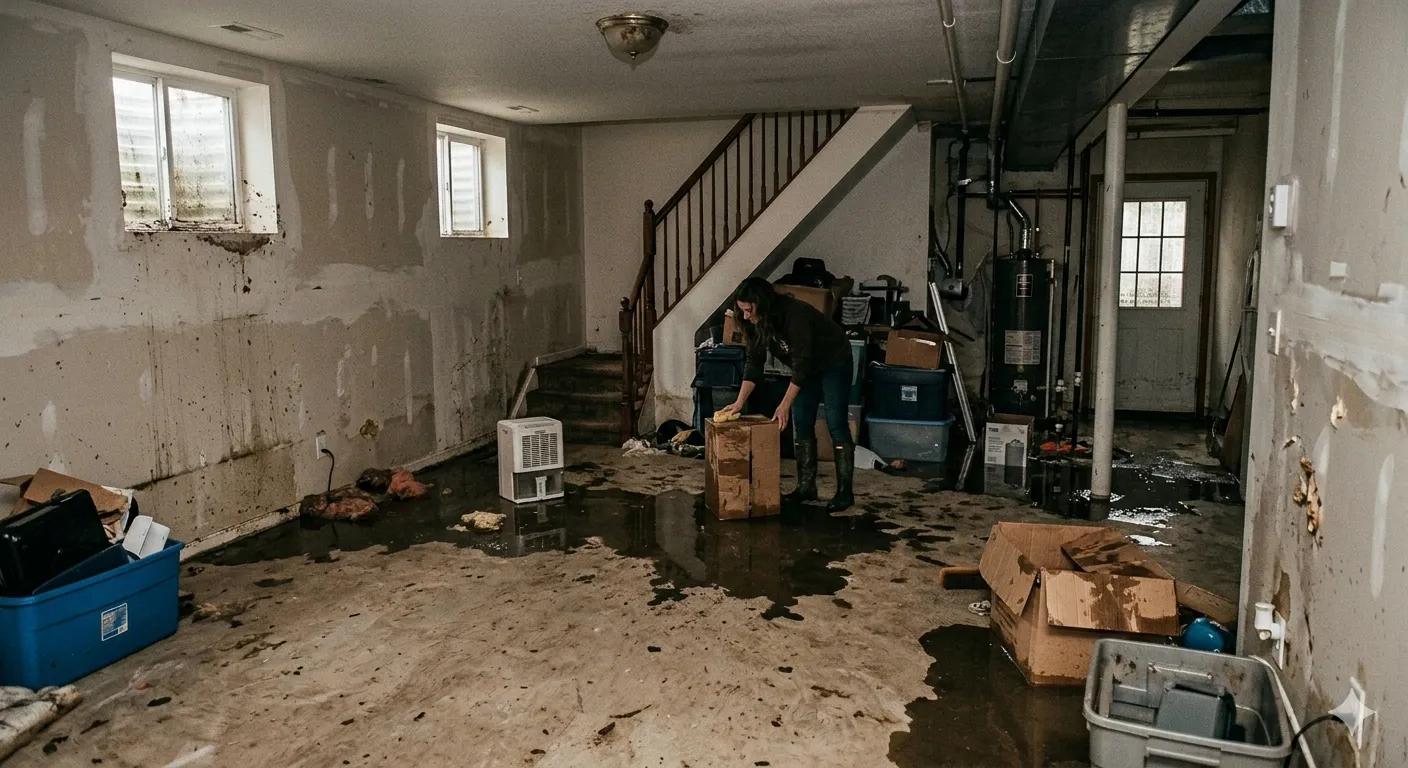
- The Tell-Tale Smell: That distinct sewage odor in the yard or gurgling in your indoor drains is a sign that gases—and liquids—are backing up.
- The "Lush Green" Trap: If one patch of your lawn looks like a tropical rainforest while the rest is dormant, that’s not a green thumb; it’s a sign of high nitrogen and moisture leaking where it shouldn't.
"The lush grass one catches people every time. We've had homeowners brag about how great their lawn looks over the drain field — and we're the ones who have to tell them what's actually feeding it. By the time the grass looks that good, the field has usually been saturated for months. It's one of those signs that feels like good news until you understand what it means." — James K., Field Supervisor, Expert Plumbing Miami (expertplumbingmiami.com)
What is a Leach Field and How Does It Actually Work?
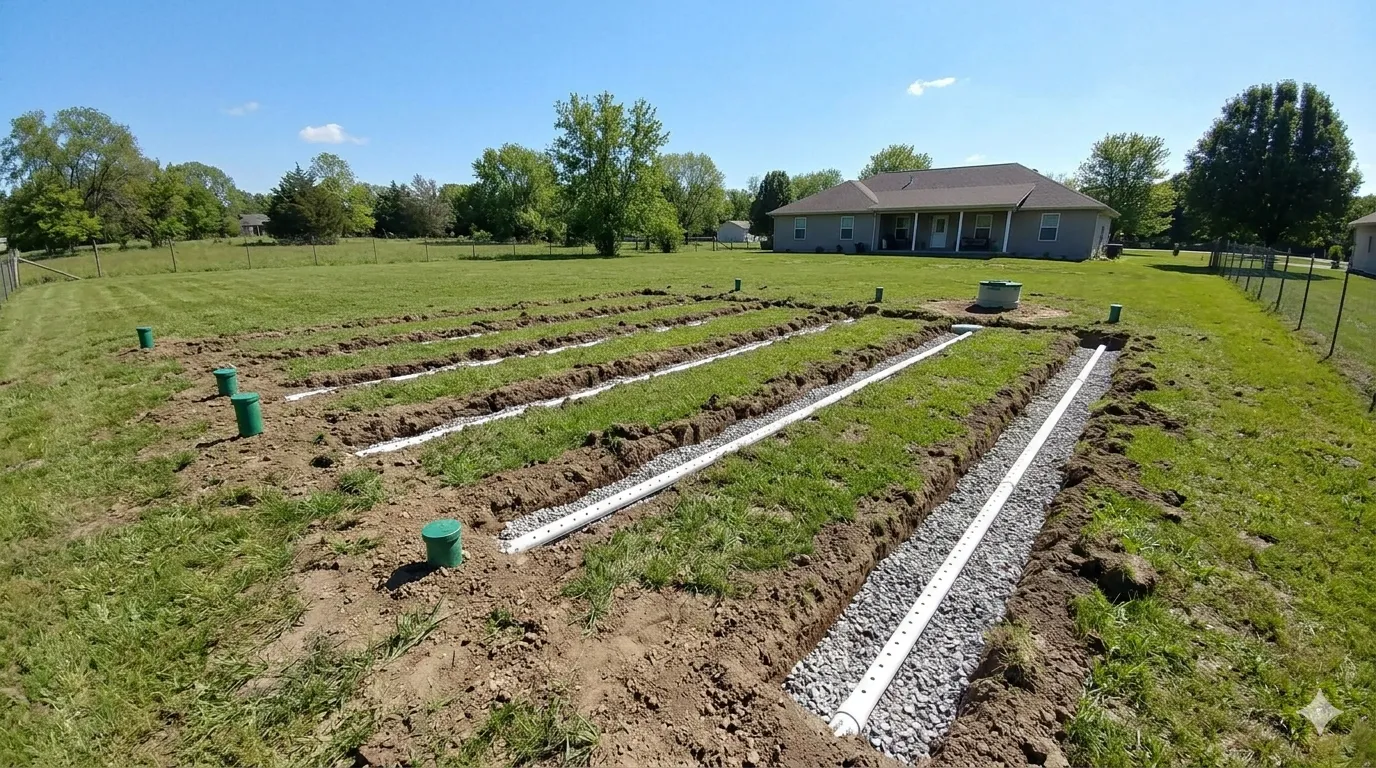
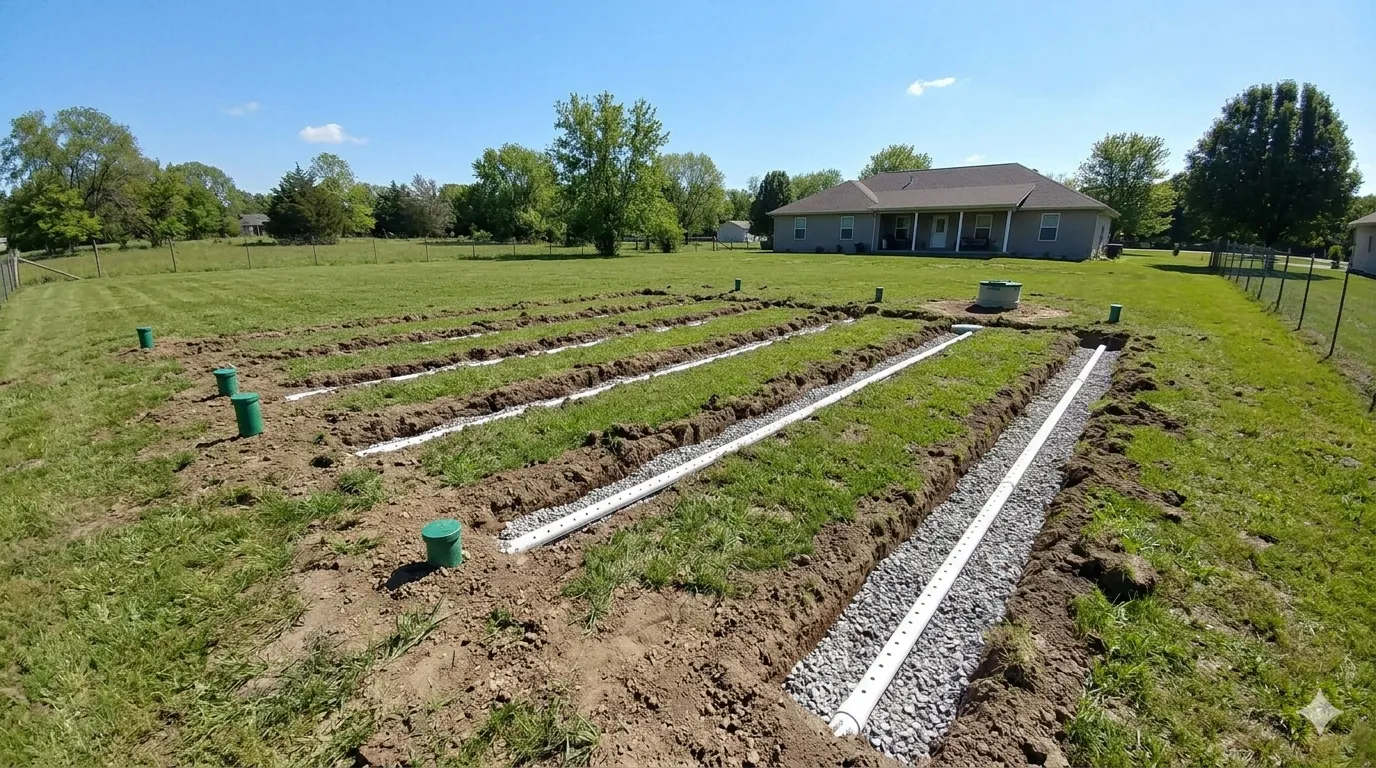
Think of a leach field (or drain field) as a natural recycling center. It’s a subsurface facility designed to take the liquid "effluent" (pre-treated wastewater) that leaves your septic tank and strip away the impurities before they reach the groundwater [3].
1. The Journey: Wastewater flows from your tank to the field using gravity or a pump.
2. The Split: A Distribution Box (D-Box) sends that liquid into perforated pipes.
3. The Filter: The liquid seeps through gravel or specialized chambers into the earth.
4. The Clean-up: Tiny microbes living in the soil "eat" the pathogens and organic matter, purifying the water naturally.
The Anatomy of the System
- The Septic Tank (The Gatekeeper): This is where heavy lifting starts. Solids sink to the bottom (sludge), while oils float to the top (scum). Only the liquid in the middle is allowed to head out to the field [3].
- The Distribution Box (The Traffic Cop): The D-Box ensures every drainage line gets an equal share of water. If this box tilts or clogs, one part of your yard gets soaked while the rest stays dry, leading to a premature collapse [1].
- Soil & Microbes (The Bio-Filter): The soil isn't just dirt; it’s a living filter. Aerobic bacteria (oxygen-loving microbes) in the soil pores consume organic waste. Think of it like a coffee filter: if it's clean, water flows; if it’s clogged with "grinds" (solids), everything overflows [4].
Design and Calculation: Why Size Matters
We’ve seen plenty of DIY-ers try to "eyeball" a leach field. We strongly recommend against this. If you undersize the field, a backup is guaranteed. Everything depends on your local codes and your specific soil "perc rate" [1].
The "Perc Test": How Fast Does Your Dirt Drink?
A percolation test measures how many minutes it takes for the water level in a test hole to drop by one inch [1][2]. This is like testing how fast a sponge soaks up a spill.
| Soil Type | Absorption Rate | Required Pipe (per Bedroom) |
| Sand | High (<5 min/inch) | ~80–100 feet (25–30 m) |
| Sandy Loam | Medium (5–15 min/inch) | ~100–125 feet (30–38 m) |
| Silt/Clay | Low (>45 min/inch) | Requires 2–3x more space |
The "Rule of Thumb": For a standard 3-bedroom home in average soil, you’ll typically need about 375 to 450 square feet of absorption area. Adding a bedroom without expanding your field is the #1 cause of system death.
Slopes and Separations
You need at least 12 inches of clean soil between your pipes and the "limiting layer" (like bedrock or groundwater) [1]. While systems can be installed on slopes up to 30%, anything steeper than 12.5% requires a professional geological report [5].
System Types: Gravel vs. Modern Infiltrators
| Feature | Traditional Gravel | Modern Infiltrators (Chambers) |
| Material | Perforated PVC + Crushed Stone | Plastic Arch-shaped Tunnels |
| Footprint | Larger (Needs more yard) | Smaller (Up to 50% less space) |
| Installation | Heavy machinery for stone | Easier to carry by hand |
| Cost | Lower material cost | Higher material cost |
Our Recommendation: If you have tight access to your backyard or very "thirsty" soil, infiltrators are worth the extra investment.
The Biomat: The "Silent Killer"
Under your pipes, a biomat forms—a layer of bacteria and slime.
- The Good: In small amounts, it helps filter out pathogens [3].
- The Bad: If you overload the system with grease or chemicals, the biomat grows into a waterproof seal. Once that happens, the water has nowhere to go but up.
"Grease is the fastest way to kill a leach field in South Florida, and it's completely avoidable. We pull up drain field pipes and find the biomat so thick it's essentially asphalt. The homeowner has no idea — they've just been pouring cooking oil down the kitchen drain for five years. Once that seal forms, no bacteria treatment in the world is going to save you. The field is done." — James K., Expert Plumbing Miami
Maintenance: DIY vs. Professional Boundaries
We believe in empowering homeowners, but knowing when to put down the shovel can save you thousands.
| Task | Who Does It? | Estimated Cost |
| Water Conservation (Low-flow fixtures) | DIY | $50–$200 |
| Annual Inspection | Pro | $200–$500 |
| Pumping the Tank (Every 3–5 years) | Pro | $300–$600 |
| Hydro-jetting (Cleaning lines) | Pro | $500–$1,000 |
| Full Field Replacement | Pro (Licensed) | $5,000–$20,000+ |
Can You Save a Failing Field?
If your field is "squishy," try Load Reduction (cut water use by 50% for two weeks) and Shock Treatment (adding high-potency bacteria). However, if the soil is totally clogged, these are often just "hospice care" for a dying system.
The Owner’s Golden Checklist: 5 Rules to Live By
- Watch the Chemicals: Avoid bleach and harsh drain cleaners. They kill the "good" bacteria that keep your biomat thin and healthy.
- No Grease: Never pour fats down the drain. They seal your soil like concrete.
- No Parking: Never drive a vehicle over your field. It crushes pipes and squeezes the "breathing room" out of the soil.
- Tree Distance: Keep trees at least 16 feet (5m) away. Roots will find the water and choke your pipes [1].
- Divert Rainwater: Ensure your gutters don't drain onto the leach field. The field has enough water to deal with already.
Frequently Asked Questions
Can I plant a garden over my leach field?
Flowers and grass are perfect—they help pull moisture out of the ground. Just avoid vegetables (risk of contamination) and anything with deep roots.
What should I do if my drains are gurgling?
First, check if your septic tank needs pumping. if the tank is clear but the gurgling persists, your leach field is likely saturated and needs a professional diagnostic.
Does insurance cover leach field failure?
Standard policies usually don't cover "wear and tear" or maintenance failures. They may cover sudden damage (like a tree falling), but for the most part, you are the underwriter for your system’s health.
References
[1] Ohio Administrative Code (OAC) Chapter 3701-29 (Septic Rules)
[2] Angi / SepticCalculator: Empirical Sizing Data
[3] EPA Guidelines for Subsurface Water Protection
[4] MathNet.ru / CyberLeninka: Percolation Models & Lifespan
[5] Permit Sonoma / U of Minnesota: Systems on Slopes
[6] Sizing and Soil Conductivity Data — Angi

























Sign in to leave a comment.