
A Pro’s Emergency Action Plan
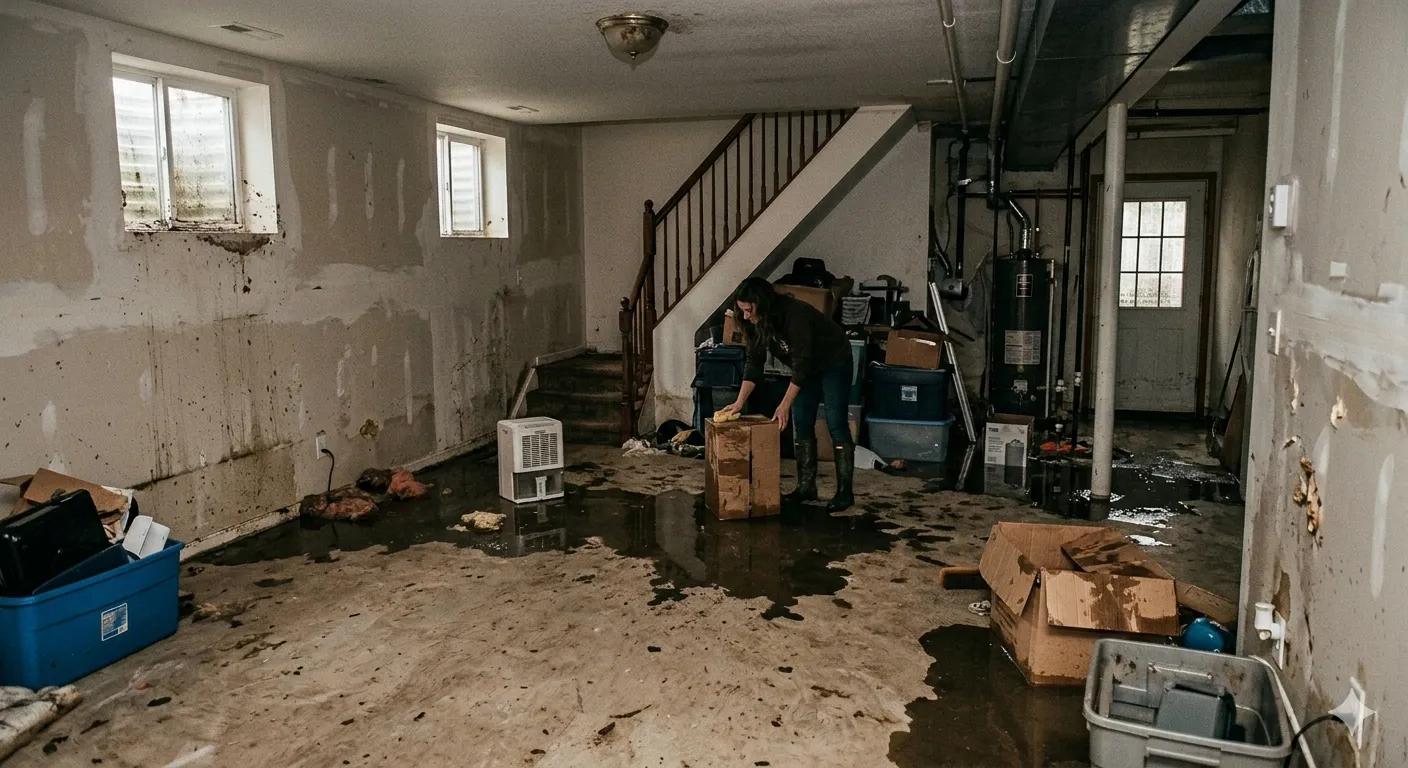
Take it from twenty years of collective experience in the trade: a flooded basement isn't just a mess—it’s a ticking clock. Whether it’s a burst pipe or a heavy downpour, the next few hours determine if we are looking at a quick cleanup or a total structural gut-job. Around here, we don't panic; we follow a process. This guide is a no-nonsense priority list to keep the home standing and the insurance company paying.
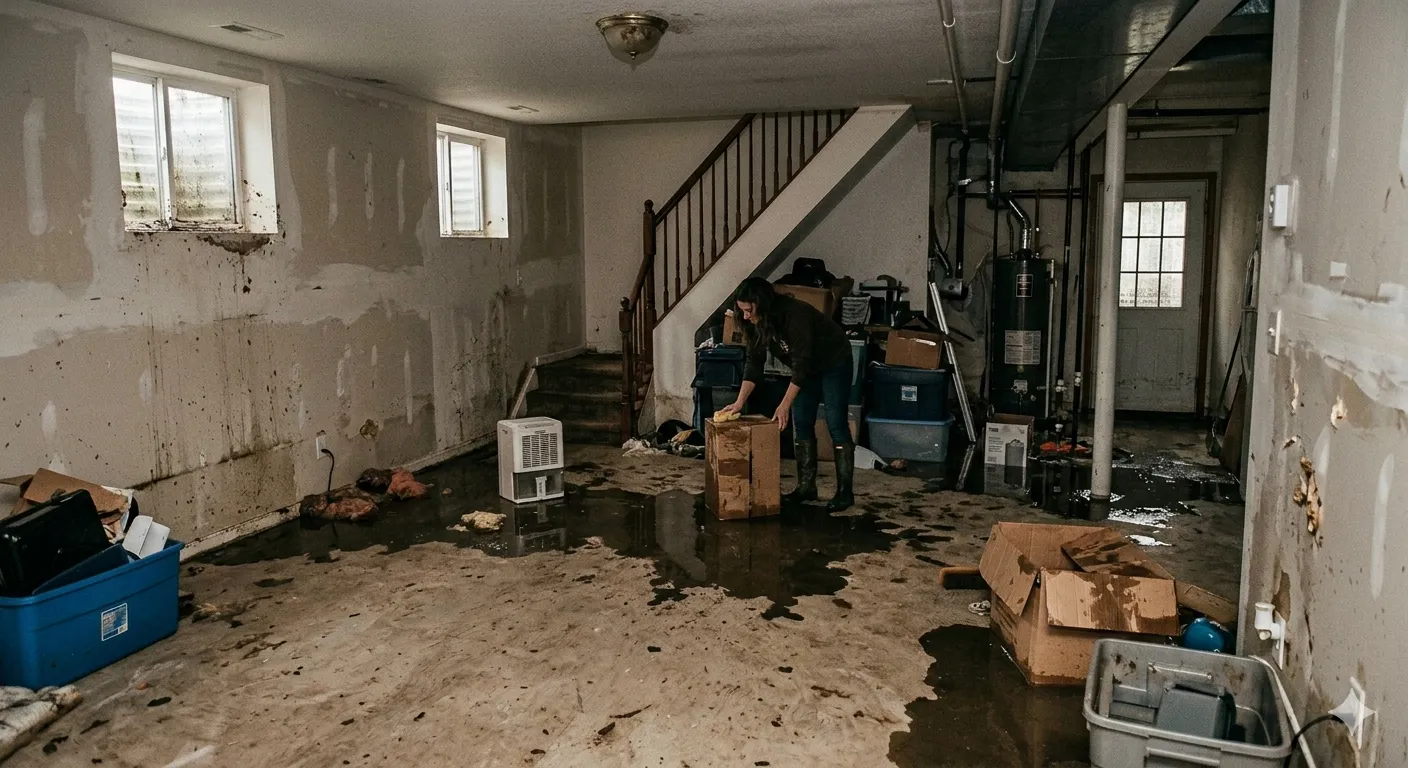
Emergency Summary: The 60-Second Priority List
If water is currently rising, here is the immediate sequence:
1. Safety: Kill power and gas (if safe to reach).
2. Stop the Flow: If it’s a pipe, shut off the main water valve.
3. Call the Gatekeeper: If water touches outlets, call an Electrician.
4. Call the Source-Fixer: If a pipe is spraying, call a Plumber.
5. Call the Heavy Lifters: For standing water, call a Restoration Company.
6. Document: Take photos before the water is pumped out.
THE KILL SWITCH: 3 Things We Must Do Before Calling Anyone
Before picking up the phone, we need to secure the site. Our team has seen too many homeowners rush into a dark basement only to realize—too late—that water and electricity are a lethal mix.
1. Kill the Power: Head to the main breaker panel. If it can be reached without stepping in water, flip the "Main" switch to OFF. If the panel is in the flooded zone, stay out and call the electric company immediately.
2. Shut Off the Gas: If the water heater or furnace is submerged, or if there is even a hint of a "rotten egg" smell, close the main gas valve.
3. Document the Evidence: An insurance adjuster won't take our word for it. Take high-resolution photos and videos of the water level, the source of the leak, and any ruined furniture before moving a single item.
The First 15 Minutes: A Practical Action Checklist
Once the site is safe, move through these steps before the pros arrive. Every minute saved now prevents mold later.
- Identify the Source: If it's a burst pipe, we shut off the house's water main. If it's groundwater, we focus on moving valuables.
- Clear the Path: Move high-value items (electronics, heirlooms, rugs) to an upper floor. Warning: only do this if the power is confirmed OFF.
- Create Airflow: If the weather permits and the flooding is Category 1 (clean water), we open windows to start reducing humidity.
- Set Up a Staging Area: Clear a space in the garage or driveway for the restoration crew to park their equipment.
"We always say: the basement can wait sixty seconds. That's all it takes to get to the breaker panel. We've responded to calls where a homeowner waded into standing water before killing the power — and we've seen what happens. The water damage becomes the least of anyone's problems at that point. Sixty seconds at the panel can be the most important thing you do all day." — Rafael M., Lead Technician, H2Osolutions FL (miamih2osolution.com)
The Emergency Contact List: Who to Call and In What Order
The sequence of phone calls can save thousands of dollars. Here is the professional hierarchy of help.
The Decision Algorithm:
- Is water touching outlets or the breaker panel? Call an Electrician first.
- Is water actively spraying from a pipe or drain? Call a Plumber first.
- Is the water standing still (the leak is stopped)? Call a Restoration Company first.
1. Licensed Electrician (The Safety Gatekeeper)
We do not enter that water until a pro says it’s safe. Even if the lights are off, submerged outlets can still be "hot." An electrician verifies the area is safe for the cleanup crew to start their work.
- Average Cost: Expect to pay $100–$200 per hour for emergency dispatch [5].
2. Emergency Plumber (Stopping the Bleeding)
If the water is coming from inside the house—a burst pipe, a failed water heater, or a sewer backup—we need a plumber to “stop the bleed.”
- Response Time: A reliable local shop should be at the door within 30 minutes to 2 hours [1].
- Estimated Cost: Repairs typically run between $400 and $1,500 depending on the break [5].
3. Water Damage Restoration Company (The Heavy Lifters)
Once the "leak" is stopped, there is still a swimming pool in the basement. These specialists (also called Mitigation Teams) bring industrial pumps and high-velocity air movers.
- Pro Tip: Only hire a crew with IICRC WRT certification (Institute of Inspection Cleaning and Restoration Certification). This ensures they follow the S-500 industry standard for professional drying [2].
4. Your Insurance Agent (The Money)
Don't wait. Most policies have a "notice of loss" window ranging from 3 to 30 days, but for emergencies, some require a call within 24 hours [3]. If we wait, they might argue that the mold was caused by "negligence" rather than the flood.
Professional Roles: A Quick Cheat Sheet
| Specialist | What They Actually Do | Average Cost (USD) | When to Call |
| Electrician | Secures the grid; prevents fire/shock | $100–$200/hr [5] | Water hits outlets or panels |
| Plumber | Patches pipes; stops the "source" | $400–$1,500 [5] | Active pipe or sewer failure |
| Restoration Team | Pumps out water; dries the air | $3–$15 per sq. ft [6] | Any standing water |
| Foundation Pro | Checks for cracks and structural shifts | $600 (Avg) [7] | If you see wall cracks or seepage |
The Risk Line: DIY vs. Professional Danger
Homeowners often try to save a buck by mopping up themselves. Sometimes that works. Sometimes it is a death sentence for the floorboards. It all depends on the "Category" of the water.
- Category 1 (Clean Water): Think of this as "tap water." It’s from a broken supply line. If we dry it within 48 hours, it can usually be handled with a wet-vac and fans [8].
- Category 2 (Grey Water): This is "used" water—dishwasher discharge or laundry overflow. It contains chemicals and bacteria. Professional help is recommended; costs usually range from $4 to $10 per square foot [6], [13].
- Category 3 (Black Water): This is the "Never DIY" zone. Sewage, rising river water, or seawater. It is packed with pathogens. We need a hazmat-certified team, and costs can exceed $15 per square foot [6].
The "Line in the Sand": If water has touched drywall, insulation, or carpet padding, it is no longer a DIY job. Porous materials act like a wick, pulling moisture up into the structure where fans can't reach.
"Black water calls are the ones we take most seriously. In South Florida, storm surge and sewer backups can look identical — just murky water on a basement floor. But one of those is a Category 1 cleanup and the other is a biohazard. Don't let the color fool you. If there's any chance that water touched a sewer line or came in from outside during a storm, treat it as black water until a professional tells you otherwise." — Carlos V., Field Supervisor, H2Osolutions FL
Your "Battle Kit": Safety Gear for the Brave
If we must go down there before the pros arrive, we don't go in sneakers.
- Rubber Boots: Mid-calf or higher. No exceptions.
- N95 Respirator: We don't want to breathe in mold spores or bacteria aerosolized by the water.
- Nitrile Gloves: Heavy-duty, rubber-coated versions to protect skin from contaminants.
Insurance Speak: How to Talk to the Adjuster
The words used on the phone can be the difference between a "check is in the mail" and a “claim denied.”
- "Water Damage" vs. "Flood": In the insurance world, a "Flood" is surface water coming from the outside (like a storm). Standard policies usually do not cover this without a separate flood policy [11]. "Water Damage" usually refers to internal pipe failures.
- The Mitigation Rule: We are legally required to "mitigate damages" [11]. This means if we let mold grow for three days without calling a drying company, the insurer can refuse to pay for the remediation.
- Sewer Backup: Check the policy for a "Sewer/Sump Pump Rider." Without this specific add-on, many companies won't cover a basement filled with sewage.
What to say: “We noticed water damage from a burst interior pipe at 2:00 PM. We have already shut off the water and called an electrician to secure the site.”
FAQ: Common Homeowner Concerns
How fast does mold grow?
It’s faster than we think. Mold spores usually activate and start eating drywall within 24 to 48 hours of getting wet.
Does the City pay if their sewer backs up into the house?
Rarely. Unless we can prove gross negligence on their part, the homeowner is usually liable for the cleanup on their side of the property line [11].
What does professional drying actually cost?
For a standard basement, we are looking at $1,200 to $3,500 for dehumidification. If the water sat for a week and the studs are rotting, that price can skyrocket to $30,000+ [10].
Anatomy of a Dry Basement: Prevention Tips
To avoid a 3:00 AM emergency call, we recommend investing in these four lines of defense:
1. Sump Pump with Battery Backup: If the power goes out during a storm, a standard pump is useless.
2. Backwater Valve: A one-way gate for the sewer line. It lets waste out but stops city sewage from pushing back in.
3. Proper Grading: The yard should move water away from the house. Aim for an 8% to 20% slope away from the foundation [9].
4. Smart Sensors: For about $50, Wi-Fi moisture sensors alert a smartphone the second a drop of water hits the floor.
References
[1] Emergency Plumbing Response Times — https://stashluk.com
[2] IICRC WRT Certification Standards — https://iicrc.org
[3] Insurance Notification Deadlines (Reference) — https://garant.ru
[4] US Electricity Rates Sept 2025 — https://globalpetrolprices.com
[5] Emergency Plumbing & Electrical Costs 2025 — https://homeadvisor.com
[6] Water Mitigation Cost per Square Foot — https://homeguide.com
[7] Foundation Inspection Cost Analysis — https://thisoldhouse.com
[8] Water Category Transition Methodology (Technical Standard) — http://tssr.ru
[9] Soil Grading and Foundation Standards (Technical Standard) — https://cemmix.ru
[10] Basement Drying and Restoration Price Guide — https://everdry.com
[11] Flood Liability and Insurance Exclusions — https://columbialaw.edu
[12] Psychology of Disaster and Loss — https://inform.kz
[13] Water Damage Categories and Remediation — https://puroclean.com





























Sign in to leave a comment.