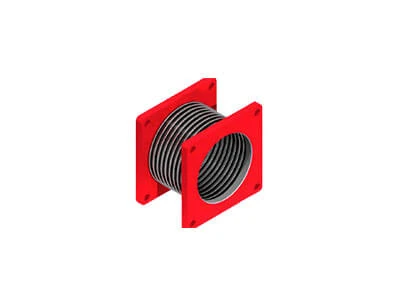

Heat management is crucial to any pipeline system that may make or break your piping system. Your staff is well aware that expansion is caused by heat. To solve this problem, companies use pipe expansion joints to counterbalance the thermal expansion. This article will explain what pipe expansion joins are and why I need pipe expansion joints for my piping system. So, let's get started:
What Is A Piping Expansion Joint?
In a piping system, pipe expansion joints are installed to mitigate pressure and vibration. They also offer benefits like noise reduction and damage caused by misalignment. Some expansion joints also accommodate thermal expansion in extremely hot environments.
Pipes can move in three different ways with the help of expansion joints:
Axial compression or extensionLateral offsetAngular deflectionTo meet a wide range of uses, they generally come in three different materials:
Most applications where thermal expansion is a problem use metal expansion joints. The metal expansion joint contracts to compensate for the movement as the pipe's temperature rises, relieving stress on the anchors and the pipe. The best way to manage expanding hot pipes is using metal bellows.
Rubber
Rubber can be applied for thermal expansion, incredibly effectively absorbing vibration and shock waves. This kind of expansion joint is ideal for reducing noise and vibration transfer from other equipment to protect equipment like pumps.
Braided
Technically, braided stainless steel hoses with flexible or metal liners are more of a flexible connection than an expansion joint. They perform effectively in high-pressure and temperature situations requiring pipe misalignments or vibration dampening. These are frequently used on pumps and other machinery to decrease the thrust pressure of thermal expansion on the machinery's nozzles.
Types of Piping Expansion Joint
Metal bellows, metal expansion jointDiesel exhaust expansion jointsHigh-temperature expansion jointsStainless steel bellows expansion jointsLateral Expansion JointsUniversal Expansion Joints
What is the Need for Expansion Joints in Piping Systems?
In recent years, expansion joints have been extensively used in various sectors, including those involving petroleum, chemicals, metallurgy, electric power, cement, construction, and district heating in metropolitan areas. We have mentioned some reasons in the form of points why you need the expansion joints in your piping system:
Also Read: The Importance of Stainless-Steel Bellows
Thermal Expansion
The primary objective of High-temperature expansion joints is to avoid system failure, the ensuing stoppage, and the costly repairs necessary to get everything back and running. They use several techniques to do this.
First, pipe expansion joints prepare for thermal expansion when system temperatures rise. Generally speaking, rising temperatures lead to expansion, which causes usually uniform, straight pipes to bend, break down, or even shatter. Expansion joints prevent this by adapting to the expansion of the pipes and axial, downward pressures.
Protect Against Vibrations
Vibration mitigation is another way an expansion joint protects a pipe system. Pipes experience force from liquids flowing through them, accumulating over time to cause the pipes to vibrate dangerously over their entire length. The longer the pipe, the higher the possibility that these pressures may cause damage to the piping system.
Advantages over a Pipe Loop
Another advantage of pipe expansion joints is their obvious benefits over pipe loops. Expansion joints are undoubtedly more space-efficient, even if both serve as helpful tools when considering thermal expansion.
A pipe loop's U-shape is what makes it unique. On the other hand, expansion joints don't take up additional space because they are almost flush with the rest of the pipe system.
They are, therefore, more useful for companies with limited space. Additionally, expansion joints—which maintain a system's pressure more consistently—are preferable to pipe loops since low-pressure systems cannot effectively accommodate them.
Conclusion
Using pipe expansion joints prevents a system from buckling or cracking during thermal expansion and contraction. This can be a significant problem since, depending on the local environment, certain pipe or tunnel systems may suffer daily or yearly fluctuations in temperature of tens of degrees.
If you are planning to install efficient and reliable expansion joints in your piping system, then it is recommended to use expansion joints manufactured by Flexpert. They are the leading expansion joint manufacturer in India.
They collaborate closely with our distribution partners, OEMs (original equipment manufacturers), industry associations, and governmental organizations to understand their unique sealing challenges and provide innovative solutions that maintain public safety and environmental protection.


























Sign in to leave a comment.