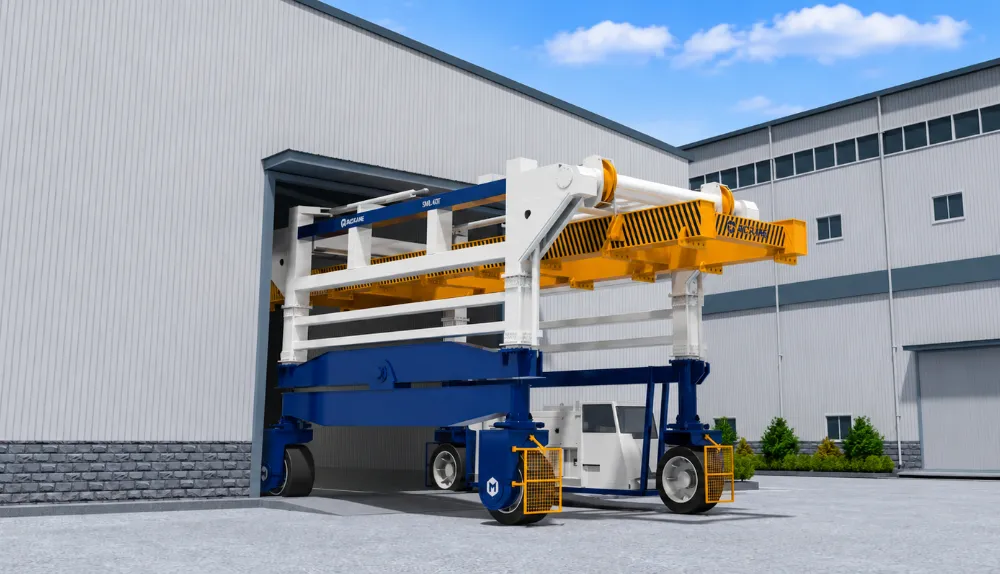

In modern industrial yards, moving heavy and oversized loads efficiently is often more challenging than the lifting operation itself. Many facilities need equipment that can not only lift materials but also transport them across large working areas, load and unload trucks, and adapt to changing production layouts. This is where a straddle carrier becomes an effective material handling solution.
Unlike traditional forklifts, overhead cranes, or fixed gantry cranes, a straddle carrier combines lifting and transportation functions in one mobile machine. It can pick up a load from the ground, carry it through the yard, and place it precisely at the required location without relying on additional transport equipment.
Although straddle carriers are widely recognized for container handling in ports, their applications have expanded significantly. Today, they are also used in precast concrete manufacturing, shipyards, heavy equipment production, modular construction, and other industries that require flexible transportation of large and heavy loads.
This guide explains what a straddle carrier is, how it works, and where it can provide practical value in industrial operations.
What Is a Straddle Carrier?
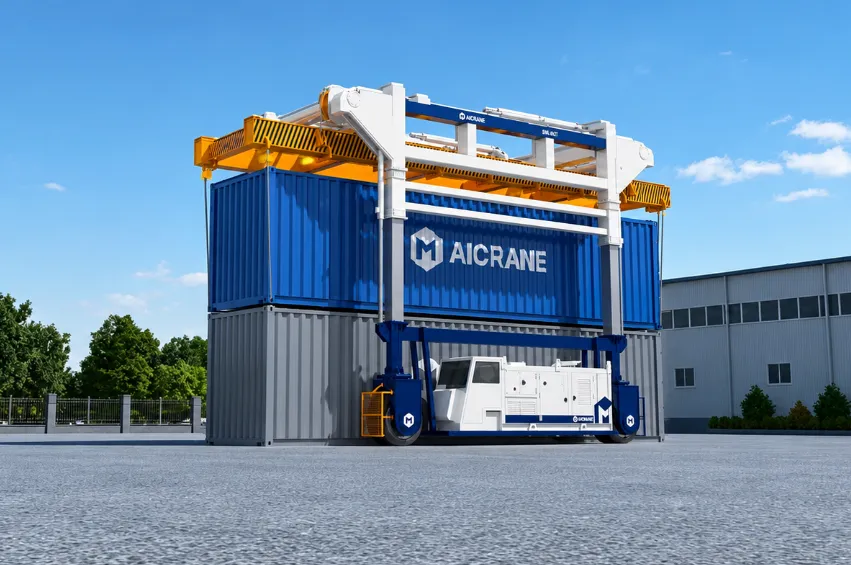
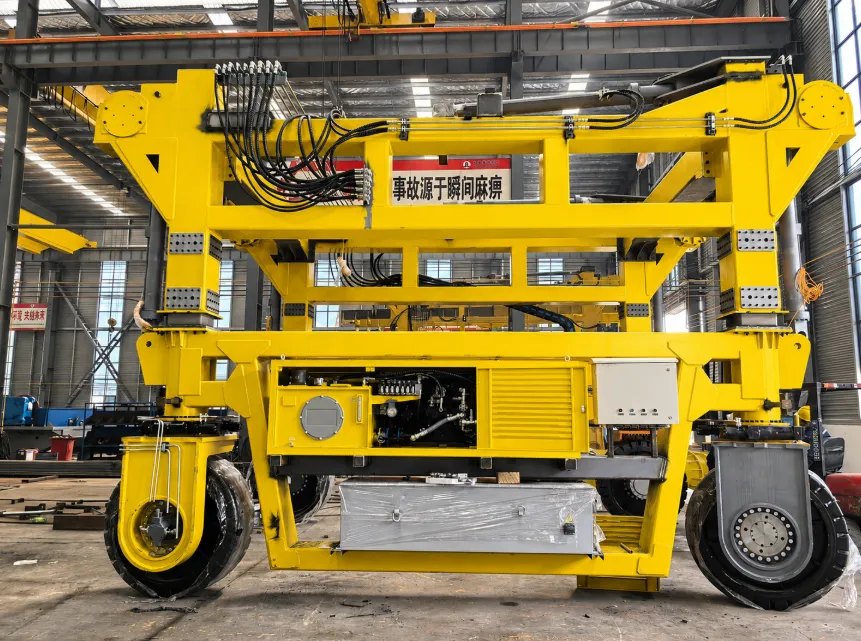
A straddle carrier is a self-propelled mobile lifting machine designed to lift and transport heavy loads by positioning its supporting legs around the load. Instead of lifting from only one side like a forklift, the machine moves over the load, grips it from above, raises it, and transports it to another location.
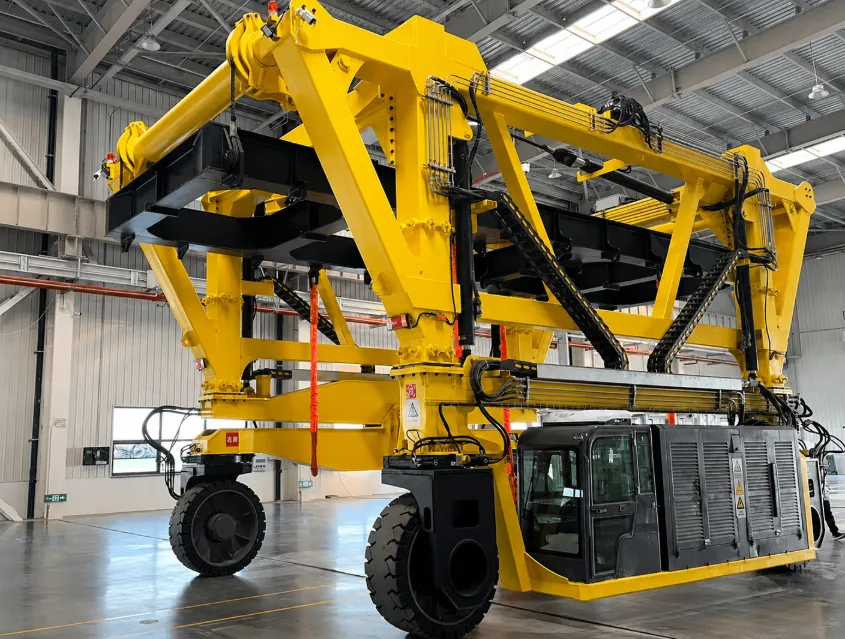
A typical straddle carrier for sale consists of:
- A heavy-duty steel frame structure
- Vertical supporting legs
- Lifting mechanism
- Spreader or customized lifting attachment
- Driving and steering system
- Power system
- Operator cabin and control system
The name “straddle carrier” comes from the way the machine operates. The carrier literally straddles the load, with the load positioned between the supporting legs during transportation.
For container handling, the carrier is normally equipped with a standard container spreader that locks onto container corner fittings. For industrial applications, the lifting attachment can be customized according to different load characteristics, such as concrete components, steel structures, machinery modules, or marine equipment.
The main advantage of a straddle carrier is that it combines lifting and transportation into one piece of equipment. A single machine can complete the entire handling process:
- Pick up the load
- Transport the load across the yard
- Position it accurately
- Place it at the required location
This reduces dependence on multiple handling machines and improves the efficiency of internal logistics.
How Does a Straddle Carrier Work?
The operating principle of a straddle carrier is based on mobile lifting and horizontal transportation.
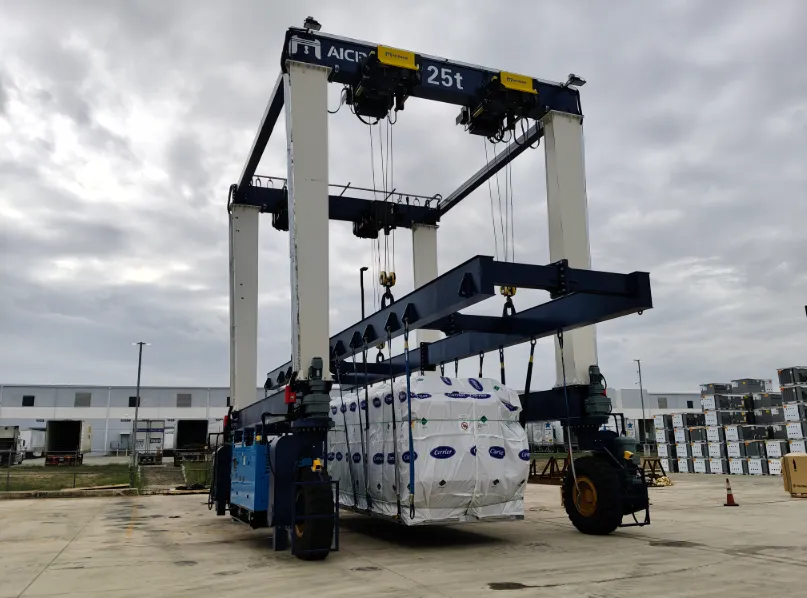
Taking a precast concrete yard as an example, when a concrete beam needs to be moved from a production area to a storage area, the straddle carrier first travels to the lifting position. The machine moves around the component, lowers the lifting system, connects with the load, and raises it from the ground.
After lifting, the carrier transports the component through the yard. Because the load is carried within the frame structure, the machine can maintain better stability when moving large and heavy products.
Once the carrier reaches the destination, the lifting system lowers the load and places it accurately.
The complete working cycle includes:
Loading → Lifting → Traveling → Positioning → Unloading
Compared with using a forklift together with a trailer or coordinating several cranes and vehicles, a straddle carrier simplifies the handling process and reduces unnecessary transfers.
For industrial facilities with frequent internal transportation requirements, this direct handling method can improve production flow and reduce waiting time.
Main Applications of Straddle Carriers
Container Terminals and Port Operations
Container terminals are the most common application for straddle carriers.
In a port environment, containers need to be continuously moved between different locations, including:
- Quay cranes and container yards
- Storage areas and truck loading zones
- Rail terminals and intermodal transfer areas
A straddle carrier can directly pick up containers from the ground, transport them across the yard, and stack them in designated positions.
Compared with a traditional operation that uses separate lifting equipment and transport vehicles, a straddle carrier reduces the number of handling steps. This improves yard efficiency and allows operators to move containers more flexibly.
Typical container terminal applications include:
- Container stacking
- Short-distance container transportation
- Truck loading and unloading
- Yard organization and repositioning
- Intermodal logistics operations
For small and medium-sized container terminals, straddle carriers can also be a practical solution where installing large fixed gantry crane systems is difficult due to space limitations or infrastructure conditions.
Precast Concrete Manufacturing Plants
The precast concrete industry is one of the most important applications beyond container handling.
Precast factories produce large components that often need to be moved multiple times during the production process, including:
- Concrete beams
- Bridge segments
- Concrete wall panels
- Pipes
- Tunnel components
- Large structural elements
After casting, these products usually need to be transferred from production areas to curing zones, storage yards, and shipping areas.
Traditional handling methods may require several pieces of equipment. For example, overhead cranes may only cover fixed working areas, while forklifts may not have enough lifting capacity for large concrete products.
A straddle carrier provides a flexible alternative because it can travel throughout the yard and handle large components without requiring extensive fixed infrastructure.
Typical benefits include:
- Faster transfer between production stages
- Reduced dependence on fixed crane systems
- Better utilization of outdoor storage areas
- Improved handling safety for oversized components
For precast manufacturers producing large concrete elements, a customized straddle carrier can significantly improve internal material flow.
Shipyards and Marine Equipment Handling
Shipyards often need to move large and irregular components across wide working areas.
Straddle carriers can be applied for transporting:
- Small boats
- Yacht components
- Ship sections
- Marine equipment
- Fabricated modules
Unlike fixed lifting systems, a mobile straddle carrier can move between different production zones, workshops, and storage areas.
This flexibility is valuable in shipyards because project requirements often change. Different vessels or marine structures may require different handling routes and positions.
For boat and yacht handling, the carrier can be equipped with customized supports to match hull shapes and reduce the risk of damage during transportation.
Heavy Manufacturing and Industrial Yards
Many heavy manufacturing industries produce large components that must be transported after fabrication.
Common applications include:
- Steel fabrication plants
- Machinery manufacturing facilities
- Wind energy equipment production
- Heavy equipment assembly yards
- Industrial module manufacturing
In these environments, products are often too large for conventional forklifts but do not require continuous lifting by overhead cranes.
A straddle carrier provides a balance between lifting capacity and mobility.
For example, a steel fabrication company may use a straddle carrier to move completed steel frames from the workshop to an outdoor storage area before shipment.
The equipment helps manufacturers:
- Reduce manual handling steps
- Improve production yard flexibility
- Move oversized products safely
- Optimize space utilization
Modular Construction and Infrastructure Projects
The increasing use of modular construction has created new demand for flexible heavy-load transportation solutions.
Large prefabricated modules are often manufactured in factories before being transported to construction sites. These modules can be heavy, oversized, and difficult to handle with standard equipment.
Straddle carriers can support:
- Internal transportation of completed modules
- Loading operations before shipment
- Positioning of large structural components
They are also suitable for infrastructure projects involving large precast elements, such as bridge segments and tunnel structures.
Because they do not require permanent installation, straddle carriers can adapt well to temporary project yards and changing construction environments.
Straddle Carrier vs Traditional Handling Equipment
Different industries have different material handling requirements. A straddle carrier is not a replacement for every type of crane or transport equipment, but it provides unique advantages in specific applications.
Straddle Carrier vs Forklifts
Forklifts are widely used for warehouse and general material handling. However, their capacity and stability can become limited when handling very large or long components.
Compared with forklifts, straddle carriers provide:
- Higher lifting capacity
- Better stability for oversized loads
- Ability to transport longer components
- Improved outdoor yard handling capability
Forklifts remain suitable for smaller loads, while straddle carriers are better suited for heavy and oversized products.
Straddle Carrier vs Overhead Cranes
Overhead cranes are highly effective for fixed working areas such as workshops and production lines.
However, they require:
- Crane runway structures
- Building reinforcement
- Fixed operating paths
A straddle carrier offers greater mobility because it can move freely between different working areas without permanent installation.
This makes it suitable for outdoor yards, temporary facilities, and locations where fixed crane systems are difficult to install.
Straddle Carrier vs RTG Cranes
RTG cranes are commonly used in container yards where organized storage blocks and fixed travel lanes are available.
Straddle carriers provide more operational flexibility because they can independently lift and transport containers or industrial loads throughout the yard.
The choice depends on factors such as:
- Yard layout
- Handling frequency
- Storage requirements
- Infrastructure investment
- Required flexibility
How to Choose the Right Straddle Carrier
Selecting the right straddle carrier requires evaluating the actual operating conditions and load requirements.
Load Capacity
The first consideration is the maximum weight of the loads being handled.
Different industries may require different capacity levels, from container handling applications to heavy-duty industrial transportation.
The carrier should be selected according to:
- Maximum load weight
- Average operating load
- Safety margin requirements
Load Dimensions
Load size directly affects the carrier design.
Important factors include:
- Load length
- Load width
- Load height
- Lifting height requirements
For customized applications such as precast concrete or marine handling, the frame dimensions and lifting attachment usually need to be specially designed.
Operating Environment
The working environment also influences equipment selection.
Important considerations include:
- Ground conditions
- Outdoor or indoor operation
- Weather exposure
- Corrosion protection requirements
- Travel distance
For coastal areas or marine environments, additional protection may be required to improve equipment durability.
Power System
Straddle carriers can use different power solutions depending on operating requirements.
Common options include:
- Diesel-powered systems for heavy-duty outdoor applications
- Electric-powered systems for cleaner and quieter operation
The choice depends on factors such as working hours, charging availability, environmental requirements, and operating costs.
Conclusion
A straddle carrier is a versatile mobile handling solution designed for industries that need both lifting capability and transportation flexibility.
Although originally developed for container terminal operations, its applications have expanded into many other fields, including precast concrete manufacturing, shipyards, heavy industry, and modular construction.
By combining lifting and transportation functions in one machine, straddle carriers help companies reduce handling steps, improve yard efficiency, and manage oversized loads more effectively.
For facilities that require frequent movement of heavy components across large working areas, a customized straddle carrier can provide a practical and flexible material handling solution.
























Sign in to leave a comment.