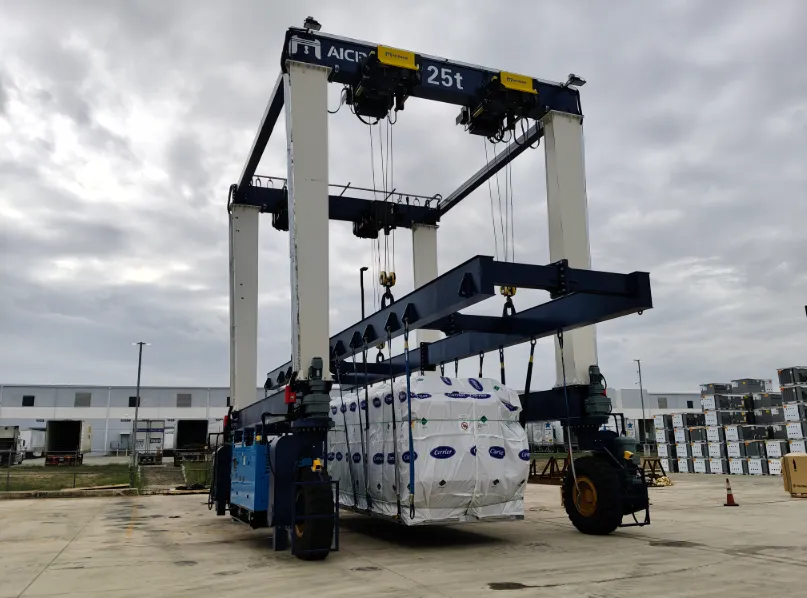

In many industrial environments, the biggest challenge is not whether a company has enough lifting capacity, but whether the crane can reach the right location at the right time. Fixed cranes such as overhead cranes, gantry cranes, and rail-mounted gantry cranes are highly effective within their designed operating areas. However, their working range is limited by permanent structures, runway layouts, and installation locations.
When production areas expand, storage yards change, or heavy components need to be transferred between different zones, fixed cranes may no longer provide enough flexibility. This is where rubber tyred gantry cranes (RTG cranes) offer a practical solution. By traveling on rubber tires instead of rails, RTG cranes can move across prepared yards and handle heavy loads in areas that are difficult or impossible for fixed cranes to access.
The Limitation of Fixed Cranes in Changing Work Environments
Fixed cranes are designed around a specific operating area. For example, an overhead crane installed inside a workshop can efficiently move materials along its runway, but it cannot transport loads outside the building. A rail-mounted gantry crane can cover a large yard, but its movement is restricted to the installed rail system.
This limitation becomes a challenge in industries where material flow is not always predictable.
Common examples include:
- A shipyard needing to move large components between fabrication areas, storage zones, and dockside locations
- A precast concrete plant transferring beams and slabs between casting beds and outdoor storage yards
- A steel fabrication facility handling oversized structures across different production areas
- A logistics yard reorganizing container storage layouts
- A manufacturing plant expanding production without rebuilding crane infrastructure
In these situations, installing multiple fixed cranes may solve individual handling problems, but it also increases construction costs and reduces operational flexibility.
RTG cranes address this issue by bringing the lifting equipment to the load instead of forcing the load flow to follow a fixed crane path.
Mobile Operation Across Different Working Areas
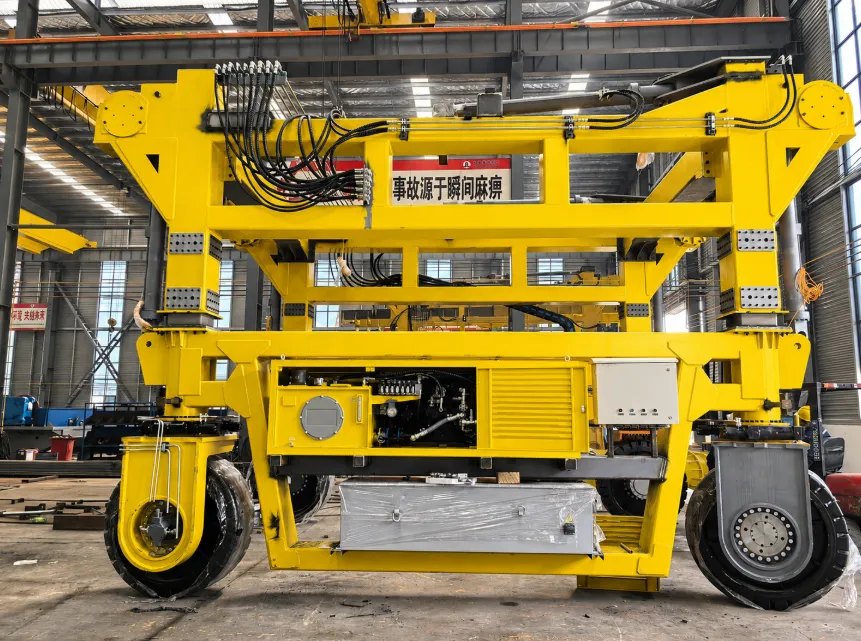
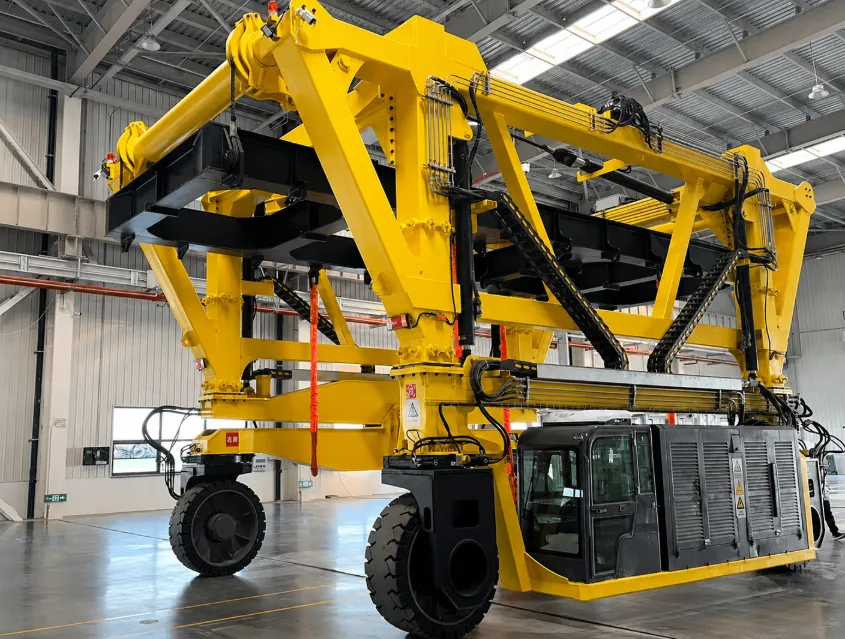
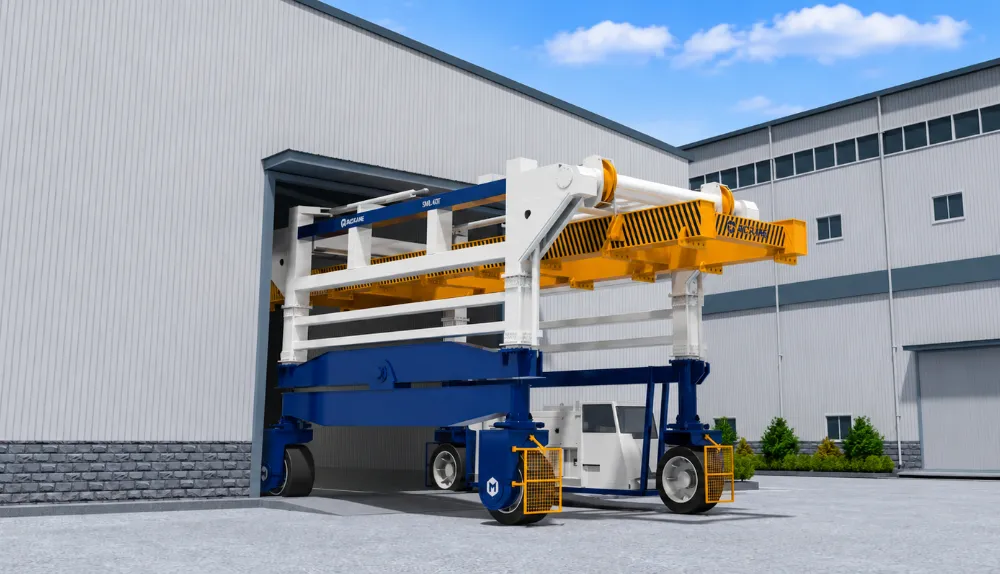
The primary advantage of an RTG crane is its ability to travel independently. Equipped with multiple rubber tires and a dedicated drive system, the crane can move along different routes within the operating area.
Unlike rail-mounted equipment, RTG cranes are not limited to a single travel direction. Depending on the design, they can be equipped with different steering modes, including:
- Straight travel for normal transportation
- 90-degree turning for changing lanes
- Diagonal movement for positioning in tight areas
- 360-degree rotation for flexible yard operation
This mobility allows operators to access areas that are separated by obstacles, changing storage arrangements, or temporary production zones.
For example, in a steel fabrication yard, finished steel structures may be stored in different locations depending on production progress. A fixed gantry crane may only serve one loading bay or storage lane, while an RTG crane can travel between fabrication, storage, and transportation areas to complete different lifting tasks.
Handling Heavy Loads in Limited-Space Facilities
Many industrial sites face space restrictions. Expanding the facility is often expensive due to land availability, environmental regulations, or existing infrastructure limitations.
RTG cranes are particularly useful in these conditions because they do not require large permanent structures.
A company can prepare reinforced operating surfaces and define working routes without constructing additional runways or rail foundations. This makes RTG cranes suitable for:
- Small and medium-sized industrial yards
- Temporary construction material storage areas
- Existing facilities undergoing expansion
- Sites where future layouts are not yet finalized
For example, a precast concrete manufacturer may have limited storage space near its production line. Large concrete beams need to be moved after curing, but the storage arrangement may change based on customer delivery schedules. An RTG crane can adjust its operating position according to the current yard layout instead of being restricted to one fixed lifting area.
Supporting Heavy-Duty Applications Beyond Container Terminals
Although RTG cranes are widely known for container handling, their applications extend far beyond ports and container yards.
Many industries use RTG cranes because they need to move heavy loads over open areas where fixed cranes are not practical.
Steel Processing and Fabrication
Steel products such as coils, beams, pipes, and fabricated structures often require frequent movement between processing areas and storage yards.
RTG cranes can be configured with suitable lifting capacities and spreader or lifting attachments to handle different steel products. Their mobility helps reduce dependence on multiple forklifts, mobile cranes, or fixed lifting stations.
Precast Concrete Production
Precast yards often contain multiple casting beds, storage rows, and loading areas. The position of products changes depending on production schedules.
RTG cranes allow manufacturers to move concrete elements such as beams, columns, and panels between different areas while maintaining organized storage.
Shipyards and Marine Facilities
Shipyards usually involve large working areas with constantly changing tasks. Components fabricated in one area may need to be transferred to another assembly zone.
Because RTG cranes can travel across open yards, they can support material transportation between workshops, storage areas, and assembly locations.
Heavy Equipment Manufacturing
Manufacturers of industrial machinery often deal with oversized components that cannot be easily transported through standard production lines.
An RTG crane provides the lifting capacity needed to move heavy parts while allowing flexible access to different production zones.
Improving Efficiency Without Adding More Equipment
One common problem with fixed lifting systems is equipment duplication. If one crane cannot reach another working area, companies may need to install additional cranes or rent mobile lifting equipment.
RTG cranes reduce this requirement by allowing one crane to serve multiple locations.
For example, a facility may have several outdoor storage areas separated by open space. Instead of installing separate gantry cranes for each zone, one RTG crane can move between areas based on daily handling requirements.
This improves equipment utilization and reduces the need for additional infrastructure investment.
Precision Control for Safer Heavy Load Movement
Moving heavy loads across open yards requires more than mobility. Operators need accurate control to position loads safely, especially when handling large components with limited visibility.
Modern RTG cranes can include features such as:
- Variable frequency drive (VFD) control for smoother acceleration and braking
- Electrical anti-sway systems to reduce load swinging
- Encoder-based steering control for accurate wheel positioning
- Remote monitoring systems for operating status
- Safety devices such as obstacle detection systems
These technologies help operators achieve more controlled movement when transporting heavy loads through complex working environments.
For example, when placing a large steel structure into a storage position, reducing unnecessary load movement improves positioning accuracy and reduces the risk of collision with nearby materials.
When Should Companies Consider an RTG Crane?
RTG cranes are not a replacement for every fixed crane application. They are most suitable when flexibility, mobility, and multi-area operation are important factors.
Companies should consider RTG crane solutions when:
- Loads need to be moved between multiple working areas
- Existing infrastructure cannot support new fixed cranes
- Production layouts frequently change
- Yard space needs to be used more efficiently
- Heavy materials must be handled outdoors
- Building additional crane runways is costly or impractical
A proper evaluation of load capacity, yard conditions, travel routes, power supply, and future expansion plans is essential before selecting the right RTG configuration.
Conclusion
Fixed cranes remain an effective choice for applications with stable workflows and clearly defined operating areas. However, industrial operations often require more flexibility than a fixed lifting system can provide.
Rubber tyred gantry cranes solve this challenge by combining heavy lifting capability with independent mobility. They can reach different working zones, adapt to changing layouts, and handle large components in areas where fixed cranes cannot operate efficiently.
For companies managing complex yards, expanding production facilities, or handling oversized materials across multiple locations, RTG cranes provide a flexible way to improve material handling without being limited by permanent crane infrastructure.


























Sign in to leave a comment.