
Capital expenditure in container port and yard construction is concentrated primarily in two areas: equipment procurement and civil engineering works, which include ground preparation, surface paving, and auxiliary facilities. In many port development projects, civil engineering expenses represent a substantial portion of the total budget.
The required pavement thickness and foundation depth of a container yard are determined largely by the weight of operating equipment and how that weight is distributed across the vehicle's wheels. As equipment capable of both horizontal transport and stacking, the straddle carrier features a structural layout and operational method that significantly lowers the load-bearing requirements imposed on the yard surface. This article examines how straddle carriers help port operators reduce civil engineering and infrastructure costs across four key areas: wheel load distribution, runway beam requirements, traffic density, and phased development.
1. Distributing Wheel Loads to Reduce Pavement Thickness
The load-bearing demand an operating vehicle places on yard pavement depends primarily on the pressure exerted by individual wheels rather than the total gross weight of the machine.
In yards utilizing reach stackers, picking up or placing heavy containers transfers a large portion of the combined vehicle and container weight onto the front axle's small number of tires. To prevent pavement cracking, rutting, or structural depression under these high localized loads, yards must install thick reinforced concrete pavement—often 40 to 50 centimeters thick or more—and perform deep soil replacement and subgrade compaction.
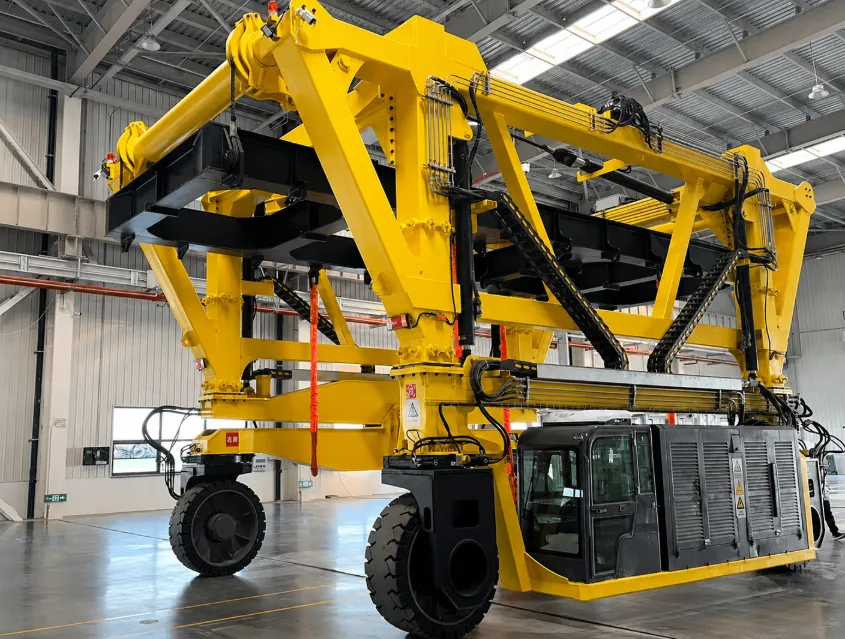
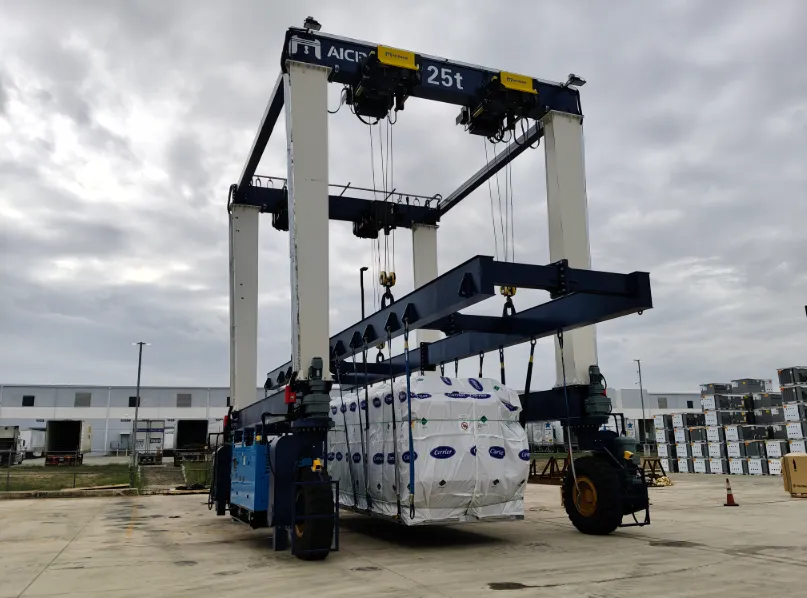
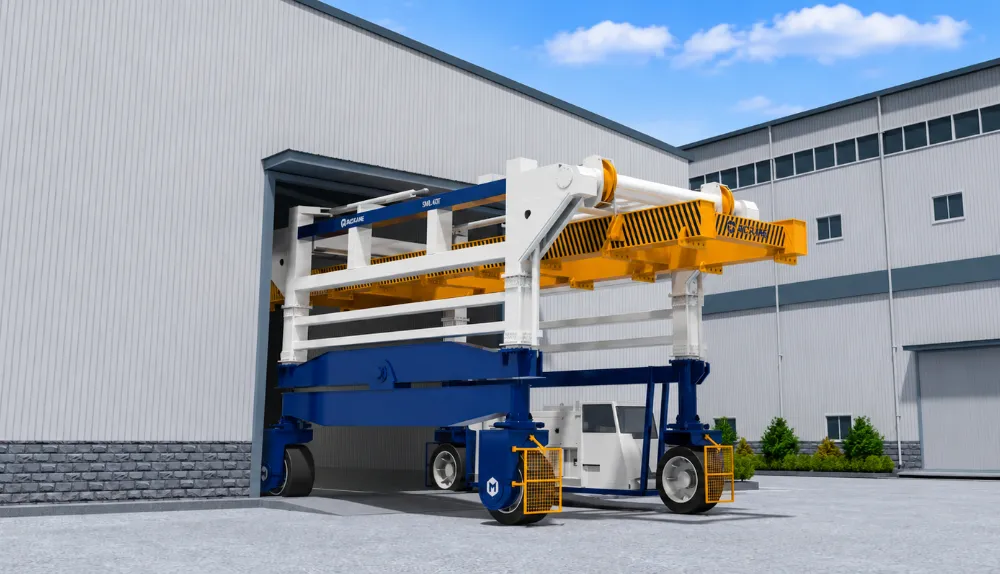
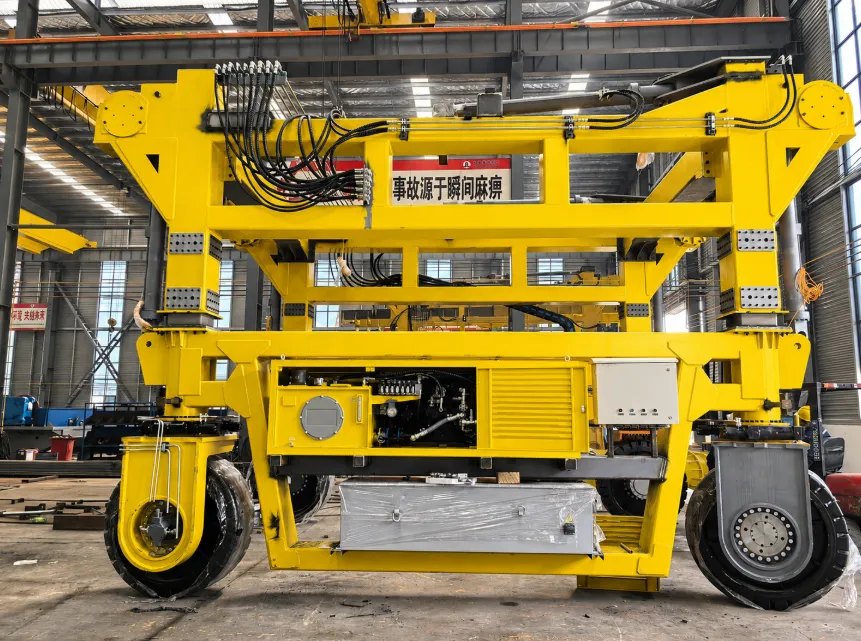
In contrast, straddle carriers use an elongated bottom chassis supported by a multi-axle, multi-wheel arrangement. A standard straddle carrier typically features 8, 12, or 16 tires evenly distributed along both sides of the frame:
- Uniform Weight Distribution: The total load—comprising the machine's self-weight and the container—is shared among a large number of tires. This larger contact area significantly reduces the ground pressure exerted on any single point of the pavement.
- Reduced Pavement Materials: Because individual wheel pressure is lower, bending forces and vertical stress within the pavement layers are reduced. As a result, terminals can specify thinner concrete or asphalt layers and reduce the amount of internal steel reinforcement. For container yards spanning tens or hundreds of thousands of square meters, reducing pavement thickness by even a few centimeters yields substantial savings in concrete, steel, earth excavation, and backfilling costs.
2. Eliminating Dedicated Concrete Runway Beams
Rubber-Tired Gantry (RTG) cranes are widely used for container stacking, but they impose high structural demands on their travel paths.
RTGs operate along fixed, narrow travel lanes, causing heavy rubber tires to repeatedly roll over the exact same line of pavement. This continuous, concentrated loading quickly leads to surface degradation and localized subgrade settlement on standard ground. Consequently, yards designed for RTG cranes must construct reinforced, heavy-duty concrete runway beams along every travel path.
When terminals are built on soft ground or reclaimed land, these runway beams often require deep foundation piling beneath them to prevent differential settlement or tilt over time. These specialized civil engineering structures carry high construction costs and extend overall project timelines.
Straddle carriers operate without fixed travel tracks:
- Flexible Movement Across the Yard: Equipped with multi-wheel steering, straddle carriers can turn freely, travel across container rows, and avoid concentrating loads along designated line paths.
- Standard Pavement Usage: Straddle carriers run directly on standard-duty asphalt or concrete surfaces. Terminals do not need to excavate ground to pour dedicated concrete runway beams or drive supporting piles, eliminating a major civil construction expense.
3. Decreasing Heavy Traffic Density and Pavement Wear
In traditional "RTG + Terminal Tractor" operations, yard transport requires two separate types of equipment working in tandem:
- Terminal tractors transport containers between the quay and the stacking yard.
- RTGs lift containers on and off the tractors and stack them in designated blocks.
This division of labor increases the volume of heavy machinery within yard lanes. Tractor fleets frequently accelerate, brake, turn, and idling within the yard, accelerating surface wear and fatigue in the pavement structure.
Straddle carriers utilize a single-equipment workflow. A single straddle carrier can pick up a container at the quay, transport it to the yard, and stack it directly—or load it directly onto an external road truck.
By reducing the number of horizontal transport vehicles operating in the yard, overall heavy vehicle mileage and rolling cycles are minimized. This reduction in traffic density slows down pavement degradation, extends the lifespan of the yard surface, and reduces the frequency of major repaving and maintenance projects.
4. Lowering Phased Investment and Future Layout Modification Costs
Managing capital deployment timelines and maintaining operational adaptability are critical considerations for port operators.
Equipment choices that demand heavy-duty subgrade reinforcement force operators to complete high-spec ground preparation across the entire facility during initial construction. If container volumes in early project stages fall short of projections, this upfront capital tied up in civil works can strain financial efficiency.
Straddle carrier operations offer greater adaptability for yard development:
- Phased Capital Expenditure: Because straddle carriers operate effectively on moderate pavement specifications, terminals can grade and pave land in stages as business volume grows, avoiding unnecessary upfront civil spending.
- Low Cost Layout Changes: When operational needs require changes to the yard layout—such as altering row orientations, expanding reefer zones, or reconfiguring lanes—straddle carrier yards generally require only repainting surface lines. There is no need to demolish existing concrete runway beams or perform underground foundation modifications, keeping reconfigurations straightforward and inexpensive.
Conclusion
When evaluating container handling equipment, civil infrastructure and ongoing pavement maintenance represent a major portion of total project expenditure alongside machine purchase prices.
By spreading wheel loads, eliminating dedicated runway beams, reducing heavy yard traffic, and offering flexible ground requirements, straddle carriers provide a practical approach to controlling initial civil engineering costs and long-term maintenance expenses. For terminal operators seeking to manage upfront capital commitments and maintain layout flexibility, this infrastructure-level cost optimization delivers clear operational value.


























Sign in to leave a comment.