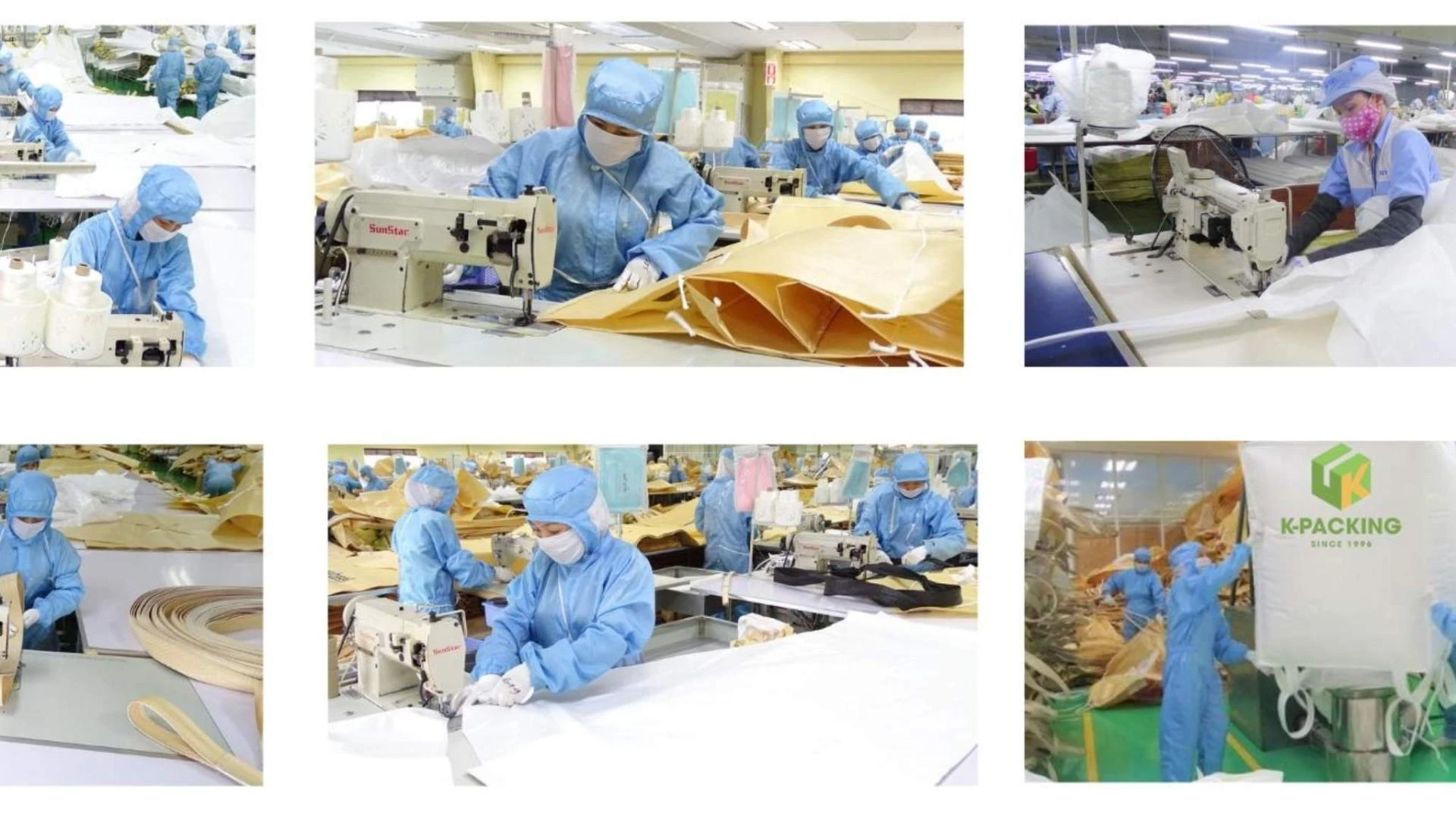

In large-scale industries such as chemical processing, food production, and electronics manufacturing, the risk of static electricity is not limited to small components. When powders, granules, or resins are poured into or discharged from bulk containers, friction between particles can create high levels of static charge. If not properly controlled, this charge can ignite flammable gases or dust, causing serious safety incidents.
To address these hazards, manufacturers use anti-static FIBC bags—specialized bulk containers engineered to safely dissipate or neutralize static electricity during filling, handling, and transport.
1. What Are Anti-Static FIBC Bags
FIBC stands for Flexible Intermediate Bulk Container, commonly known as jumbo bags or bulk bags. They are large woven polypropylene sacks used for storing and transporting bulk materials, usually ranging from 500 to 2000 kilograms.
Anti-static FIBC bags are enhanced versions made with conductive or static-dissipative materials that prevent spark discharge. These bags are used wherever flammable dusts, solvents, or gases may be present, ensuring both product integrity and worker safety.
2. How Static Electricity Builds Up in Bulk Handling
When powders or pellets flow through filling equipment, the friction between particles and the bag’s surface generates static electricity. In ordinary polypropylene bags, this charge has no escape path and can accumulate to thousands of volts. When it finally discharges as a spark, it can ignite explosive atmospheres or damage sensitive products.
Anti-static bulk bags are designed to manage this charge safely. Depending on their construction type, they either allow the charge to dissipate through controlled leakage or transfer it directly to the ground through conductive yarns or grounding cables.
3. Classification of Anti-Static FIBC Bags
The international classification system divides anti-static bulk bags into four main types, based on their static control capability:
Type Description Static Control Method Grounding Required Typical Use Type A Standard woven polypropylene with no ESD protection None Not applicable Non-flammable materials Type B Made from insulating material with low breakdown voltage Prevents brush discharge No Dry powders, non-flammable environment Type C Contains conductive yarns woven into the fabric Grounded to safely dissipate charge Yes Flammable powders or gases Type D Made from static-dissipative fabric using special fibers Neutralizes charge without grounding No Environments where grounding is difficult Type C and Type D bags provide the highest safety levels and are most widely used in industries dealing with volatile materials.
4. Standards and Safety Regulations
Anti-static FIBC bags must comply with international safety standards to ensure proper ESD protection. Key references include IEC 61340-4-4 and ISO 21898, which specify testing methods, surface resistance values, and labeling requirements.
Factories that produce or handle explosive materials often require additional certifications such as ATEX (for European markets) or OSHA compliance (for the United States). Meeting these standards ensures safe operation and legal conformity across global supply chains.
5. Industrial Applications
Anti-static bulk bags are widely used in:
- Chemical and petrochemical industries for powders, resins, and catalysts
- Pharmaceutical manufacturing for active ingredients and granulated materials
- Food processing for sugar, flour, and starch handling
- Electronics production for conductive fillers and polymer compounds
- Paints, coatings, and pigments where volatile solvents are present
In each of these sectors, the bags provide a combination of static safety, mechanical strength, and reusability.
6. Benefits of Using Anti-Static FIBC Bags
- Prevents static-induced fires or explosions in hazardous areas.
- Protects product purity by avoiding contamination from spark burns.
- Enhances compliance with international ESD and safety standards.
- Reduces downtime and inspection costs related to static hazards.
- Extends packaging life through durable woven construction.
When used correctly, these bags not only improve safety but also contribute to more efficient and sustainable industrial logistics.
7. Handling and Maintenance Guidelines
- Always use the correct type (C or D) according to the risk level of the material.
- For Type C bags, ensure the grounding connection is continuous and secure during filling and discharge.
- Avoid using damaged bags or those with broken conductive yarns.
- Maintain proper humidity in storage areas to prevent excessive charge buildup.
- Follow IEC and ATEX handling recommendations when operating in hazardous zones.
Proper training of operators and periodic testing of bag conductivity are also essential for maintaining ESD protection performance.
Conclusion
Anti-static FIBC bags play a vital role in protecting industrial operations from the invisible dangers of static electricity. By safely managing charge buildup, they prevent sparks, fires, and explosions, ensuring both workplace safety and product quality.
From chemical plants to electronics factories, the right type of FIBC—B, C, or D—helps companies comply with safety standards, reduce operational risks, and build a more reliable global supply chain.




























Sign in to leave a comment.