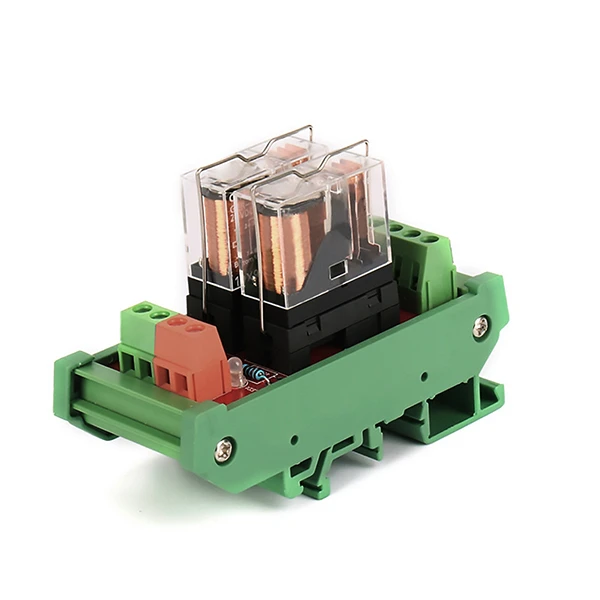
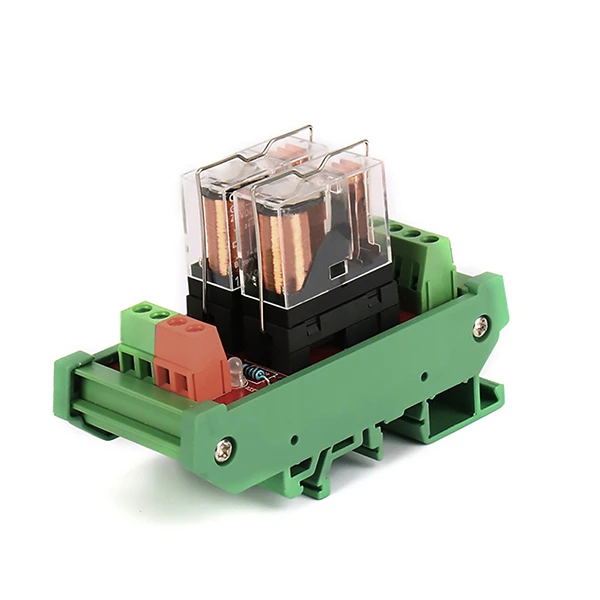
When it comes to managing high-current switching in modern control panels, the electromagnetic relay module has earned its place as a core component. ATO’s version offers a compact footprint, strong load capacity, and the kind of scalability industrial applications demand — all in one module that’s far easier to wire and mount than using multiple individual relays.
You’ll find configurations from 2-channel all the way up to 32-channel, so whether you're prototyping or building out a full automation cabinet, there’s a module that fits. Coil voltage is standardized at 24V DC, and you can choose between 1NO+1NC or 2NO+2NC contact forms depending on your control strategy. It handles up to 10A at 250V AC or 12A at 30V DC for resistive loads, and it’s even rated for 7.5A inductive at 250V AC — which means it’s ready for real-world conditions, not just lab specs.
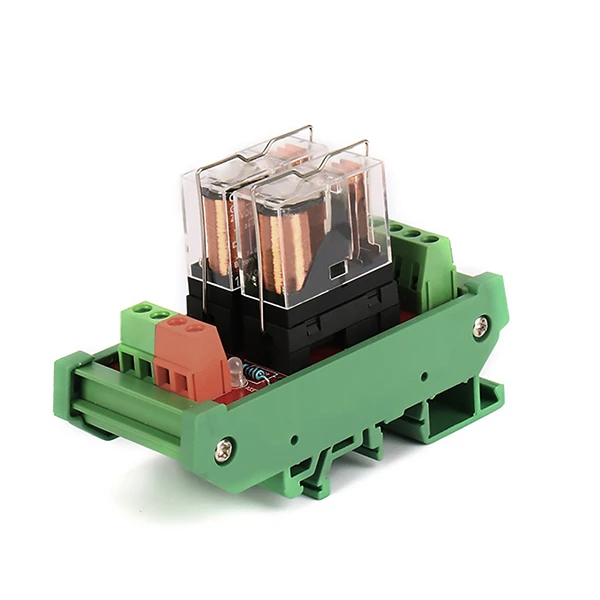
There’s more to it than switching capacity. Optocoupler isolation on the input side ensures that control signals from a PLC or microcontroller are protected from transients, voltage spikes, and electrical noise. That means you can implement dual power systems with confidence, without worrying about interference or feedback loops. And because it uses low-level drive logic, relays default to off when the system is powered down — which is exactly what you want for safety during maintenance or unexpected shutdowns.
From a usability standpoint, these modules check all the boxes. LED status indicators on every channel make it simple to monitor switching activity. Screw terminals are easy to access and clearly labeled. And thanks to DIN rail compatibility (NS35/7.5 or NS32), you can mount them quickly and securely inside standard control enclosures. They’re CE certified and perform reliably in ambient temperatures from –20°C to 70°C with high humidity tolerance.
What makes this relay board a smart choice isn’t just the specs — it’s how seamlessly it fits into everything from smart building systems to motor control setups. Whether you’re isolating a signal, managing alarms, or automating a production line, this module replaces multiple relays with a streamlined, cost-effective solution that’s easier to install and maintain.
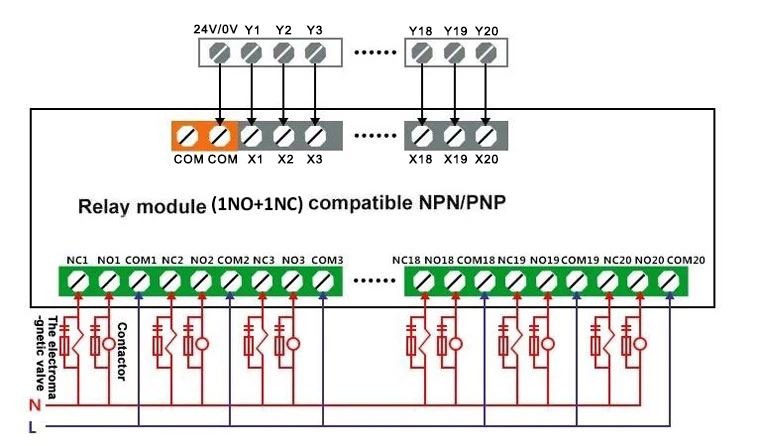
Compared to solid-state relay modules, electromagnetic types like this one give you that tactile switching feel and visible LED feedback — which can be a big advantage during troubleshooting. You’ll see these used in HVAC systems, security panels, conveyor setups, factory controls, and even custom automation by hobbyists. It’s built with both scale and simplicity in mind.
If you need a dependable relay solution that saves space, reduces wiring complexity, and adds protection to your control logic, this module from ATO is worth serious consideration. Explore the full range of options and see how well it fits your next project on the Electromagnetic Relay Module page.


























Sign in to leave a comment.