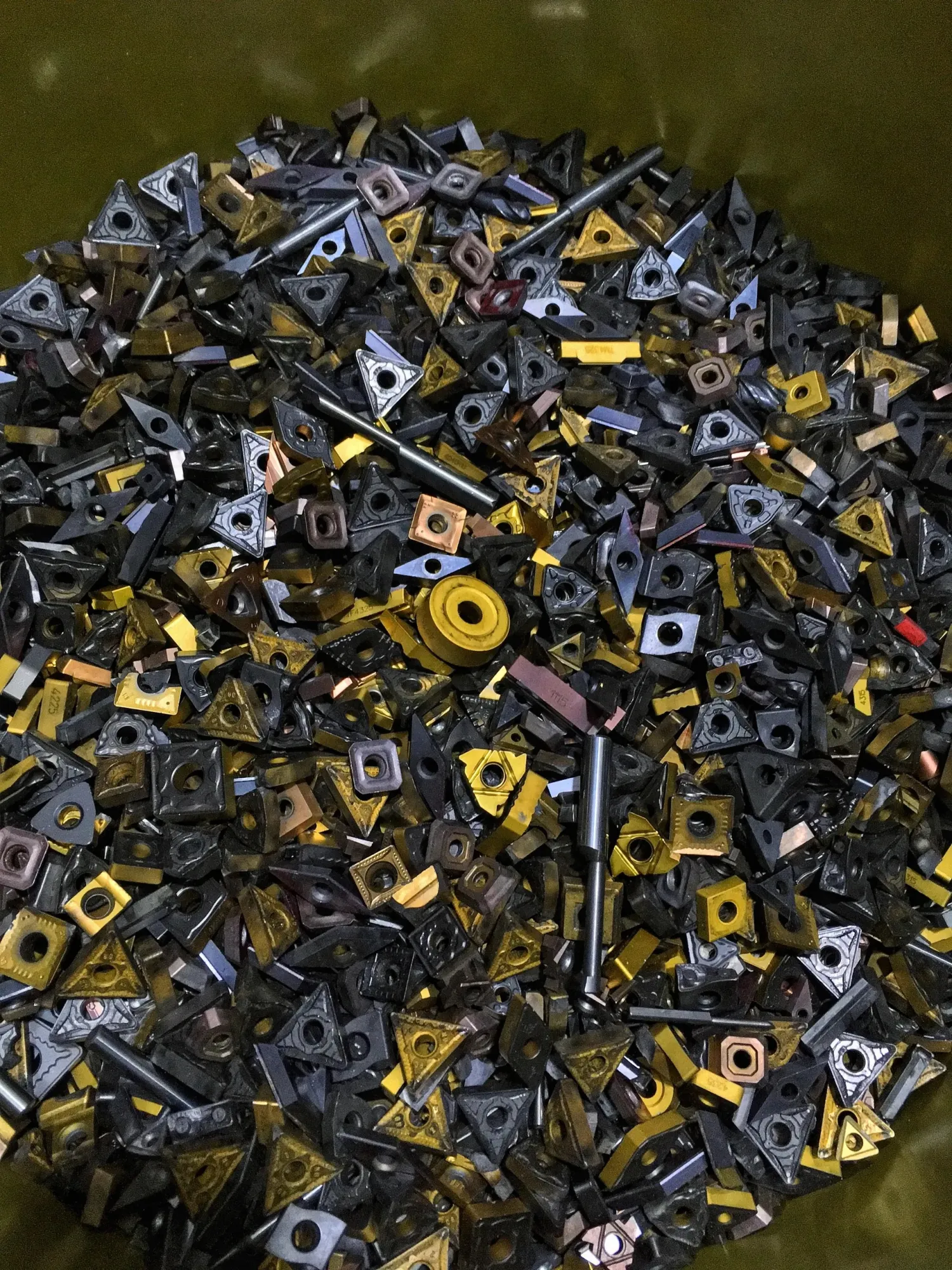

Carbide inserts scrap refers to worn, chipped, or discarded cutting inserts used in CNC lathes and milling machines, made from tungsten carbide bonded with cobalt. This scrap retains significant value because the tungsten and cobalt content can be recovered and reused in new tooling production. Shops that discard used inserts as ordinary waste are overlooking a recoverable revenue source.
Why Used Inserts Retain Material Value
Tungsten and Cobalt Content Don't Wear Out
Even when the cutting edge of an insert is worn or chipped beyond use, the underlying tungsten carbide material remains chemically intact. This is why carbide inserts scrap continues to hold real market value long after the tool itself is no longer usable.
Grade and Coating Affect Recoverable Value
Different insert grades and coatings (such as titanium nitride or carbonitride) can affect pricing slightly, since buyers factor in the composition when testing material for cobalt and tungsten content.
Common Sources of Carbide Inserts Scrap
CNC Machine Shops
Machine shops running lathes and milling operations generate a steady stream of worn inserts as part of routine tooling replacement, making this one of the most consistent sources of sellable carbide scrap.
Tool and Die Operations
Facilities producing dies and precision components also accumulate inserts scrap, often alongside other carbide waste like rods and wear rings, which can be sold together as mixed lots.
How to Turn Inserts Into Revenue
Collecting and Storing Inserts Properly
Setting up a dedicated container for used inserts, separate from general metal waste, prevents contamination and makes eventual sale faster. Even small daily accumulations add up to meaningful volume over months.
Selling to a Buyer That Understands Insert Grading
Working with knowledgeable carbide insert buyers ensures inserts are graded and tested accurately rather than priced at a flat generic rate, which can significantly affect the final payout for shops accumulating inserts regularly.
Shops that treat insert collection as a routine part of their tooling replacement process — rather than an afterthought — typically accumulate enough volume to make regular sales worthwhile. Partnering with a buyer that consistently purchases carbide inserts scrap also removes the need to shop around every time a new batch accumulates, since an established relationship means faster, more predictable transactions.
Conclusion
Carbide inserts scrap holds meaningful value that many shops leave unclaimed simply by treating worn tooling as waste. By collecting inserts properly and selling to a buyer experienced in grading tungsten and cobalt content, machine shops can turn a routine byproduct of daily operations into consistent additional revenue.























Sign in to leave a comment.