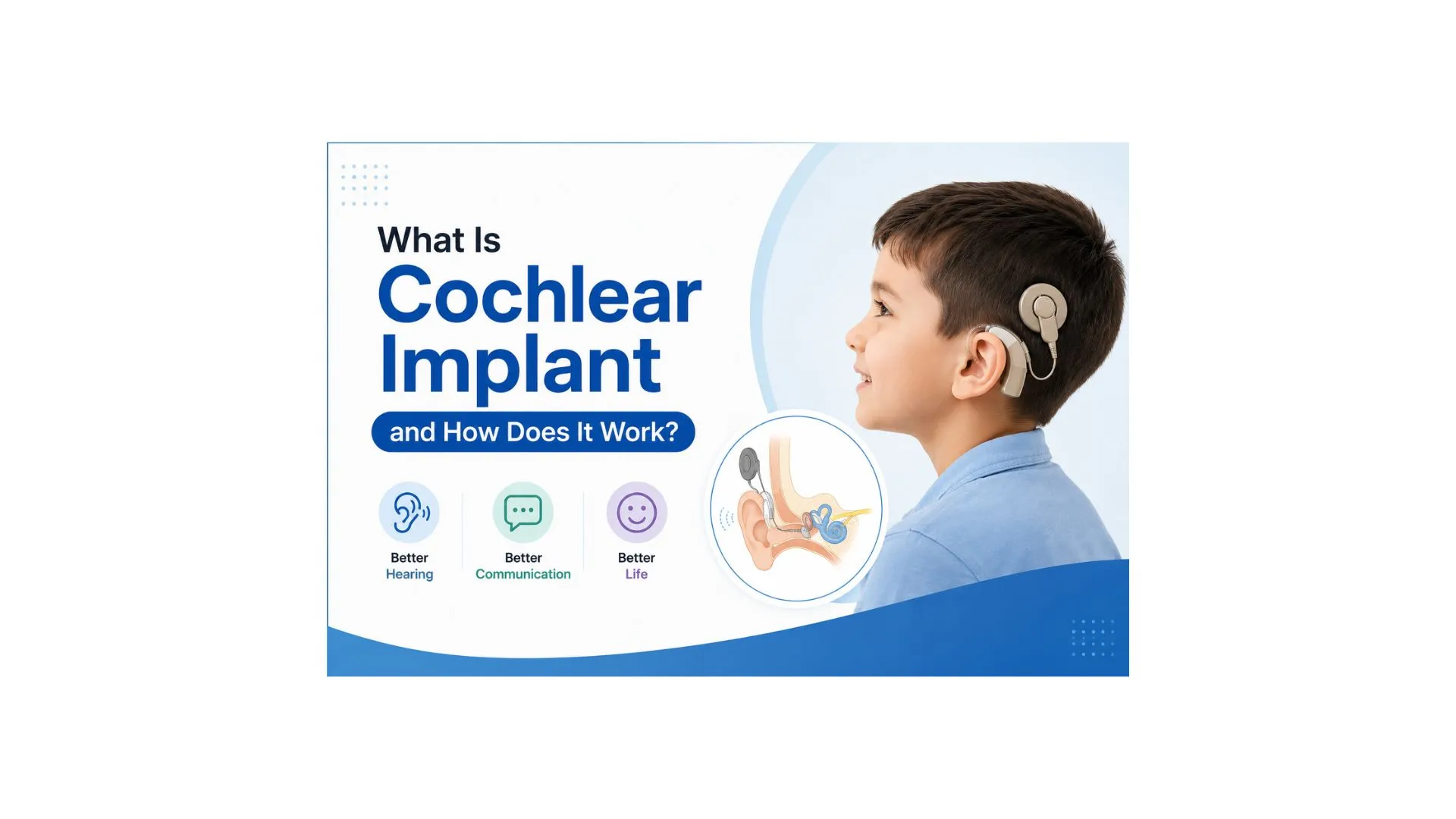

We listen with our ears all the time. Hearing is very important for communication, learning, work and everyday life. For people with severe to profound hearing loss, standard hearing aids are not always able to provide sufficient benefit. In such cases, a cochlear implant would be a more sophisticated treatment.
The Cochlear Implant is a biomedical tool that directly stimulates the auditory nerve. The Cochlear Implant is not the same as the hearing aid, which only amplifies sound and bypasses the damaged inner ear part and sends signals to the auditory nerve.
Patients and families will be able to make informed decisions once they understand the mechanism of the operation of cochlear implant, its benefits for some patients, and process involved. Visit Sarvesh Health City for all types of ENT problems and get complete assessment and treatment for all types of ear and hearing problems.
What Is a Cochlear Implant?
A cochlear implant is an electronic medical device for people with severe sensorineural hearing loss who receive limited benefit from hearing aids.
The device consists of two main parts:
External component
External component – This consists of a microphone, speech processor and transmitter. Usually it is worn behind or near the ear.
Internal part
Internal part: This part includes a receiver-stimulator that is implanted under the skin and an array of electrodes that are implanted in the cochlea.
The implant does not return normal natural hearing. Instead it transmits electrical impulses to the auditory nerve which the brain perceives as sound.
How does a cochlear implant work?
The cochlear implant converts sound into electrical signals that are sent to the hearing nerve.
The process will usually involve the following steps:
1. Sound hits Microphone.
The external device’s microphone picks up the surrounding sound such as speech, music or other common sounds.
2. The Sound is Decoded by the Speech Processor
The speech processor converts the sound into digital information. It analyzes and detects the key features of sound which is very useful for understanding speech.
3. Transmitter transmits the information
The transmitter transmits the processed information through the skin to the receiver-stimulator within the body.
4. The Internal Receiver Alters the Signal
The receiver-stimulator receives the information and converts it into electrical signals.
5. Electrode Stimulation of Auditory Nerve
An array of electrodes inserted into the cochlea electrically stimulates the auditory nerve.
Who might need a cochlear implant?
Cochlear implants may be an option for children and adults with severe to profound sensorineural hearing loss who do not benefit sufficiently from hearing aids.
People may be considered for a cochlear implant if:
-Serious or deep hearing loss
-Limited benefit of well-fitted hearing aids
-Difficulty understanding speech even with hearing aids
-Have a working auditory nerve
-Medically cleared for the procedure
Eligibility requirements can be specific to the person’s age, hearing level, speech understanding, medical history and other factors.
What’s the Difference Between a Hearing Aid and a Cochlear Implant?
Hearing aids and cochlear implants are not the same thing.
A hearing aid makes the sound louder, or easier to hear, so the person can use their hearing better. Suitable for persons who can obtain significant benefit from amplification.
By contrast, a cochlear implant transforms sound into electrical signals and directly stimulates the auditory nerve. If the damage to the inner ear is such that a person cannot gain enough benefit from hearing aids, this may be an option.
Which one you take depends on your hearing condition and the specialist’s assessment.
What happens in cochlear implant surgery?
Cochlear implant surgery is done under anesthesia. During the procedure the surgeon implants the internal receiver-stimulator under the skin and carefully positions the electrode array within the cochlea.
The surgery is usually preceded by careful planning and imaging or other assessment before the operation. After implantation, the external processor is turned on only after the surgical site heals.
Each person will have a different type of surgery and recovery time.
What to Expect After Cochlear Implant Surgery
Usually the implant does not start giving usable sound immediately after surgery.
After the surgical site has healed the external speech processor is fitted and turned on. The first activation is programd by the audiologist based on the patient’s responses and hearing needs.
At first the sounds may seem unfamiliar or strange. The brain needs a while to figure out how to interpret the new electrical signals.
Regular follow-up and rehabilitation are, therefore, important.
How long does it take to get used to a cochlear implant?
How much adjustment varies from person to person. For some people, it doesn’t take long to start recognizing environmental sounds, but it can take longer to understand speech.
Progress may be affected by a variety of factors, such as:
-Age of implantation
-Length of hearing loss
-Experience hearing before
-Use of hearing aid
-Total health.
-Individual auditory processing skills
-Device use consistency
-Hearing rehabilitation participation
The adaption process can be aided by regular practice and follow-up with hearing professionals.
How Does a Cochlear Implant Function?
In appropriately selected patients cochlear implants may offer several benefits including:
-Heightened awareness of environmental sounds
-Enhanced speech detection capability
-Better speech understanding under the right conditions
-Communication support
-Greater confidence in everyday life
-Improved access to sounds that were difficult to hear
But the results vary from person to person. A cochlear implant does not restore normal hearing. The results depend on a number of personal and medical factors.
Safety of Cochlear Implant
Cochlear implantation is generally accepted as an established surgical treatment, but as with any surgery there are potential risks.
Complications may include infection, bleeding, dizziness, changes in taste, problems with the device, or other surgical complications. There are cases when the implant may not give the expected benefit in hearing.
The ENT surgeon and audiology team can discuss the possible benefits and risks depending on the individual’s condition.
What are the necessary tests before cochlear implantation?
Implantation is usually recommended after a thorough examination by a specialist.
-Audiometry
-Speech Hearing Testing
-Hearing aid benefits evaluation
-Examination of the ears
-Medical Evaluations
-Hearing and Communication Evaluation
Children may also qualify for developmental and speech-language evaluations.
These assessments will help to determine whether a cochlear implant is an appropriate option.
When Should You See an ENT Specialist?
If you are constantly having trouble hearing, especially if you have trouble understanding conversations even with the use of hearing aids, you should not ignore it.
Should you or your child experience:
-Severe hearing impairment
-Trouble understanding speech
-Hearing loss that affects day-to-day communication
-Hearing aid benefit is poor
-Hearing loss that develops gradually.
-Hearing problems that interfere with a child’s speech or learning
Early assessment can help with the diagnosis of the cause of hearing loss and selection of the best treatment options.
Why Sarvesh Health City for Hearing & ENT Care?
Selecting the proper medical team is crucial when assessing complex hearing conditions. Sarvesh Health City believes in holistic healthcare and provides specialist assessment for ENT and hearing related problems.
Proper diagnostic assessment for the level and cause of hearing loss can be done to patients. The results can then inform the medical team to discuss treatment options that are available, including whether cochlear implantation may be appropriate.
If you or your child have a significant hearing loss or are not getting enough benefit from hearing aids, an experienced ENT specialist can be an important next step to consider. Best ENT Hospital in Hisar can help people to decide on the best treatment and hearing rehabilitation plan through a detailed evaluation.
Summary
A cochlear implant is a sophisticated hearing device that can provide access to sound for appropriately selected individuals with severe to profound hearing loss. It doesn’t work like a hearing aid; it converts the sound into electrical signals that will stimulate the auditory nerve.
Success with cochlear implantation is more than surgery. Proper patient selection, medical evaluation, programming of the device, regular follow-up and auditory rehabilitation are all important.
If you or your child has a significant hearing loss or does not gain much from hearing aids, consult an ENT specialist for a complete evaluation. Sarvesh Health City can help patients understand their hearing condition and find the treatment options best suited for their individual needs.



























Sign in to leave a comment.