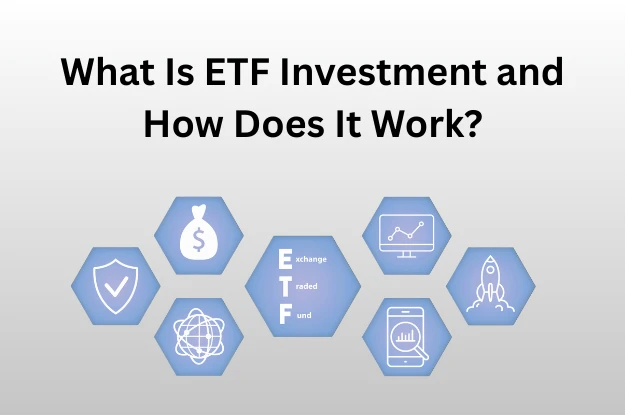

Exchange-traded funds, or ETFs, have become one of the most popular investment products worldwide. For both beginners and seasoned investors, ETFs provide a straightforward, flexible, and cost-effective means of building wealth and gaining exposure to a diverse range of markets. But what exactly are ETFs, and how do they work?
What Is an ETF?
An ETF is an investment fund that holds a basket of assets—such as stocks, bonds, commodities, or even currencies—and trades on an exchange just like a stock. When you buy a share of an ETF, you’re essentially buying a small piece of every asset within that fund.
For example, an ETF tracking the S&P 500 index gives you exposure to 500 of the largest U.S. companies through a single trade, instead of purchasing all those individual shares separately.
How Do ETFs Work?
Here’s a simple breakdown of how ETFs function:
- Pooling Investor Funds
- Investors’ money is pooled together to buy a diversified portfolio of assets.
- Tracking a Benchmark or Strategy
- Many ETFs are designed to track an index (like the FTSE 100, S&P 500, or MSCI World). Some follow specific themes, such as clean energy, AI, or healthcare.
Trading on Stock Exchanges (During Market Hours)
- ETFs are listed and traded on stock exchanges during regular market hours for the exchange where they are listed. Their prices move in real time during those sessions based on supply and demand and the value of their underlying holdings — just like individual shares.
- Liquidity and Flexibility
- Investors can buy or sell ETF shares at any time during trading hours, making them highly liquid compared to traditional investment funds.
Types of ETFs
There are many types of ETFs to suit different goals and risk appetites:
- Equity ETFs – Track stock indexes like the S&P 500 or regional markets.
- Bond ETFs – Provide exposure to government or corporate bonds.
- Sector ETFs – Focus on industries such as technology, real estate, or healthcare.
- Commodity ETFs – Invest in physical assets like gold, silver, or oil.
- Thematic ETFs – Capture long-term trends such as AI, robotics, or clean energy.
Factors to Look Out For When Selecting an ETF
Choosing the right ETF involves more than just picking a popular name. Here are key factors to consider before investing:
1. Investment Objective and Underlying Index
Understand what the ETF tracks. Is it following a broad market index, a sector, or a theme (like technology or ESG)? Ensure it aligns with your investment goals and risk tolerance.
2. Total Expense Ratio (TER)
This is the annual fee charged by the ETF provider. Lower TERs generally mean higher net returns over time, especially for long-term investors.
3. Liquidity and Trading Volume
ETFs with higher trading volumes and larger AUM tend to be easier to trade and feature narrower bid-ask spreads. Thinly traded ETFs may be harder to buy or sell at a fair price.
4. Tracking Error
This measures how closely the ETF’s performance mirrors its underlying index. A smaller tracking error indicates better performance replication and efficient management.
5. Fund Size and Longevity
Larger and more established ETFs tend to have more stable operations, tighter tracking, and better liquidity. Very small or new ETFs might be at risk of closure if they don’t attract sufficient assets.
6. Distribution Policy (Income vs. Accumulation)
Some ETFs pay dividends to investors (income ETFs), while others reinvest them automatically (accumulation ETFs). Choose based on whether you prefer regular payouts or reinvestment for growth.
7. Currency Exposure
If the ETF invests in assets denominated in foreign currencies, your returns can be affected by exchange rate fluctuations. Consider whether you prefer hedged or unhedged ETFs depending on your outlook.
Why Do Investors Choose ETFs?
ETFs are attractive because they combine the best features of stocks and mutual funds. Key benefits include:
- Diversification – Spread risk across many assets in a single trade.
- Cost-effectiveness – ETFs generally charge lower fees than actively managed funds.
- Transparency – Most ETFs publish their holdings daily.
- Flexibility – Easy to trade during market hours, with options for global exposure.
Risks of ETF Investing
Like any investment, ETFs aren’t risk-free. Prices can fluctuate with the market, and specialized ETFs (such as leveraged or thematic funds) can be more volatile. Investors should always assess a fund’s objective, costs, and underlying holdings before investing.
Getting Started with ETFs
- Open a brokerage account that provides access to ETFs.
- Choose your ETF based on your goals—broad index exposure, sector-specific, or thematic.
- Invest regularly to take advantage of compounding and market growth.
- Monitor your portfolio and rebalance as needed.
ETF investing provides a flexible and low-cost way to access global markets, ranging from blue-chip companies to cutting-edge innovations. Whether you’re building a long-term retirement portfolio or seeking targeted exposure to a specific trend, ETFs can help simplify and strengthen your investment strategy.




























Sign in to leave a comment.