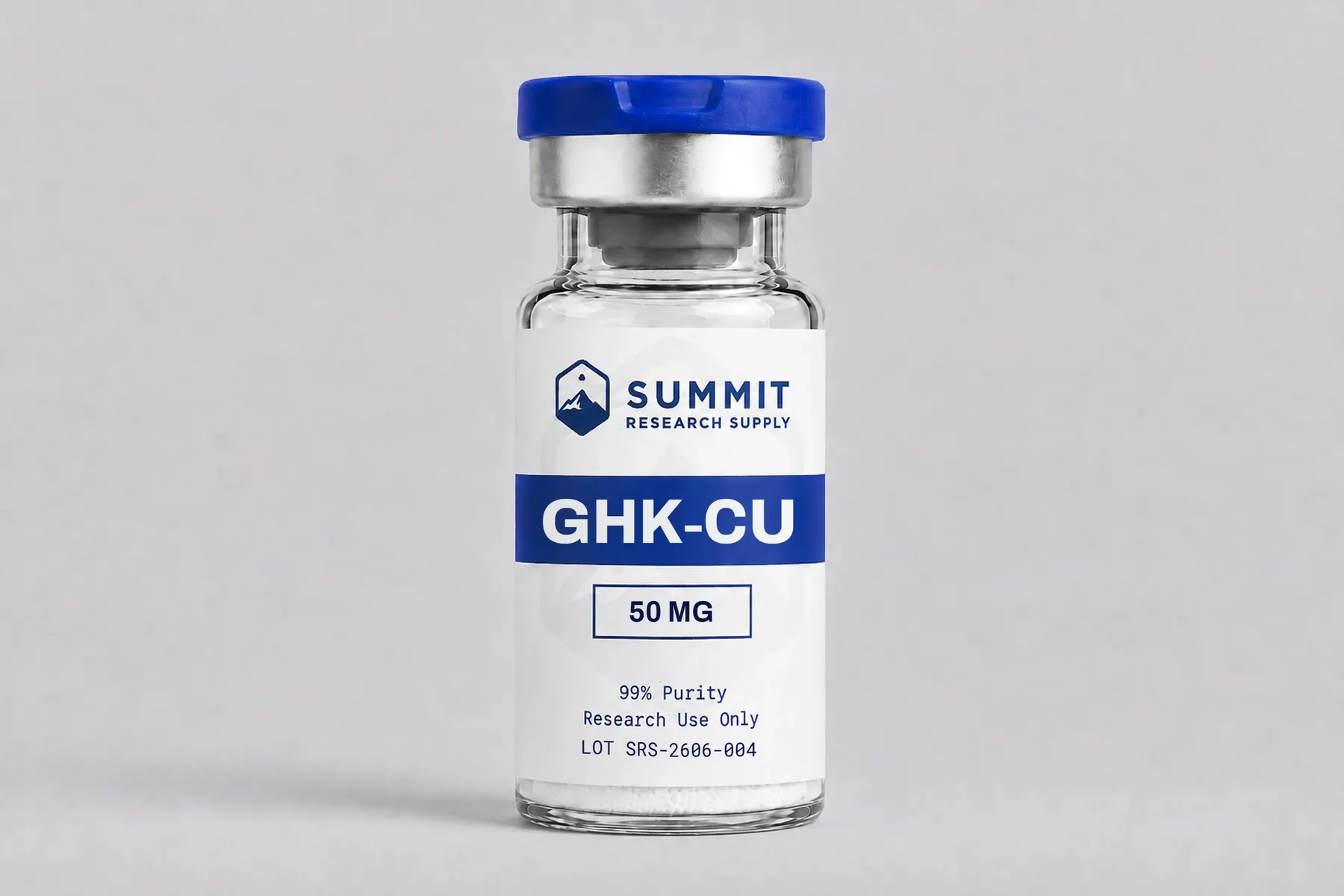

GHK Cu is a copper peptide that has attracted considerable interest in peptide and biomedical research. Also known as GHK Cu or GHK-Cu, it is formed from the naturally occurring tripeptide glycyl-L-histidyl-L-lysine and copper. Researchers have investigated this peptide complex for decades, particularly in relation to cellular signaling, extracellular matrix activity, tissue remodeling, and skin biology.
Interest in GHK Cu continues because laboratory and preclinical studies have identified several biological activities that may be relevant to tissue and cellular research. At the same time, the available evidence varies considerably by application, experimental model, and route of administration. A clear distinction between research findings and established clinical applications is therefore important when evaluating GHK Cu peptide 50mg.
What Is GHK Cu Peptide?
GHK is a naturally occurring tripeptide made up of three amino acids: glycine, histidine, and lysine. It has a strong affinity for copper ions and can form the GHK-Cu complex. Research has investigated both GHK and its copper complex in connection with cellular and tissue processes.
GHK-Cu has been studied for its potential involvement in tissue remodeling, extracellular matrix activity, cellular signaling, and inflammatory pathways. These characteristics have made the peptide relevant to researchers investigating how peptide compounds interact with biological systems.
The term GHK Cu 50mg peptide generally refers to a research material containing a specified amount of GHK-Cu. Researchers should review the product documentation to confirm the exact composition, batch information, analytical specifications, and intended research use.
Why Is GHK Cu Being Studied?
GHK Cu is of interest because research has identified multiple biological mechanisms associated with the peptide complex. Laboratory studies have examined its effects on processes involving collagen, glycosaminoglycans, fibroblasts, and other components of connective tissue.
A review published in PubMed notes that GHK-Cu has demonstrated tissue remodeling, wound healing, antioxidant, and anti-inflammatory properties in in vitro and in vivo studies. These findings provide a basis for continued preclinical investigation.
Researchers may therefore study GHK Cu to better understand how copper binding influences peptide activity and how the compound interacts with biological pathways.
GHK Cu and Tissue Remodeling Research
Tissue remodeling involves changes to the extracellular matrix and the cells responsible for maintaining tissue structure. Collagen, elastin, glycosaminoglycans, and other components contribute to this complex process.
Research into GHK-Cu has examined its relationship with extracellular matrix production. In an experimental wound model, GHK-Cu was associated with increased accumulation of collagen, protein, DNA, and glycosaminoglycans.
These findings have made GHK Cu a useful subject for researchers interested in understanding the molecular mechanisms involved in tissue remodeling. However, experimental observations should be interpreted according to the model in which they were obtained.
What Does GHK Cu Research Examine?
Research involving GHK Cu can cover several areas of peptide and cellular biology.
Collagen and Extracellular Matrix
Researchers have examined GHK-Cu in relation to collagen synthesis and extracellular matrix components. A laboratory study found that GHK-Cu influenced glycosaminoglycan synthesis in cultured human fibroblasts, providing evidence for further investigation into its role in extracellular matrix biology.
Fibroblast Activity
Fibroblasts are important cells involved in connective tissue maintenance and extracellular matrix production. Their response to peptide compounds can provide useful information about cellular mechanisms and tissue biology.
GHK-related research has investigated fibroblast function and activity, contributing to broader research into cellular regeneration and tissue remodeling.
Inflammatory Signaling
GHK-Cu has also been investigated for interactions with inflammatory pathways. Preclinical research has reported anti-inflammatory activity, although the significance of these observations depends on the experimental model and requires further investigation before broad conclusions can be made.
Skin Biology
Skin biology is another major area of interest. GHK and GHK-Cu have been studied in connection with skin remodeling and cosmetic applications. However, recent reviews highlight limitations in the available evidence, including insufficient clinical research and challenges related to skin permeability.
What Is GHK Cu 50mg Research Peptide?
GHK Cu 50mg research peptide is a research material supplied in a specified quantity for laboratory use. The 50mg designation identifies the amount of material provided rather than indicating a recommended dose or therapeutic regimen.
Researchers evaluating GHK Cu 50mg should focus on the available product specifications and analytical documentation. Information such as peptide identity, purity testing, batch number, storage requirements, and Certificate of Analysis details can help researchers maintain accurate laboratory records.
The quantity of a research peptide should not be interpreted as a dosage recommendation. Experimental requirements vary according to the research design, analytical method, and laboratory protocol.
Why Is a GHK Cu Research Peptide Useful for Laboratory Studies?
Research peptides can provide controlled materials for investigating biological mechanisms. For GHK Cu, researchers may be interested in studying copper-peptide interactions, cellular responses, extracellular matrix processes, or other mechanisms identified in previous research.
A defined research material can also support reproducibility when researchers maintain consistent documentation and experimental conditions.
However, research quality depends on more than the availability of a peptide. Appropriate controls, validated analytical methods, reproducible protocols, and careful interpretation of results are all important parts of scientific research.
What Should Researchers Consider When Evaluating GHK Cu 50mg?
Researchers considering GHK Cu 50mg research should review several aspects of the material before incorporating it into a laboratory project.
Identity: The product should clearly identify the research compound.
Batch Information: Batch or lot information can support traceability and laboratory record keeping.
Analytical Testing: Available testing documentation can provide information about specified characteristics of the material.
Storage: Researchers should follow the applicable product documentation and laboratory procedures for storage and handling.
Research Objective: The compound should have a defined purpose within the experimental design.
Evidence: Researchers should distinguish between preclinical findings, laboratory observations, and clinical evidence.
These considerations can help laboratories maintain a more structured approach to peptide research.
What Does Current Research Say About GHK Cu?
The scientific literature provides evidence that GHK-Cu has several interesting biological properties, particularly in laboratory and animal research. Studies have investigated tissue remodeling, collagen and glycosaminoglycan production, inflammatory pathways, and skin related mechanisms.
However, the clinical evidence is considerably more limited than the preclinical literature. A recent review of GHK-Cu in aesthetic medicine identified predominantly preclinical studies and only a small number of randomized controlled trials, while noting methodological variability and the need for larger, standardized clinical studies.
This distinction is important. Promising laboratory findings can provide a rationale for further research, but they do not by themselves establish clinical effectiveness, safety, dosing, or therapeutic use.
The Future of GHK Cu Research
Future research may focus on better understanding GHK-Cu mechanisms, formulation characteristics, delivery methods, and biological activity. Skin permeability is one area receiving attention because GHK Cu is relatively hydrophilic and may have limited penetration through the skin barrier. Researchers are investigating approaches such as liposomal delivery and other permeability enhancement methods.
More standardized clinical studies could also help clarify how findings from laboratory and preclinical models translate into human applications.
Conclusion
GHK Cu is an established subject of peptide research with a history of investigation into tissue remodeling, extracellular matrix activity, cellular signaling, and skin biology. Its ability to form a complex between GHK and copper contributes to its distinctive research profile.
For researchers examining GHK Cu 50mg peptide, understanding the scientific background is only one part of the process. Product identity, batch documentation, analytical testing, storage requirements, and appropriate research protocols should also be considered.
Current evidence provides substantial preclinical interest in GHK-Cu, while clinical evidence remains more limited. Continued research and well controlled studies will be important for developing a clearer understanding of the peptide and its potential biological applications.




















Sign in to leave a comment.