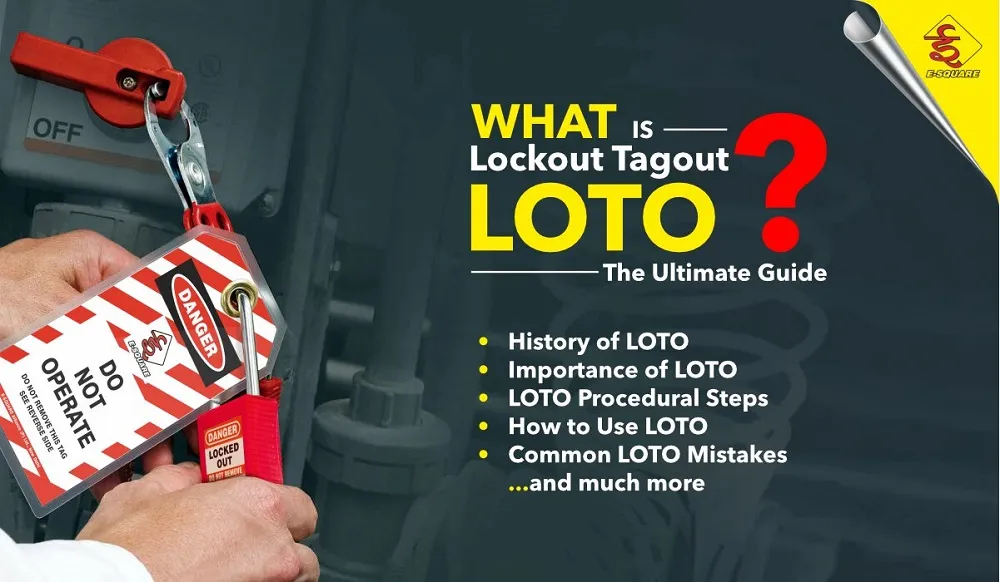

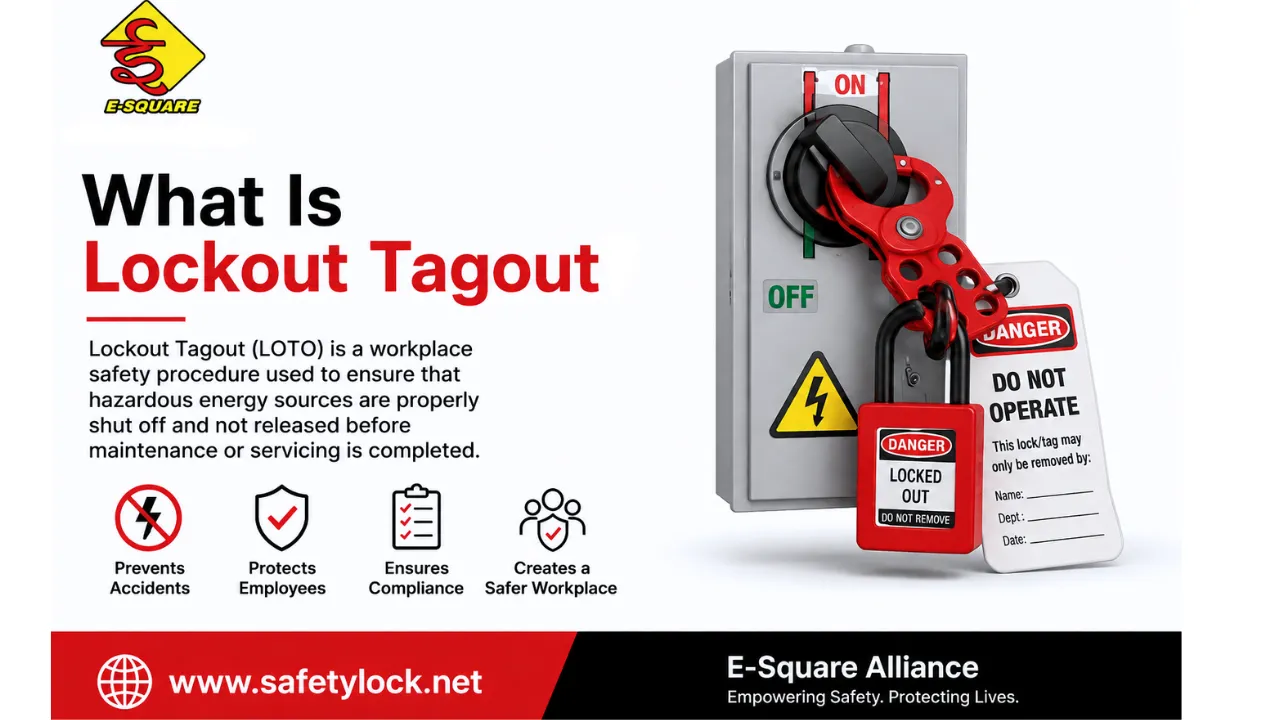
Lockout Tagout, commonly called LOTO, is one of the most important safety practices used in industrial workplaces. It helps protect employees from unexpected machine startup, electrical energization, or the release of stored energy while equipment is being serviced or maintained.
In a manufacturing plant, a machine may look completely switched off, but that does not always mean it is safe to work on. Electrical power, hydraulic pressure, compressed air, mechanical movement, heat, or stored energy may still be present. If that energy is released unexpectedly, it can cause serious injuries.
This is why a proper Lockout Tagout procedure is essential.
In the United States, OSHA's 29 CFR 1910.147, also known as the Control of Hazardous Energy standard, establishes requirements for controlling hazardous energy during servicing and maintenance activities. OSHA explains that the purpose of the standard is to prevent injuries caused by unexpected energization, startup, or release of stored energy.
What Does Lockout Tagout Mean?
Lockout Tagout means isolating hazardous energy sources and preventing equipment from being operated while maintenance or servicing is being performed.
A lockout normally involves placing a physical lockout device on an energy-isolating device so that the equipment cannot be energized or operated.
Tagout involves attaching a prominent warning tag to indicate that the equipment must not be operated.
The basic idea is simple:
Stop → Isolate → Lock/Tag → Release Stored Energy → Verify → Perform Work
The process gives authorized employees control over the energy sources that could otherwise cause an unexpected startup or release of hazardous energy.
OSHA defines a lockout device as a device that uses a positive means, such as a lock, to hold an energy-isolating device in a safe position. A tagout device provides a warning that the equipment must not be operated.
Why Is Lockout Tagout Important?
Industrial equipment can contain several forms of hazardous energy.
For example, consider a conveyor system that needs maintenance. Turning off the main electrical switch may stop the motor, but there could still be stored mechanical energy, electrical energy, or other hazards in the system.
If someone accidentally restarts the conveyor while a maintenance worker is working on it, the result could be severe.
LOTO helps prevent this type of situation by making energy isolation a controlled process.
OSHA requires employers covered by the standard to establish an energy control program consisting of energy control procedures, employee training, and periodic inspections.
A good LOTO program therefore does more than provide padlocks and tags. It combines the right equipment with documented procedures and properly trained employees.
What Is Hazardous Energy?
Hazardous energy is energy that can potentially cause injury when machinery or equipment is being serviced or maintained.
Common forms include:
- Electrical energy
- Mechanical energy
- Hydraulic energy
- Pneumatic energy
- Chemical energy
- Thermal energy
- Gravitational energy
- Stored or residual energy
For example, a hydraulic machine may continue to have pressure in its lines after the main power has been switched off. Similarly, a machine with a suspended component may have gravitational energy that needs to be controlled before maintenance begins.
This is why simply pressing an emergency stop button or switching off a machine is not necessarily a complete energy-control procedure.
The equipment must be properly isolated from its energy source and rendered inoperative before covered servicing or maintenance work begins.
What Is OSHA 1910.147?
OSHA 29 CFR 1910.147 is the general-industry standard for the control of hazardous energy, commonly referred to as the Lockout/Tagout standard.
The standard applies to servicing and maintenance of machines and equipment where unexpected energization, startup, or release of stored energy could cause injury.
An effective energy control program includes:
- Written energy-control procedures
- Employee training
- Periodic inspections
- Appropriate lockout or tagout devices
- Proper energy isolation
Verification before work begins
OSHA also requires energy-control procedures to describe the scope, purpose, authorization, rules, techniques, and methods used to control hazardous energy. The procedures should include shutdown, isolation, securing, device removal, and verification steps.
Companies should always review the actual OSHA standard and applicable requirements for their specific workplace rather than relying on a general online article.
Lockout vs. Tagout: What Is the Difference?
Lockout and tagout are related, but they are not exactly the same.
Lockout
Lockout uses a physical device to hold an energy-isolating device in a safe or off position.
For example, a maintenance worker may use a circuit breaker lockout device and personal safety padlock to prevent a breaker from being switched back on.
Tagout
Tagout uses a warning device or tag to communicate that the equipment must not be operated.
A tag is primarily a warning and identification device. It does not provide the same physical restraint as a lock.
Under OSHA 1910.147, when an energy-isolating device is capable of being locked out, the employer's program generally must use lockout unless the employer can demonstrate that tagout provides full employee protection under the standard.
Therefore, businesses should not treat lockout and tagout as interchangeable without considering the requirements of their energy-control program.
The Basic Lockout Tagout Procedure
A successful LOTO procedure should be specific to the machine, equipment, energy sources, and work being performed.
The following steps provide a general overview.
1. Prepare for Shutdown
Before shutting down equipment, identify all energy sources.
An authorized employee should understand the type and magnitude of energy involved, the hazards associated with it, and the methods needed to control it.
This may include reviewing machine-specific procedures, drawings, manuals, or energy-control documentation.
2. Notify Affected Employees
Employees who operate or work around the equipment should be informed that the machine will be shut down for servicing or maintenance.
Good communication is important because employees should understand why the equipment is being taken out of service and that they must not attempt to restart it.
3. Shut Down the Equipment
The equipment should be shut down using the normal stopping procedure.
An orderly shutdown helps prevent additional hazards that could occur if equipment is stopped incorrectly.
4. Isolate the Energy Sources
Next, locate and operate the appropriate energy-isolating devices.
Depending on the equipment, this may involve electrical disconnects, circuit breakers, valves, switches, or other isolation points.
OSHA requires the energy-isolating devices needed to control the equipment's energy sources to be physically located and operated so that the equipment is isolated from those sources.
5. Apply Lockout or Tagout Devices
Authorized employees apply the appropriate lockout or tagout devices to the energy-isolating devices.
Common devices include:
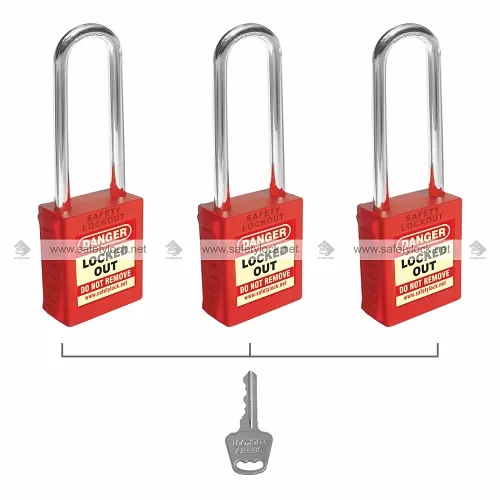
- Safety padlocks
- Lockout hasps
- Circuit breaker lockouts
- Valve lockouts
- Cable lockout devices
- Electrical plug lockouts
- Lockout tags
- Group lockout devices
The devices should be suitable for the equipment and workplace environment.
6. Release Stored Energy
Turning off the main power is not always enough.
Stored or residual energy may remain in:
- Pressurized hydraulic lines
- Pneumatic systems
- Capacitors
- Springs
- Flywheels
- Elevated equipment
- Heated systems
OSHA's LOTO procedure requires hazardous stored or residual energy to be relieved, disconnected, restrained, or otherwise rendered safe.
7. Verify Energy Isolation
This is one of the most important steps.
Before maintenance begins, an authorized employee must verify that the equipment has been properly isolated and deenergized.
Depending on the equipment, verification may involve testing electrical circuits, checking pressure gauges, attempting normal equipment operation after controls are applied, or using other appropriate methods.
The exact verification method should be defined by the machine-specific procedure.
8. Perform the Maintenance Work
Only after the required energy-control steps have been completed should servicing or maintenance work begin.
Workers should continue to follow the established energy-control procedure throughout the job.
Common Lockout Tagout Devices
Different machines require different types of LOTO equipment.
Safety Padlocks
LOTO safety padlocks are designed for use as part of an energy-control program. They can identify the employee responsible for the lock and help prevent unauthorized operation.
Lockout Hasps
A lockout hasp allows multiple workers to attach their personal locks to a single energy-isolation point.
This can be useful during maintenance jobs involving several authorized employees.
Circuit Breaker Lockouts
Circuit breaker lockout devices are designed to prevent a breaker from being operated during maintenance.
Different breaker designs may require different lockout devices, so compatibility should always be checked.
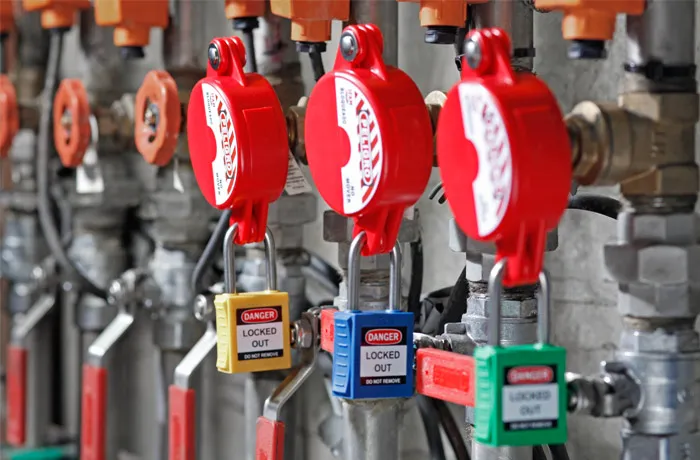
Valve Lockout Devices
Valve lockouts help prevent valves from being opened or closed when equipment is undergoing maintenance.
Common applications include ball valves, butterfly valves, gate valves, and other industrial valve types.
Cable Lockout Devices
Cable lockout systems can be useful when several isolation points need to be secured or when a standard lockout device is not suitable for the application.
Lockout Stations
A centralized LOTO station can help organizations store commonly used locks, tags, hasps, and other devices in an accessible location.
E-Square Alliance provides a range of industrial Lockout Tagout products designed for different energy-isolation applications, including safety padlocks, lockout hasps, valve lockouts, cable lockout devices, and other LOTO equipment.
Who Is an Authorized Employee?
The term authorized employee is important in OSHA's LOTO requirements.
An authorized employee is a person who locks out or tags out machines or equipment in order to perform servicing or maintenance.
These employees need the appropriate knowledge and training to safely apply, use, and remove energy-control devices.
OSHA's energy-control program also includes training so employees understand the purpose and function of the program and can follow the applicable procedures.
Who Is an Affected Employee?
An affected employee is generally an employee who operates or uses the equipment being serviced or works in the area where the energy-control procedure is being used.
Affected employees need to understand the purpose and use of the energy-control procedure and must not attempt to restart or reenergize equipment that has been locked or tagged out.
Understanding the difference between authorized and affected employees is important when developing workplace LOTO training.
Common Lockout Tagout Mistakes
Even companies with LOTO programs can make mistakes.
Some common problems include:
- Failing to identify every energy source
- Using the wrong lockout device
- Skipping stored-energy control
- Starting maintenance before verification
- Using damaged or unsuitable devices
- Allowing employees to share personal locks
- Failing to train employees properly
- Not updating machine-specific procedures
- Poor communication during shift changes
- Treating an emergency stop as the only energy-isolation method
The biggest lesson is that LOTO should be treated as a complete process rather than simply “putting a lock on a switch.”
How to Improve a Workplace LOTO Program
A strong program starts with a clear understanding of the equipment and its energy sources.
Companies should regularly review:
- Machine-specific energy-control procedures
- Employee training
- LOTO equipment condition
- Energy-isolation points
- Stored-energy hazards
- Verification methods
- Group LOTO procedures
- Shift-change procedures
- Periodic inspections
OSHA identifies energy-control procedures, employee training, and periodic inspections as core parts of the energy-control program.
LOTO devices should also be durable, standardized, substantial, and identifiable as required by the applicable OSHA provisions.
Final Thoughts
Lockout Tagout is more than a collection of safety locks and warning tags. It is a structured approach to controlling hazardous energy before employees perform servicing or maintenance.
A successful LOTO program combines:
Correct procedures + proper isolation + suitable devices + employee training + verification
For US general industry, OSHA 29 CFR 1910.147 provides the core regulatory framework for controlling hazardous energy during covered servicing and maintenance activities.
Businesses should develop procedures based on their actual machines, energy sources, workplace conditions, and applicable regulations.
For organizations looking to improve their energy-isolation practices, choosing appropriate LOTO equipment is an important part of the process. E-Square Alliance offers a range of Lockout Tagout solutions for industrial safety and energy-control applications.
Frequently Asked Questions
What is Lockout Tagout (LOTO) and why is it important?
Lockout Tagout (LOTO) is a safety procedure used in industrial workplaces to prevent the accidental startup or release of hazardous energy during maintenance. It's crucial because it protects employees from serious injuries that can occur if machinery is inadvertently energized or if stored energy is released unexpectedly.
What are the main components of a LOTO program?
A comprehensive LOTO program includes written energy-control procedures, employee training, periodic inspections, and appropriate lockout or tagout devices. It ensures that all employees understand the energy sources involved and the correct procedures to follow for safe maintenance.
What is the difference between lockout and tagout?
Lockout involves using a physical device, like a lock, to secure an energy-isolating device in a safe position, preventing operation. Tagout, on the other hand, uses warning tags to indicate that equipment must not be operated, but does not provide the same physical restraint, making lockout the preferred method when feasible.
Who qualifies as an authorized employee in a LOTO procedure?
An authorized employee is someone who has received the necessary training and is responsible for applying and removing lockout or tagout devices to ensure equipment safety during maintenance. They must understand the energy sources involved and the hazards associated with them.
What are common mistakes made in LOTO procedures?
Common mistakes include failing to identify all energy sources, using inappropriate lockout devices, skipping the verification step, and allowing employees to share personal locks. Such errors can compromise safety and lead to serious accidents.
How can a workplace improve its LOTO program?
To enhance a LOTO program, companies should regularly review machine-specific procedures, ensure proper employee training, maintain LOTO equipment, and conduct periodic inspections. Regular updates and communication during shift changes are also critical for maintaining safety.


























Sign in to leave a comment.