
Introduction
Business communication has changed dramatically in the digital era. Organizations now rely heavily on email to exchange financial data, contracts, confidential documents, customer information, and internal communication every single day. While email has become essential for operational efficiency, it has also become one of the biggest targets for cybercriminals
worldwide.
Modern phishing attacks are no longer easy to identify. Cybercriminals use advanced impersonation tactics, fake domains, AI-generated messaging, and spoofed email identities to trick employees into sharing sensitive information or authorizing fraudulent transactions. These attacks are becoming more sophisticated and more damaging every year.
One of the fastest-growing cyber threats today is Business Email Compromise (BEC), where attackers impersonate executives, suppliers, or trusted business partners to manipulate organizations financially or operationally. Traditional spam filters and basic email protection tools alone are no longer enough to stop these threats effectively.
This growing cybersecurity challenge is why businesses increasingly require stronger email security systems capable of verifying identities, encrypting communication, and protecting sensitive digital interactions. That’s exactly where Public Key Infrastructure (PKI) becomes essential for modern business communication.
In this guide, we’ll explain what PKI is, how it works in secure business communication, why organizations need PKI-based security, and how solutions like XgenPlus help businesses strengthen secure digital communication infrastructure.
What Is Public Key Infrastructure (PKI)?
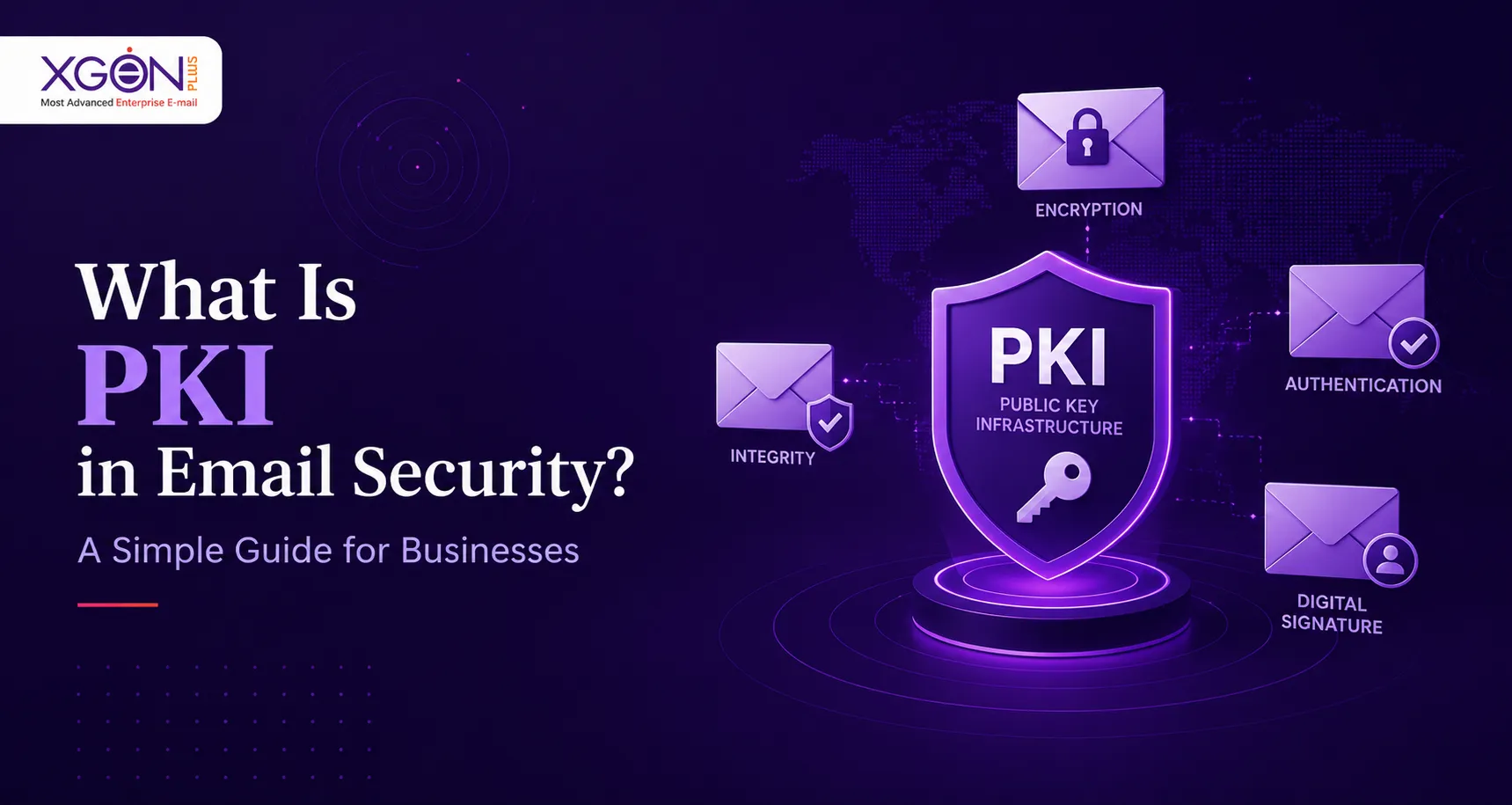
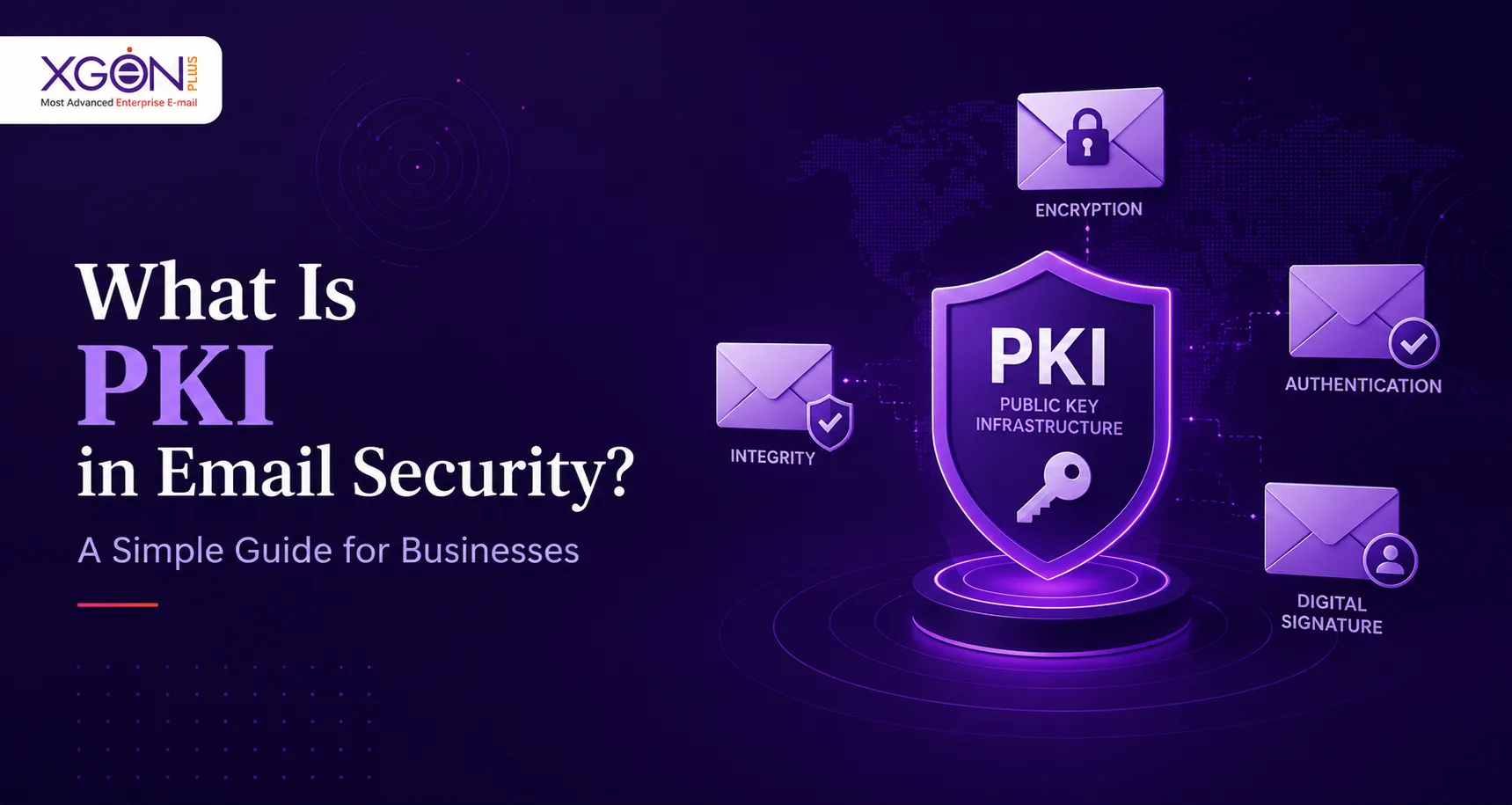
Public Key Infrastructure is a digital security framework designed to protect online communication through encryption and identity verification technologies. PKI enables organizations to securely exchange information by ensuring that communication remains confidential, authentic, and protected from unauthorized access or tampering.
At its core, PKI uses two cryptographic keys, a public key and a private key, to encrypt and decrypt sensitive information securely. The public key encrypts the data, while the private key decrypts it, ensuring that only authorized recipients can access confidential communication.
PKI also supports digital identity verification using certificates issued by trusted Certificate Authorities. These certificates confirm the legitimacy of email senders, websites, and digital communication systems, helping businesses establish trusted communication environments.
For modern organizations, PKI plays a major role in strengthening secure business email systems by reducing risks associated with spoofing, impersonation, unauthorized access, and email tampering. It helps businesses maintain trust while securing sensitive operational communication.
As cybersecurity threats continue evolving, PKI-based security has become an essential part of modern enterprise communication infrastructure and advanced email security strategies.
Key Components of PKI
- Public and private encryption keys
- Digital certificates
- Certificate Authorities
- Identity verification systems
- Secure encryption protocols
Why Email Security Matters More Than Ever
Email remains one of the most widely used communication channels in business environments today. Organizations rely on email for daily collaboration, customer engagement, financial approvals, document sharing, and operational communication across departments and external partners. This makes email a highly valuable target for cybercriminals.
Modern phishing attacks have become extremely sophisticated and difficult to detect. Attackers now create highly convincing fake emails that imitate executives, vendors, banks, or trusted organizations. Many employees unknowingly interact with malicious emails because they appear legitimate at first glance.
Another major concern for businesses is Business Email Compromise, where cybercriminals manipulate trusted communication channels to initiate fraudulent transactions or steal sensitive information. These attacks can result in financial losses, operational disruption, legal complications, and reputational damage.
Traditional spam filters and antivirus systems alone are no longer sufficient for protecting organizations against evolving email threats. Businesses now require advanced email security systems capable of verifying identities, encrypting communication, and preventing unauthorized access.
This growing threat landscape is why organizations increasingly adopt PKI-based security technologies to improve trust, communication, and authenticity, and secure digital collaboration across modern business environments.
Common Email Security Threats
- Phishing attacks
- Business Email Compromise
- Email spoofing
- Unauthorized data access
- Malware-based email attacks
How PKI Works in Email Security
PKI strengthens email security by combining encryption and identity authentication to secure digital communication. When a user sends an encrypted email using PKI, the recipient’s public key encrypts the message while the private key decrypts it securely upon delivery. This ensures that only authorized recipients can access the communication.
In addition to encryption, PKI also supports digital signatures that verify the sender’s identity and confirm that email content has not been modified during transmission. This creates a trusted communication environment where recipients can verify message authenticity before interacting with emails.
Trusted Certificate Authorities issue digital certificates that validate identities within the PKI ecosystem. These certificates help organizations confirm that communication originates from verified and authorized senders rather than cybercriminals attempting impersonation attacks.
PKI also protects organizations from spoofing and fraudulent communication by validating sender credentials before emails are delivered. This significantly reduces risks associated with fake email domains, impersonation scams, and unauthorized communication attempts.
Businesses implementing PKI-based security within their communication infrastructure improve trust, communication integrity, and protection against increasingly sophisticated cyber threats targeting enterprise email systems.
How PKI Protects Email
- Encrypts sensitive communication
- Verifies sender identities
- Prevents email tampering
- Reduces spoofing risks
- Strengthens communication trust
The Role of Certificate Authorities in PKI
Certificate Authorities (CAs) are trusted entities responsible for issuing and managing digital certificates within the PKI ecosystem. These certificates function like digital identity passports that verify the authenticity of organizations, users, websites, and communication systems online.
When businesses receive certificates from trusted Certificate Authorities, it confirms that the organization or user has been verified properly. This helps establish trust between communication parties and reduces risks associated with fake or unauthorized identities.
Certificate Authorities play a critical role in maintaining secure communication environments because they help organizations validate sender identities and communication integrity before emails or digital interactions are trusted. This is essential for secure enterprise communication.
CAs also manage certificate issuance, renewal, expiration, and revocation processes to ensure that encryption systems remain valid and secure over time. This helps organizations maintain long-term communication security and compliance standards.
As organizations increasingly depend on digital communication and remote collaboration, trusted Certificate Authorities remain fundamental to modern secure business email systems and enterprise-grade PKI-based security infrastructure
Functions of Certificate Authorities
- Issuing digital certificates
- Verifying identities
- Managing certificate lifecycles
- Supporting secure encryption
- Establishing digital trust
How PKI Helps Prevent Business Email Compromise
Business Email Compromise has become one of the most financially damaging cyber threats affecting organizations worldwide. Attackers often impersonate executives, suppliers, or financial teams to manipulate employees into sharing confidential information or transferring funds fraudulently.
These attacks are highly dangerous because they often bypass traditional email filtering systems. Cybercriminals carefully imitate trusted communication patterns, making fraudulent emails appear authentic to unsuspecting employees. Many organizations fail to detect these threats until significant damage has already occurred.
This is where PKI-based security becomes extremely valuable for modern businesses. PKI verifies sender identities using digital certificates and cryptographic validation mechanisms that help organizations identify unauthorized communication attempts before employees engage with malicious emails.
Digital signatures also strengthen communication trust by confirming that emails have not been altered or tampered with during transmission. This helps organizations reduce exposure to impersonation scams, spoofed communication, and fraudulent email activity targeting enterprise environments.
Businesses implementing strong email security systems with PKI protections can significantly reduce the risks associated with phishing attacks and sophisticated Business Email Compromise campaigns.
Benefits of PKI Against BEC Attacks
- Verifies legitimate senders
- Prevents spoofed communication
- Detects unauthorized modifications
- Improves communication trust
- Strengthens enterprise security posture
Why Businesses Need Secure Business Email Solutions
Modern organizations operate in highly connected digital environments where communication flows continuously across employees, clients, suppliers, remote teams, and business partners. As businesses become more digitally dependent, securing communication channels becomes increasingly important.
A modern Business Email Solution should provide more than simple messaging functionality. Organizations now require advanced encryption, sender authentication, anti-phishing protection, digital identity verification, and secure collaboration capabilities integrated directly into communication systems.
Businesses that fail to secure communication infrastructure face growing risks from cyberattacks, operational disruption, compliance violations, and reputational damage. Email security is no longer just an IT responsibility; it is a business continuity and trust issue.
Secure communication systems powered by Public Key Infrastructure help businesses strengthen trust while protecting sensitive operational communication from evolving cyber threats. These systems improve communication integrity while reducing vulnerabilities associated with traditional email platforms.
Organizations investing in modern, secure business email systems position themselves to operate more securely, efficiently, and confidently within today’s rapidly evolving cybersecurity landscape.
Features Businesses Should Look For
- End-to-end email encryption
- Digital identity verification
- Anti-phishing protection
- Secure authentication systems
- PKI-based security integration
How XgenPlus Strengthens Secure Business Communication
Modern organizations need communication platforms designed specifically for security, trust, reliability, and enterprise-grade performance. This is where XgenPlus helps businesses strengthen secure digital communication through advanced email security infrastructure and intelligent protection systems.
XgenPlus provides organizations with a secure Business Email Solution built to support encrypted communication, sender authentication, anti-phishing protection, and advanced identity verification capabilities. The platform helps businesses reduce risks associated with spoofing and impersonation attacks.
As cybercriminals continue launching increasingly sophisticated phishing attacks, businesses require a secure communication infrastructure capable of protecting sensitive data while supporting modern collaboration and productivity workflows. XgenPlus helps organizations modernize communication securely.
Advanced PKI-based security capabilities within XgenPlus help businesses improve communication authenticity, strengthen trust, and secure digital interactions across distributed teams and enterprise environments. This creates a more reliable and trusted communication ecosystem.
Organizations looking to improve operational security and secure business communication need platforms capable of combining productivity, scalability, and advanced email security within a single enterprise-ready solution.
Why Businesses Choose XgenPlus
- Enterprise-grade email security
- Secure encrypted communication
- Protection against phishing attacks
- Advanced authentication capabilities
- Trusted business communication infrastructure
Conclusion
Cyber threats targeting business communication are evolving faster than ever before. From sophisticated phishing attacks to highly targeted Business Email Compromise schemes, organizations face growing risks that traditional email systems alone can no longer prevent effectively.
This is why Public Key Infrastructure has become a critical foundation for modern email security strategies. PKI helps businesses verify identities, encrypt communication, prevent spoofing, and establish trusted digital communication environments across increasingly connected business ecosystems.
Secure communication is no longer just a technical requirement; it is essential for protecting operational continuity, customer trust, compliance, and long-term business resilience. Organizations now require advanced PKI-based security systems capable of defending against modern cyber threats effectively.
Trusted Certificate Authorities, digital encryption technologies, and secure authentication mechanisms all play a major role in helping businesses strengthen secure digital communication while reducing vulnerabilities associated with insecure email systems.
As cyber threats continue becoming more sophisticated, organizations must proactively invest in a secure communication infrastructure capable of supporting both productivity and enterprise-grade security. Businesses that prioritize secure communication today will be better prepared for the future of digital business operations.
Book a Free Demo with XgenPlus Today
Protect your organization from phishing attacks, spoofing, and Business Email Compromise with advanced secure business email solutions powered by PKI-based security.
Discover how XgenPlus helps businesses strengthen secure communication, improve trust, and modernize enterprise email security infrastructure.
Book a free demo with XgenPlus today.




























Sign in to leave a comment.