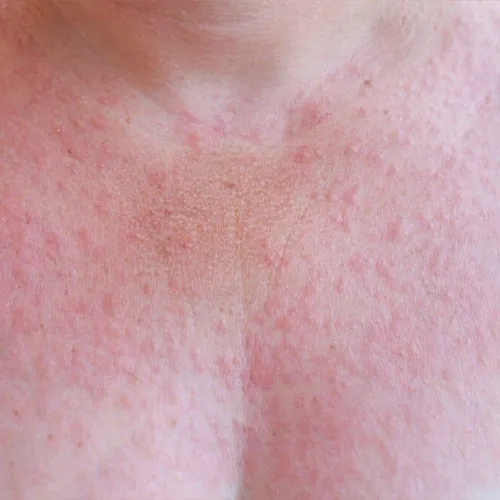

For many people, the arrival of spring and summer brings outdoor barbecues, beach trips, and beautiful sunny days. However, for a significant portion of the population, the first major exposure to warm sunlight triggers a frustrating, intensely itchy skin rash. If you experience mysterious red bumps or burning patches on your skin a few hours after being outdoors, you might not be suffering from a simple sunburn; you could be dealing with Polymorphic Light Eruption (PMLE).
Often referred to colloquially as a "sun allergy", PMLE is an incredibly common type of photosensitivity that affects up to 15% of individuals worldwide. In this comprehensive guide, we will break down the biological mechanics behind this condition, outline how to identify its shifting symptoms, explore the latest 2026 clinical management guidelines, and explain how digital tools can help you regain control over your skin comfort.
What is Polymorphic Light Eruption?
Polymorphic Light Eruption (PMLE) is a seasonal, acquired, and immunologically mediated skin disorder characterized by an abnormal, delayed healing response to ultraviolet (UV) radiation.
To unpack the name itself:
- "Polymorphic" (or polymorphous) means taking on "many forms". The rash looks remarkably different from one patient to the next.
- "Light Eruption" refers to the sudden outbreak of a rash following exposure to light source wavelengths (predominantly solar UV rays).
When a person with PMLE steps into the sun, the UV light is believed to alter a compound within the cutaneous tissue. Instead of naturally tolerating this change, the body's immune cells mistake it for a foreign threat and mount an localized inflammatory attack, culminating in an itchy, burning skin reaction.
Symptoms and Shifting Appearances of PMLE
One of the most challenging aspects of diagnosing Polymorphic Light Eruption is its visual variability. While a single individual will typically experience the exact same type of rash every time it flares up, the presentation changes drastically between different people.
The most common physical presentations include:
- Small Red Bumps (Papular): Dense clusters of tiny, raised red spots this is the most frequent presentation.
- Targetoid Patches (Plaques): Larger, raised, flat-topped red areas that look similar to hives.
- Fluid-Filled Blisters (Vesicular): In severe flares, the inflammation can cause small clusters of blisters.
Where and When Does It Strike?
PMLE has a distinct clinical footprint that sets it apart from other dermatological conditions:
- The Latency Period: The rash does not show up instantly. It typically erupts anywhere from 30 minutes to several hours or days after stepping out into the sun.
- Sensation: The rash is almost always accompanied by intense itching, stinging, or a severe burning sensation.
- Anatomical Distribution: Interestingly, PMLE rarely develops on areas that see the sun year-round, such as the face or the backs of the hands. Instead, it strongly targets skin sites that have been covered up during the colder winter months and suddenly receive intense exposure, such as the décolletage (V-area of the chest), forearms, upper arms, and thighs.
The Root Causes: UVA vs. UVB Light
The precise mechanism driving PMLE is rooted in the solar spectrum. While both types of ultraviolet radiation can trigger a flare-up, Ultraviolet A (UVA) rays are the principal culprit, provoking roughly 75% to 90% of all cases.
This distinction matters because of how UVA behaves compared to UVB:
- Window Glass Penetration: Unlike UVB rays (which cause sunburns and are mostly blocked by glass), UVA rays effortlessly pass through window glass. This means a highly sensitive individual can experience a PMLE flare-up simply by sitting next to a sunny window at home or during a long car drive.
- Atmospheric Consistency: UVA rays remain relatively constant in intensity throughout daylight hours and across different seasons, meaning cloud cover provides minimal protection against the specific wavelengths that trigger the eruption.
Clinical Management and the Concept of "Skin Hardening"
For mild cases, PMLE flares typically run their course and resolve completely on their own within a few days to a couple of weeks, provided the skin is strictly shielded from further sun exposure. Crucially, the rash heals smoothly and does not leave behind any permanent scarring.
When medical intervention is required, dermatologists rely on a multi-tiered approach:
1. Acute Flare Treatment
If you are suffering from an active, intensely uncomfortable breakout, topical treatments are highly effective at settling the localized immune response. Over-the-counter or prescription-strength topical corticosteroids (steroid creams) significantly reduce swelling, redness, and itching. Oral antihistamines and cool compresses can also be paired with your regimen to keep discomfort at bay.
2. Preventive "Photohardening"
For individuals with moderate-to-severe PMLE, the primary therapeutic goal is prevention. Many patients naturally notice that their skin becomes less reactive as summer progresses. This is due to a natural process called desensitization or "hardening," where repeated, gradual exposure to UV light causes the skin to adjust and develop a temporary tolerance.
Medical professionals can recreate this process safely using Narrowband UVB (NB-UVB) phototherapy. Administered in a controlled medical setting during late winter or early spring, a structured series of light treatments artificially "hardens" the skin, significantly dropping the likelihood of a massive flare-up when the hot summer months arrive.
Treatment Pros and Cons Comparison
| Treatment Strategy | Pros | Cons / Challenges |
| Topical Corticosteroids | Fast-acting; rapidly reduces intense itching and local inflammation during a flare-up. | Purely reactive; cannot prevent future flare-ups from occurring. Prolonged use can thin the skin. |
| Photohardening (NB-UVB) | Proactive and highly preventative; builds genuine skin tolerance before summer hits. | Requires a significant time commitment (typically 15-18 sessions over several weeks); the protective effect fades by winter. |
| Sun Avoidance & High-SPF Sunscreen | Low cost; zero medical side effects; simultaneously lowers lifetime skin cancer risks. | Can feel highly restrictive during holidays; standard sunscreens protect better against UVB than UVA. |
Frequently Asked Questions
Does Polymorphic Light Eruption lead to skin cancer?
No, PMLE is a benign (non-cancerous) inflammatory skin condition and does not directly increase your risk of developing melanoma or non-melanoma skin cancer. However, the UV radiation that triggers the rash is a known carcinogen. The rigorous sun-safety habits you implement to keep your PMLE under control will naturally shield you from skin damage and lower your cancer risks over time.
How can I tell the difference between PMLE and a standard sunburn?
A standard sunburn occurs in everyone if they stay out in the sun too long without protection, presenting as uniformly red, hot, painful skin that peels later. PMLE is an allergic-style immune response unique to sensitive individuals. It presents as distinct bumps, plaques, or blisters, and can erupt after as little as 20 minutes of mild sun exposure.
Can I use any sunscreen to prevent PMLE flares?
Not necessarily. Many traditional sunscreens offer excellent protection against UVB rays (the sunburn rays) but are less efficient at filtering out the deep-penetrating UVA rays that primarily drive PMLE. Look explicitly for a broad-spectrum sunscreen labeled with a high UVA protection rating (such as a 4 or 5-star UVA rating or a clear "UVA Broad Spectrum" label) alongside an SPF of 30 or higher.
Should I take vitamin D if I am strictly avoiding the sun?
Yes, this is an important clinical consideration. Because managing PMLE often requires staying out of the sun during peak daylight hours or wearing heavy protective clothing, many sufferers develop a vitamin D deficiency. Speak to your healthcare provider about checking your blood levels and implementing a daily vitamin D3 supplement.
Conclusion
Polymorphic Light Eruption can transform what should be an enjoyable season into an agonizing cycle of rashes and discomfort. Fortunately, by shifting from a reactive approach to a proactive prevention plan utilizing high-quality broad-spectrum sun protection, choosing smart clothing, or exploring clinical photohardening protocols you can break the cycle and comfortably navigate the brighter months ahead.



























Sign in to leave a comment.