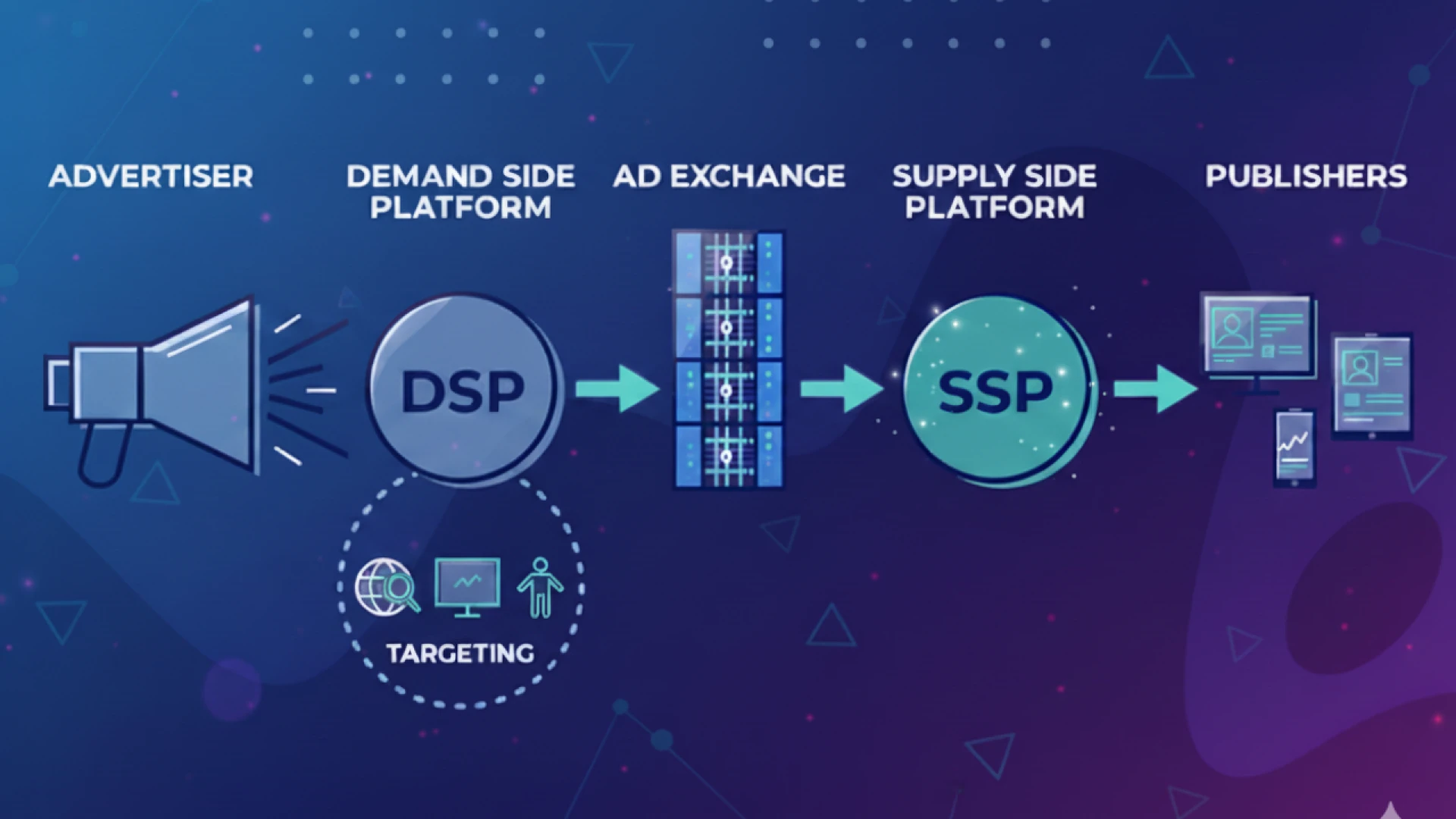

Within the digital advertising landscape, two platforms often cause confusion: SSP (Supply-Side Platform) and DSP (Demand-Side Platform). Both are vital to programmatic advertising, but they function on opposite sides of the ecosystem. Understanding the distinction between SSPs and DSPs can help publishers, advertisers, and marketers make better decisions and improve campaign efficiency.
What is an SSP (Supply-Side Platform)?
An SSP is a tool created for publishers—such as website owners, mobile app developers, or digital media companies—that helps them manage and sell advertising space automatically. By connecting to multiple ad exchanges and buyers, SSPs ensure publishers receive the highest possible value for their ad inventory.
Core Functions of an SSP:
- Automates the selling process for digital ad spaces.
- Connects directly with ad exchanges and DSPs to find buyers.
- Enables real-time bidding (RTB) to secure competitive prices.
- Gives publishers control over which ads are displayed.
Example: If you own a travel blog, using an SSP allows you to sell banner or video ad slots to interested advertisers without manually handling deals.
What is a DSP (Demand-Side Platform)?
A DSP is built for advertisers and agencies that want to purchase ad inventory efficiently. It allows them to buy ad space from a wide range of publishers while using data to target specific audiences.
Core Functions of a DSP:
- Provides advertisers with access to ad placements across multiple sites and apps.
- Uses data-driven targeting to reach specific demographics or interests.
- Automates bidding to make campaigns cost-effective.
- Supplies detailed analytics to measure ad performance.
Example: An e-commerce brand can use a DSP to deliver display ads to shoppers who recently searched for related products across different websites.
SSP vs DSP: The Key Differences
Category SSP (Supply-Side Platform) DSP (Demand-Side Platform) Who Uses It Publishers and media owners Advertisers and media buyers Main Function Sell available ad inventory Buy available ad inventory Primary Goal Maximize publisher revenue Achieve strong ROI for advertisers Focus Inventory management and monetization Campaign targeting and optimization Process Makes ad space available to buyers Places bids to secure ad space How SSPs and DSPs Interact
Even though SSPs and DSPs serve different purposes, they work together seamlessly in programmatic advertising:
- A publisher makes ad space available via an SSP.
- The SSP shares that inventory with exchanges.
- Advertisers, using DSPs, place bids for the impression in real time.
- The highest bid is accepted, and the winning ad appears instantly.
This exchange occurs in milliseconds each time a webpage or app loads.
Why Knowing the Difference Matters
- For publishers: SSPs help generate higher revenue while offering control over ad quality.
- For advertisers: DSPs allow for more precise targeting and better use of advertising budgets.
- For marketers: A solid understanding of both platforms enables smarter strategies that connect supply with demand effectively.
READ ALSO:- What is Display Advertising And Use ABM for B2B Marketing
Conclusion
The core difference between an SSP and a DSP lies in who they serve and what they aim to achieve. Publishers turn to SSPs to manage and sell their advertising space, while advertisers use DSPs to purchase that space efficiently and target the right audience. Together, they form the foundation of programmatic advertising, ensuring ads are delivered in a way that benefits both sides.
For publishers, SSPs mean better monetization. For advertisers, DSPs deliver smarter targeting and improved results. When combined, they create a more efficient and profitable digital advertising ecosystem.




























Sign in to leave a comment.