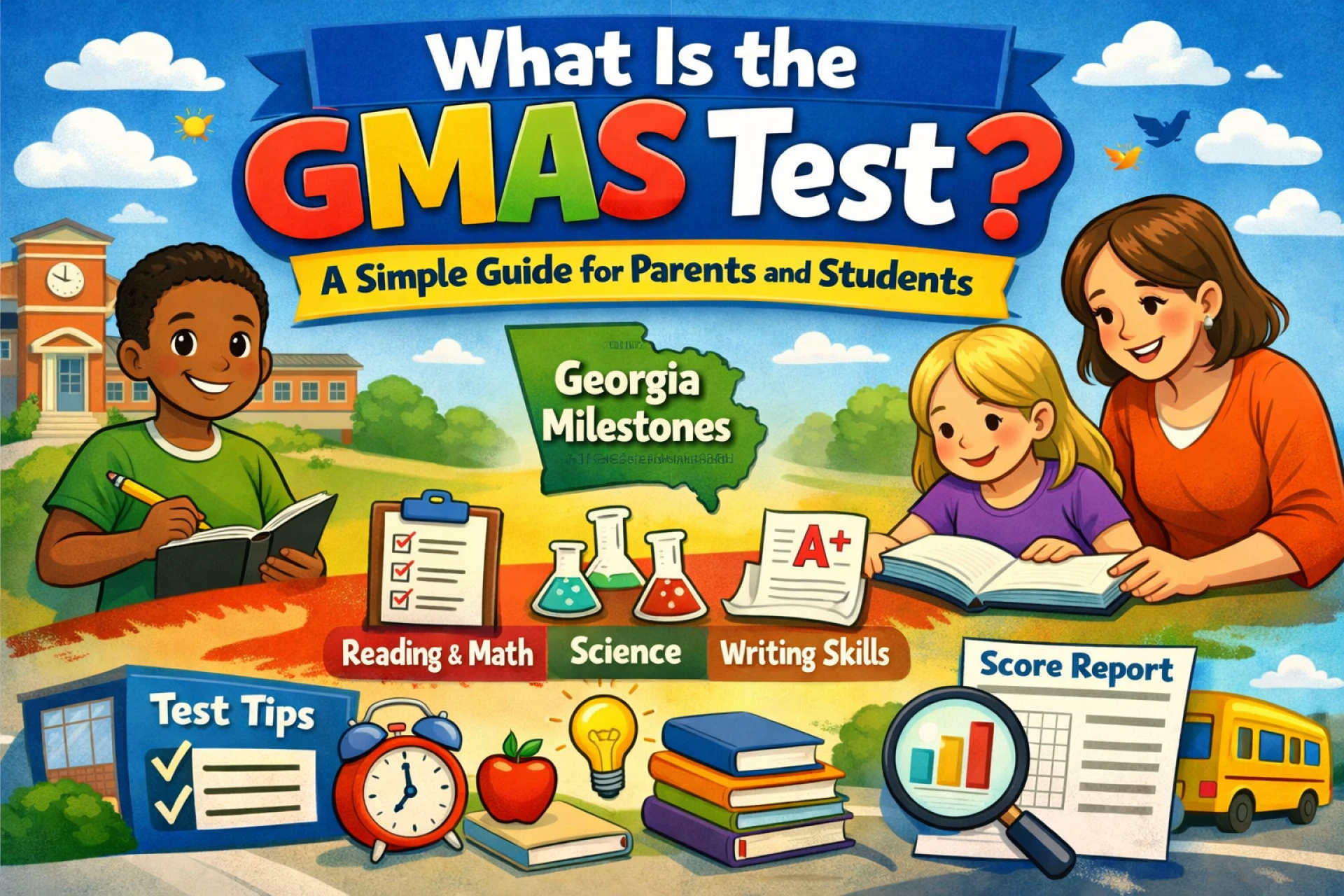

If you’re a parent of a student in Georgia, you’ve probably heard the term GMAS Test come up at school meetings, in newsletters, or during parent-teacher conferences. For students, the GMAS can feel like a big deal, sometimes even a stressful one. But what exactly is the GMAS test, and why is it important?
This guide breaks everything down in simple terms so parents and students can understand what the GMAS test is, how it works, what subjects it covers, and how to prepare effectively, without feeling overwhelmed.
What Does GMAS Stand For?
GMAS stands for Georgia Milestones Assessment System. It is the statewide testing program used in Georgia public schools to measure how well students are learning the state’s academic standards.
The GMAS test helps:
- Teachers understand student strengths and gaps
- Parents track academic progress
- Schools evaluate instruction effectiveness
- The state ensure consistent education standards
In short, GMAS shows how well students are mastering what they are expected to learn at their grade level.
Who Takes the GMAS Test?
The GMAS test is taken by students in grades 3 through high school in Georgia public schools.
Grade Levels and Subjects,
- Grades 3–8: English Language Arts (ELA), Mathematics
- Grades 5 & 8: Science and Social Studies
- High School: End-of-Course (EOC) tests in specific subjects
Each test is aligned with Georgia’s state curriculum standards, ensuring students are assessed on what they’ve actually been taught.
Why Is the GMAS Test Important?
The GMAS test plays different roles depending on the student’s grade level.
a. For Elementary and Middle School Students
- Measures academic growth year over year
- Helps identify areas where students may need extra support
- Provides parents with clear performance levels
b. For High School Students
- Some GMAS End-of-Course tests count toward final course grades
- Results can impact graduation requirements
- Helps prepare students for college-level assessments
While one test doesn’t define a student’s ability, GMAS results are an important academic checkpoint.
How Is the GMAS Test Structured?
Most GMAS tests are computer-based, though paper options may be available in some cases.
Question Types Include:
- Multiple-choice questions
- Short constructed responses
- Extended writing tasks (especially in ELA)
- Technology-enhanced items (drag-and-drop, graphs, tables)
The ELA portion often includes reading passages followed by questions that test comprehension, vocabulary, and writing skills.
GMAS Performance Levels Explained
After taking the test, students receive scores grouped into four performance levels:
- Beginning Learner – Needs significant academic support
- Developing Learner – Partial understanding of grade-level content
- Proficient Learner – Solid understanding and on-track academically
- Distinguished Learner – Advanced understanding and mastery
Parents should focus less on a single score and more on overall progress and growth over time.
When Is the GMAS Test Given?
GMAS testing usually takes place in the spring semester, though exact dates may vary by district and grade level.
Schools typically share testing schedules in advance so families can:
- Ensure students get enough rest
- Avoid scheduling conflicts
- Reduce test-day anxiety
How Can Students Prepare for the GMAS Test?
Preparation doesn’t mean endless hours of studying. In fact, smart, consistent practice works better than last-minute cramming.
Effective Preparation Tips
- Review key concepts regularly throughout the year
- Practice reading and answering questions carefully
- Focus on understanding mistakes, not just getting answers right
- Take practice assessments to build confidence
Using a gmas practice test can help students become familiar with the question format and timing, which often reduces test anxiety and improves performance.
Parents looking for structured resources often explore gmas test prep materials that align closely with Georgia standards. One helpful reference many families use is this GMAS practice tests and sample questions resource, which provides grade-specific practice in both Math and ELA.
When used consistently, practice tools like these help students feel more prepared and less nervous on test day.
How Parents Can Support Their Child
Parents play a huge role in GMAS success. even without teaching every subject.
Simple Ways to Help:
- Encourage a positive attitude toward testing
- Create a quiet space for homework and practice
- Talk about progress instead of pressure
- Make sure your child sleeps well before testing days
Most importantly, remind your child that the GMAS test is just one measure of learning, not a reflection of their worth or intelligence.
Final Thoughts
The GMAS test may seem intimidating at first, but with the right understanding and preparation, it becomes much more manageable. For parents, knowing what the test measures and how to support your child can ease stress. For students, consistent practice and confidence are key.
By focusing on learning not just scores and using trusted preparation resources, families can approach the GMAS testing season feeling informed, prepared, and calm.





























Sign in to leave a comment.