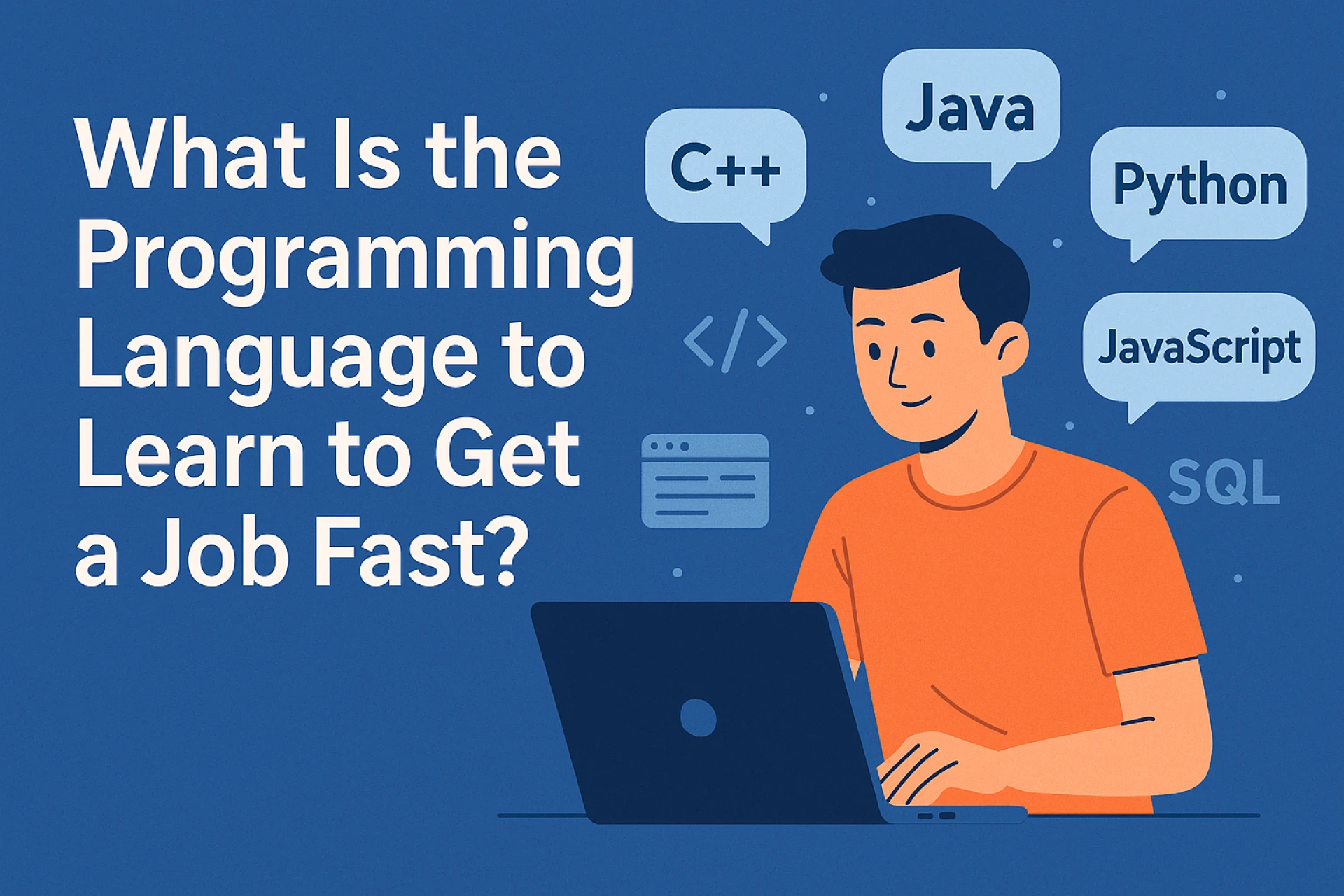

If you are a student of engineering and programming, learning a programming language is important. It will help you get jobs in different fields. Now, many students get confused to learn the right programming language. They don’t know which one opens more scope in the job industries. So, many of them don’t focus on learning one and try to learn all of them together. It only makes you more confused. Get programming assignment help and dig deep to understand which programming language can help you get jobs. To do that, you must understand each language briefly.
Understand Programming Languages to Get a Job Fast
It is tricky to pinpoint a programming language that can open more job opportunities for you. So, it is better to understand the leading languages and see which one can be the best for you. Read on to know more:
Python- The Language in Demand
If you are learning a programming language as a beginner and want a job quickly, you can trust Python. So, it is the easiest programming language to learn and use in the top industries. Also, the clean and easy-to-read syntax can help you learn Python quickly. Here are the features of Python you must understand:
- It is easy to understand. The syntax is written in simple English. So, it is quite effective for beginners.
- Besides, Python has a high demand in fields like AI, engineering, medical fields, machine learning, and automation.
- Also, it comes with a wide application, like AI, robotics, data analysis, etc.
Jobs You Can Apply for After Learning Python:
- Web developer
- Data analyst
- Machine learning engineer
- Software developer
- Automation engineer
If you have the mission to get a good job quickly, you can have chances to apply to companies like Netflix, Google, Spotify, Instagram, etc.
JavaScript- The True Web Language
If you want to be a strong web developer, many industries will be eager to work with you. Now, if you have thorough knowledge of JavaScript, you get golden opportunities. Companies keep looking for experts in this programming language as they can work on almost every online platform. Here are the wonderful features of JavaScript you must know:
- JavaScript is a language for web designers as it helps in front-end development.
- Not only in front-end developments, but JavaScript also helps in back-end developments with its wide frameworks.
- If you are an expert in JavaScript, you can get many freelancing opportunities. Also, many startups and small businesses look for web designers and developers to develop their websites. JavaScript is the key to those.
Jobs You Can Get after Learning JavaScript
- Web designer
- UI/UX developer
- Full-stack developer
- Front-end developer
Today, every business, small or big, needs its websites and apps. Now, the core feature of JavaScript is that it helps to develop those. So, you get more opportunities in almost every field to work. Therefore, learn it well and write more assignments to have practical experience. Moreover, take guidance from assignment writing services like Instant Assignment Help.
JAVA- The Alliance of Big Companies
It is one of the oldest programming languages that is still in business. Additionally, Java helps to develop apps for Android and strengthens many large-scale applications. So, how learning Java can help you get a job faster? Understand its features and you will know it:
- First, many big industries, like banking sectors, software industries, and financial institutions etc., use Java.
- Also, Java runs on every platform. If you run code once, it can run on any platform.
- Above all, Java developers are always in demand as there are many companies that completely rely on this programming language.
Jobs You Can Get after learning Java
- Software engineer
- Systems architect
- Backend developers
- Android app developers
It is true that students need a bit more time to learn Java than Python. However, once you learn it, you can be an expert and get strong career growth. Also, learning Java can help you get the opportunity to work in companies like IBM, Amazon, Infosys, etc.
SQL- The Language of Database
Data is the basic requirement of every business. Therefore, to understand data and to handle it effectively, you must learn SQL. Now, let’s find out why learning SQL can give you a quick opportunity for jobs:
- Companies use databases like MySQL, SQL Server, etc. So, learning this language opens opportunities for you to work in many companies.
- Also, learning SQL is not too difficult. Here, you must learn how to retrieve data and modify it.
- Also, the power of SQL increases when you combine it with Python or Java. Then, you get better opportunities to work in leading industries.
Jobs You Can Get after Learning SQL
- Data analyst
- Backend developer
- Business analyst
- Database administrator
You can learn SQL quite easily. Therefore, you can use SQL in simple jobs, like data entry, IT support, data analytics, etc.
HTML and CSS- The Base of Websites
If you want a great job opportunity in web development, learning HTML and CSS will be the best choice for you. Why should you learn HTML and CSS to get jobs?
- Now, you can build your website within a few days after learning these languages.
- Also, together with JavaScript, these languages can help in front-end and backend development of different websites.
- Moreover, students get several freelancing opportunities as many small business owners welcome them to work as web designers.
Jobs You Can Get after Learning HTML and CSS
- Front-End Developer
- Web designer
- Email template designer
If you are looking for a quick job or freelancing opportunities, learning these programming languages is quite a good idea. Also, if you learn JavaScript and Python along with these, you will get bigger opportunities.
Conclusion
So, here you get an insight into different programming languages and the job opportunities you can get after learning those. Now, if you study hard and do assignments with programming assignment help, you can get your dream job in your favourite industries. So, learn the programming languages and ensure your career growth.
Also Read: How to Build Learning Habits in a Fast-Changing Knowledge World?





























Sign in to leave a comment.