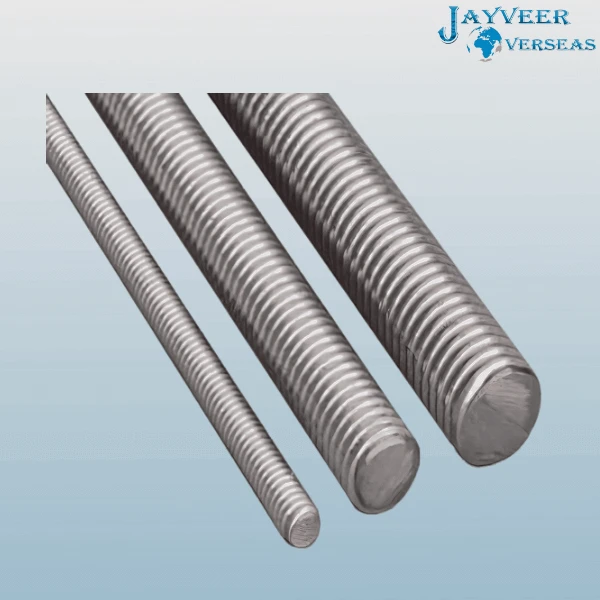
A bar of variable length that is threaded into a helical construction is referred to as aThreaded bar.This type of rod is also usually referred to as a stud. When the rod is in use, the threading causes a rotary motion similar to that of a screw since it extends around and along the rod. The mixture of linear and rotational movement that threaded rods provide results in high resistance to pressure. The direction of rotation that is induced by a threaded rod is determined by whether the rod has a right-handed thread, a left-handed thread, or both right-handed and left-handed threads. Threaded rods are a frequent type of fixing for support systems and are used for a wide variety of applications. These are designed to sustain extremely high levels of pressure and stress. A threaded bar, which can also be referred to as a stud or a bolt, is a type of fastener that is used to hold together two or more separate objects. It is made out of a shaft that has a succession of screw-like ridges or threads running down the surface of it. The threads make it possible for the bar to be readily inserted into the material and fixed there by twisting it in the same way that a screw would. There are a few distinct varieties of threaded bars, the most common of which are double-ended, fully-threaded, and partially-threaded bars. A fully threaded bar will have threads along the entirety of its shaft, whereas a bar that is partially threaded will only have threads along a section of its shaft. Because double-ended threaded bars feature threads on both ends of the shaft, they can be used in a broad variety of applications where it is necessary to make numerous connections.
A threaded rod is a type of fastener that functions through the process of threading, which leads to a tight action due to the rotational movements involved. Because the rod is threaded, various types of fasteners, including bolts and nuts, can be readily screwed on or tightened using the threading.
There are a variety of uses for threaded rods; one of those uses is to effectively function as pins to join or fasten two materials together. In addition to being used to anchor structures, they can be inserted in a variety of materials, including concrete, wood, or metal, to form a secure basis that is either temporary while construction is occurring or permanent once it is complete.
Sign in to leave a comment.