A closer look at what the market actually demands, and where most vendor relationships break down.
Long Beach janitorial services operate inside one of the most commercially active and operationally diverse markets in Southern California. The city's economy runs across logistics and port operations, aerospace, healthcare, professional services, and a growing downtown office corridor. Each of those sectors places different demands on facility cleanliness, compliance documentation, and service flexibility. Yet most businesses in Long Beach are still selecting their cleaning vendors the same way they were a decade ago: lowest bid, basic scope, vague service agreement. The gap between what the market now requires and what most standard janitorial contracts actually deliver is widening. Understanding that gap is where better facility decisions begin.
A Market with More Complexity Than Most Vendors Acknowledge
Long Beach is not a uniform commercial environment. A logistics facility near the port operates under entirely different cleanliness and compliance expectations than a downtown professional services firm or a healthcare clinic in the Bixby Knolls corridor.
The Port of Long Beach is the second-busiest container port in the Western Hemisphere, according to commercial real estate data from Lee & Associates. The industrial and warehouse sector surrounding it spans over 34 million square feet. Facilities in this zone frequently require janitorial programs that account for heavy particulate environments, loading dock maintenance, and in some cases, compliance with OSHA sanitation standards specific to industrial operations.
At the other end of the spectrum, Long Beach's growing downtown office and mixed-use market, along with institutions like Cal State Long Beach and Long Beach Memorial Medical Center, generates demand for a completely different service profile: one focused on indoor air quality, daytime responsiveness, and credentialed staff with background checks.
Most janitorial vendors in the area offer a version of the same general-purpose program to all of these clients. That is the first and most common mistake.
| Industry observation: The businesses reporting the highest dissatisfaction with janitorial vendors are rarely those who received poor cleaning. They are the ones who received the wrong cleaning program for their specific facility type. |
Where Vendor Relationships Break Down
The U.S. janitorial services market was valued at $81.88 billion in 2025 and is projected to reach $105.62 billion by 2033, according to Grand View Research, growing at a compound annual rate of 3.3%. That growth figure sounds steady and manageable. What it obscures is the significant churn happening at the individual account level.
Facility managers in Long Beach report a recurring pattern: a new vendor performs well in the first 60 to 90 days, then service quality drifts as staff turnover occurs or attention shifts to newer accounts. The root cause is almost never the cleaning itself. It is account management, or more precisely, the absence of it.
The vendors who retain accounts longest share a few structural characteristics:
- Dedicated account managers rather than general dispatch systems
- Documented quality control inspections on a defined schedule
- Written service level agreements with measurable benchmarks
- Staff continuity plans that do not leave a client without coverage during turnover
- Clear communication protocols when issues arise
These are not premium features. They are operational basics that a significant portion of the Long Beach janitorial market still does not consistently deliver.
Carpet Care as a Compliance and Asset Question
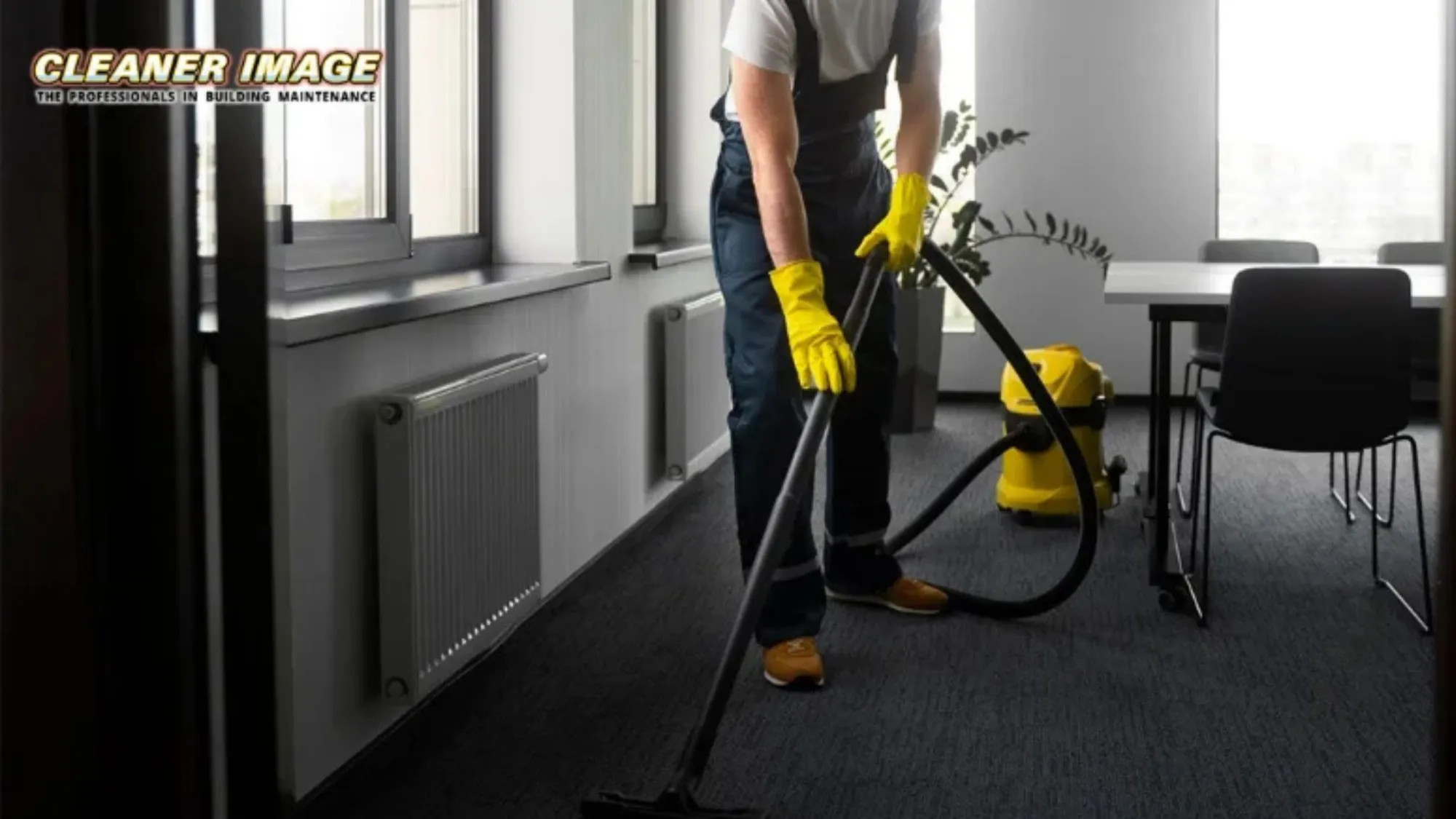
Long Beach, CA carpet cleaning is a specific area where facility managers consistently underinvest relative to the actual cost of deferred maintenance. Carpet in commercial settings does not simply look bad when neglected. It accumulates particulate matter, allergens, and microbial load that contributes to indoor air quality problems.
California has some of the most stringent indoor air quality standards in the country. For facilities in healthcare, education, or any building pursuing LEED or WELL certification, carpet maintenance is not a discretionary line item. It is part of a documented IAQ program.
The practical calculus is straightforward. Commercial carpet replacement in a Long Beach office or logistics facility runs from $3 to $7 per square foot, depending on grade and installation conditions. A professional hot water extraction program, executed on a quarterly or semi-annual schedule, extends carpet service life by several years. The math consistently favors maintenance over replacement, yet most facility budgets treat carpet cleaning as a reactive expense rather than a scheduled one.
| What most vendors miss: carpet in high-traffic commercial environments should be assessed by zone, not treated uniformly. Lobby and corridor carpet degrades at three to four times the rate of private office carpet. A maintenance program that does not reflect those wear differentials is not optimized for either cost or outcome. |
The Compliance Layer That Is Quietly Becoming Non-Negotiable
Over the past three years, compliance expectations around commercial cleaning have shifted in ways that most facility managers are still catching up to.
California's AB 617 and related air quality regulations have increased scrutiny of chemical use in enclosed commercial environments. Green Seal and UL ECOLOGO certifications, once considered differentiating features for cleaning vendors, are increasingly appearing as baseline requirements in public sector and institutional RFPs across Los Angeles County, including Long Beach.
Background check requirements for janitorial staff are now standard in healthcare, education, and government facility contracts. Insurance minimums are rising. Many procurement teams are adding requirements for digital service verification, meaning a vendor must provide electronic records confirming when cleaning tasks were completed and by whom.
This compliance layer is not slowing the market down. It is sorting it. Vendors who cannot meet these documentation and certification requirements are being eliminated from consideration for the contracts that matter most, regardless of price.
What Smarter Procurement Looks Like in 2026
Facility managers who are getting the best outcomes from their janitorial programs in Long Beach tend to approach vendor selection as a structured evaluation rather than a price comparison.
The questions that surface the most useful information during an RFP or vendor walkthrough:
- Who specifically will manage this account, and what is their supervisory ratio?
- How is staff turnover handled without service disruption to the client?
- What quality control documentation is provided, and how frequently?
- Which cleaning products are used, and are they compliant with California VOC regulations?
- What does the emergency response protocol look like for after-hours incidents?
- Can the vendor provide references from facilities with a comparable footprint and use type?
Standard commercial cleaning costs in Long Beach range from approximately $0.08 to $0.18 per square foot per month for baseline janitorial programs, with specialized services priced separately. That range is wide enough that the price alone tells you almost nothing about what you are actually getting. The structure behind the price is what matters.
The Broader Shift Worth Paying Attention To
Long Beach janitorial services are operating in a market that is maturing in terms of client expectations but remains uneven in terms of vendor capability. The gap between what sophisticated facility operators now require and what the average cleaning contract actually delivers is the central challenge in this market.
That gap is closing, but not uniformly. The vendors investing in account management infrastructure, compliance documentation, and specialized service programming are pulling ahead. The ones competing primarily on price are increasingly winning only the accounts that will churn again within 18 months.
For facility managers and operations directors in Long Beach, the clearest strategic move is to treat the janitorial vendor relationship the same way they would treat any other critical facilities partnership: with structured evaluation criteria, clear performance benchmarks, and a long enough time horizon to distinguish service quality from opening-week effort.
A building that is consistently well-maintained is not a function of luck or a low price point. It is a function of a well-structured program managed by a vendor who understands the specific demands of that facility. In a market as operationally diverse as Long Beach, that specificity is the differentiator.





























Sign in to leave a comment.