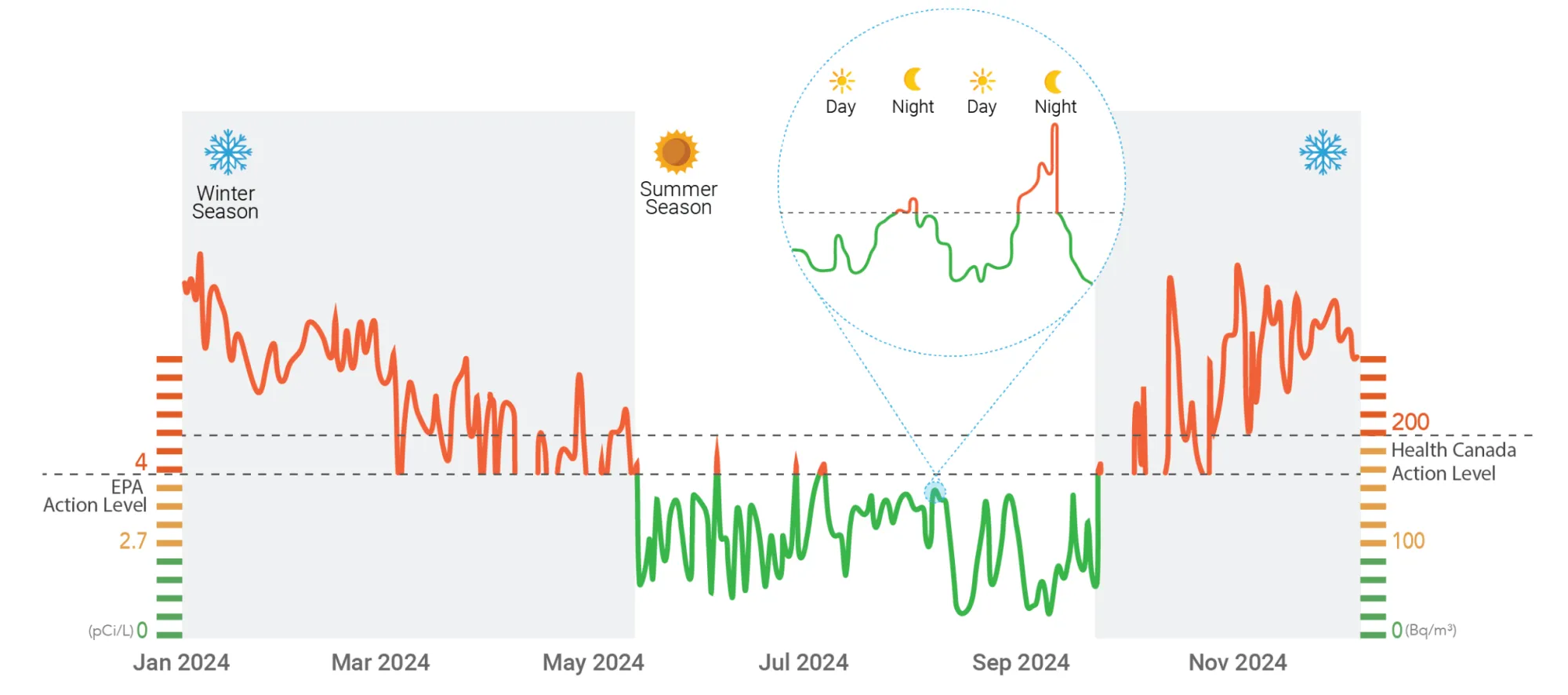

Just received a high radon test result?
Don’t panic — but don’t ignore it. The most important step is to confirm the result and take action to reduce radon levels as soon as possible.
If you used a short-term test, follow up with a long-term test or a continuous radon monitor to verify the reading. If radon levels are at or above the recommended action level, it’s time to consider mitigation.
Steps to Take
✅ Confirm the test result
Use a long-term test or a second approved test for accuracy.
✅ Contact a radon mitigation professional
A qualified specialist can assess your home and recommend the best solution.
✅ Install a radon mitigation system
The most common method is sub-slab depressurization, which vents radon gas safely outside before it enters your living space.
✅ Retest after mitigation
Always test again to ensure radon levels have been reduced effectively.
Why Acting Matters
Radon is a naturally occurring radioactive gas that has no color, smell, or taste. Long-term exposure to elevated radon levels increases the risk of lung cancer, making testing and mitigation important for maintaining a healthy home.
Quick Answer
If your home has high radon levels, confirm the result, hire a qualified mitigation professional, install a radon reduction system if needed, and retest to verify that levels are safe.
Have you tested your home for radon recently? Knowing your radon level is the first step toward protecting your indoor air quality.






















Sign in to leave a comment.