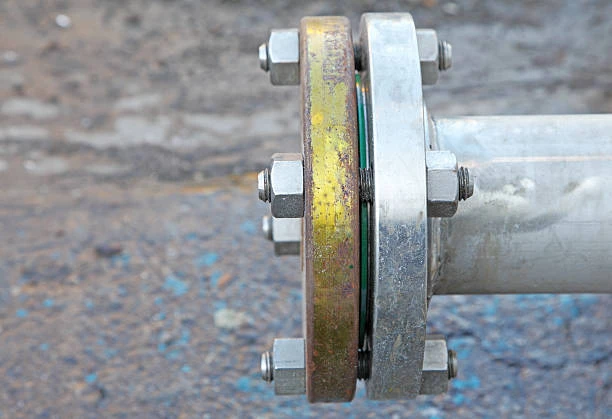

No matter how big or small your industrial plant is, you need a spiral wound gasket. A spiral wound gasket is a metallic gasket that is widely used in industrial applications including chemical, oil & gas, petrochemical, and power industries. It can withstand high temperatures and prevent leaks throughout its lifespan.
Find out why getting a spiral wound gasket is so important and what you can do to effectively use it.
What is Spiral Wound Gasket
A spiral wound gasket is applicable for use across a wide pressure range. It can seal fluid pressures up to 250 bar, cryogenic temperatures as low as -200ºC, and elevated temperatures of 1000ºC.
Most spiral wound gaskets have a sturdy design, and this is what makes them simple to install without causing any damage. Also, they are non-adhesive; thus, they are easy to remove after service.
The main types of gaskets are basic, inner ring, outer ring, and inner & outer ring. The basic type consists of filler and V-shaped metal wound into a spiral shape. It is typically used for male and female type flanges and tongue and groove type flanges. On the other hand, inner ring types are pretty similar to the basic types. Their only difference is that the former is fitted with an inner ring.
Meanwhile, outer ring types are the standard spiral wound gaskets that consist of a wound component fitted with an outer centering ring. And for inner and outer ring types, an inner ring is added to the basic type gaskets with outer rings. The inner ring protects the gasket against protrusion and deformation during tightening.
What Spiral Wound Gasket Consists of?
In general, a spiral wound gasket consists of an outer ring, an inner ring, and a sealing element. Let’s dive into each element.
Outer ring. Most outer rings are made of carbon steel. They are used to center the gasket when you insert it into a bolted flange joint.
Inner ring. Inner rings play an essential role in the gasket – they prevent windings from buckling inside the pipe. They help avoid the parts of the gasket getting sucked into the pipe.
Sealing element. Last but not the least, the sealing element is the one responsible for preventing leaks. It encompasses both windings and filler material. These filler materials include, but are not limited to, aluminum, ceramic, graphite, non-asbestos fiber, and treated asbestos fiber.
Why the Color of Spiral Wound Gasket Matters
Industry standards require that gaskets are color-coded, as each color indicates particular windings materials. For instance, outside rim colors yellow means 304 stainless steel gasket material while green is 316 stainless steel.
Other outside rim colors and their meanings that you have to take note of are the following:
Beige – Hastelloy C
Black – Alloy 20
Blue – 347 Stainless steel
Brown – Hastelloy C
Orange – Monel
Purple – Titanium
Red – Nickel
Steel – Carbon steel
Turquoise – 321 stainless steel
It is also important to pay attention to the color of the stripe along the rim as it is also an indicator of the material within the gasket.
Wrapping Up
A spiral wound gasket has been developed to meet the increasingly demanding conditions encountered in various industries. The need for it cannot be ignored, and it is useful to know valuable information about it.


























Sign in to leave a comment.