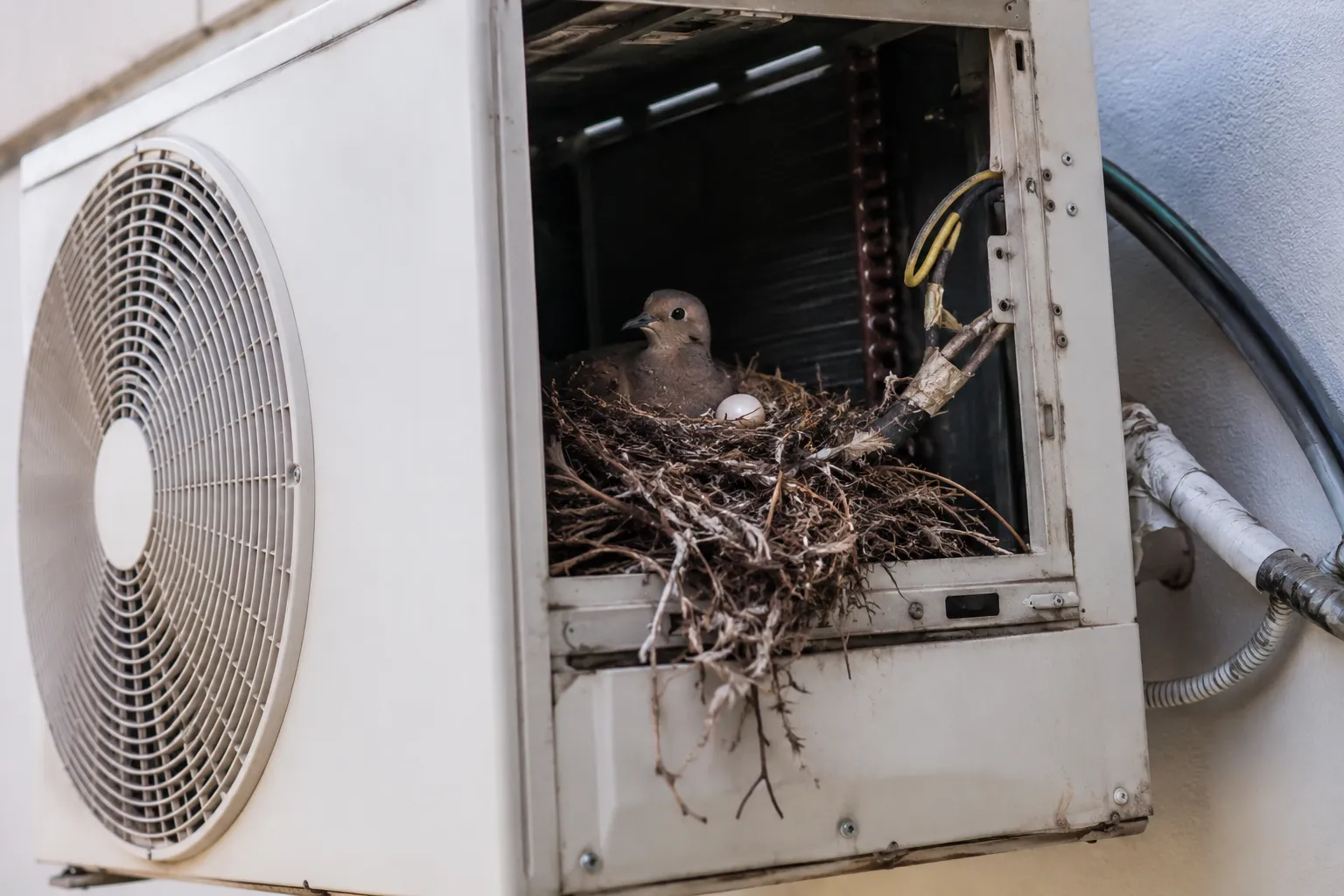

Every spring and autumn, Dubai's rooftop and window-mounted AC units become prime real estate for pigeons, mynas, and sparrows looking for a warm, sheltered place to build a bird nest in AC units. The residual heat from the compressor, along with the narrow vents that resemble natural nesting cavities, makes outdoor condenser units especially attractive to nesting birds.
For property owners, this isn't just a nuisance. A nest lodged inside a compressor fan or vent can restrict airflow, trigger overheating, and in some cases cause the unit to fail. It can also introduce droppings, feathers, and parasites into a system that recirculates air throughout the home.
Addressing the issue quickly and correctly matters both for equipment longevity and indoor air quality. This is one of the more common calls received by teams specializing in bird control in Dubai, particularly during the UAE's cooler months when nesting activity peaks.
Quick Answer: What Should You Do if a Bird Nest in AC Units?
If you discover a bird nest in your AC unit, do not turn the unit on and avoid removing the nest yourself if eggs or chicks are present.
- Turn off the AC immediately to prevent injury to the bird and damage to the unit
- Check for eggs or chicks before touching anything, many wild birds are protected under UAE wildlife regulations
- Contact a licensed pest or wildlife control service if the nest is active
- Schedule a professional cleaning and inspection once the nest is safely relocated or vacated
Attempting DIY removal of an active nest can be both legally and physically risky, which is why most facilities management guidelines recommend professional intervention.
Why This Issue Matters in Dubai's Climate
Dubai's AC units run almost year-round. Usage dips slightly between November and February, precisely when many bird species are nesting. That brief window of reduced fan activity is often enough for a pair of pigeons or common mynas to establish a nest inside a condenser housing or wall-mounted split unit.
The city's dense high-rise landscape has also reduced natural nesting sites. AC units, balcony ledges, and rooftop plant rooms have effectively become substitute habitats. Property managers across residential towers in areas like Jumeirah Lake Towers, Dubai Marina, and Al Barsha report recurring nesting issues on external units during these transitional seasons.
Key Causes and Challenges
Several factors make AC units particularly appealing to nesting birds:
- Residual warmth from compressors and motors, especially in cooler months
- Sheltered, elevated positioning that mimics cliffside or tree-cavity nesting
- Reduced foot traffic on rooftops and balconies compared to ground level
- Gaps in vents or housing that provide easy entry but limited predator access
Once a nest is established, removing it becomes more complicated. Many bird species, including pigeons and some native songbirds, are protected during breeding season.
This means disturbing an active nest may require specific handling procedures rather than simple removal.
Practical Solutions for an Active Nest
Should You Remove the Nest Yourself?
Generally no, not if eggs or chicks are present. The safest approach is a phased response.
- Leave the unit switched off until the nest is addressed
- Document the nest with photos in case professional assessment is needed
- Avoid blocking the vent completely, which can trap the bird inside
- Arrange for a technician or wildlife-aware pest specialist to assess whether the nest is active
If the nest is confirmed empty or the chicks have fledged, a technician can safely clear debris, sanitize the unit, and inspect for mechanical damage before restarting the system.
What Damage Can Occur?
Nesting material twigs, feathers, and droppings can obstruct fan blades and clog drainage lines. It can also corrode electrical components exposed to moisture from droppings. Left unresolved, this often shortens the unit's operational lifespan and increases energy consumption due to restricted airflow.
Preventive Measures That Actually Work
Prevention is significantly more cost-effective than repeated removal and cleaning. Facilities teams and residential building managers commonly rely on a combination of physical and behavioral deterrents:
- Mesh guards or vent covers designed specifically for AC units, allowing airflow while blocking entry
- Bird spikes or slope deterrents on adjacent ledges to reduce perching before nesting begins
- Routine seasonal inspections, particularly before the autumn and spring nesting windows
- Prompt removal of unused nesting material at the start of each season, before eggs are laid
Reactive measures like blocking a vent after a nest is already built are far less effective than proactive deterrents installed before birds settle in.
Many buildings now factor this into their annual maintenance calendar rather than treating it as an emergency-only issue. This shift is outlined in more detail in this guide on seasonal bird-proofing schedules for residential and commercial properties.
The Best Long-Term Solution
For recurring nesting problems, a one-time cleanup rarely solves the underlying issue. The most durable outcome combines mechanical barriers with periodic inspection, particularly for buildings with multiple exposed condenser units.
Licensed pest management providers typically assess the specific bird species involved, since deterrent strategies differ. Mesh spacing effective against pigeons, for instance, may not suit smaller sparrows.
This species-specific approach is a core part of professional bird control in Dubai, where technicians balance effective deterrence with compliance around protected species and humane handling standards.
Frequently Asked Questions
Is it illegal to remove a bird nest in the UAE?
Disturbing an active nest with eggs or chicks may be restricted under local wildlife protection guidelines, depending on the species. It's advisable to consult a professional before removal rather than assume it's permitted.
Can a bird nest cause my AC to stop working?
Yes. Nesting material can obstruct fans, block drainage, and cause overheating, which may lead to compressor failure if left unaddressed for an extended period.
How long do birds typically nest in AC units?
Most nesting cycles, from egg-laying to fledging, last between three and six weeks depending on the species, after which the nest is usually vacated.
How can I stop birds from returning next season?
Installing mesh vent guards and scheduling a pre-season inspection before nesting periods begin is the most effective long-term deterrent.
Conclusion
A bird nesting in an AC unit is a common seasonal issue in Dubai, driven by the city's climate and dense urban landscape. It's rarely something to handle without care. Turning off the unit, confirming whether the nest is active, and involving a qualified technician protects both the bird and the equipment.
For property owners dealing with recurring nesting problems, pairing timely removal with preventive measures tends to offer the most sustainable outcome. Teams like Allied Pest Control work with residential and commercial properties across Dubai to assess these situations and recommend humane, code-compliant solutions suited to the specific bird species involved.


























Sign in to leave a comment.